
Free written scope consultation - allowances, timeline, and change-order rules on paper before a single trade is scheduled
ADU Site Prep & Utilities in Hurst, TX: What It Actually Involves
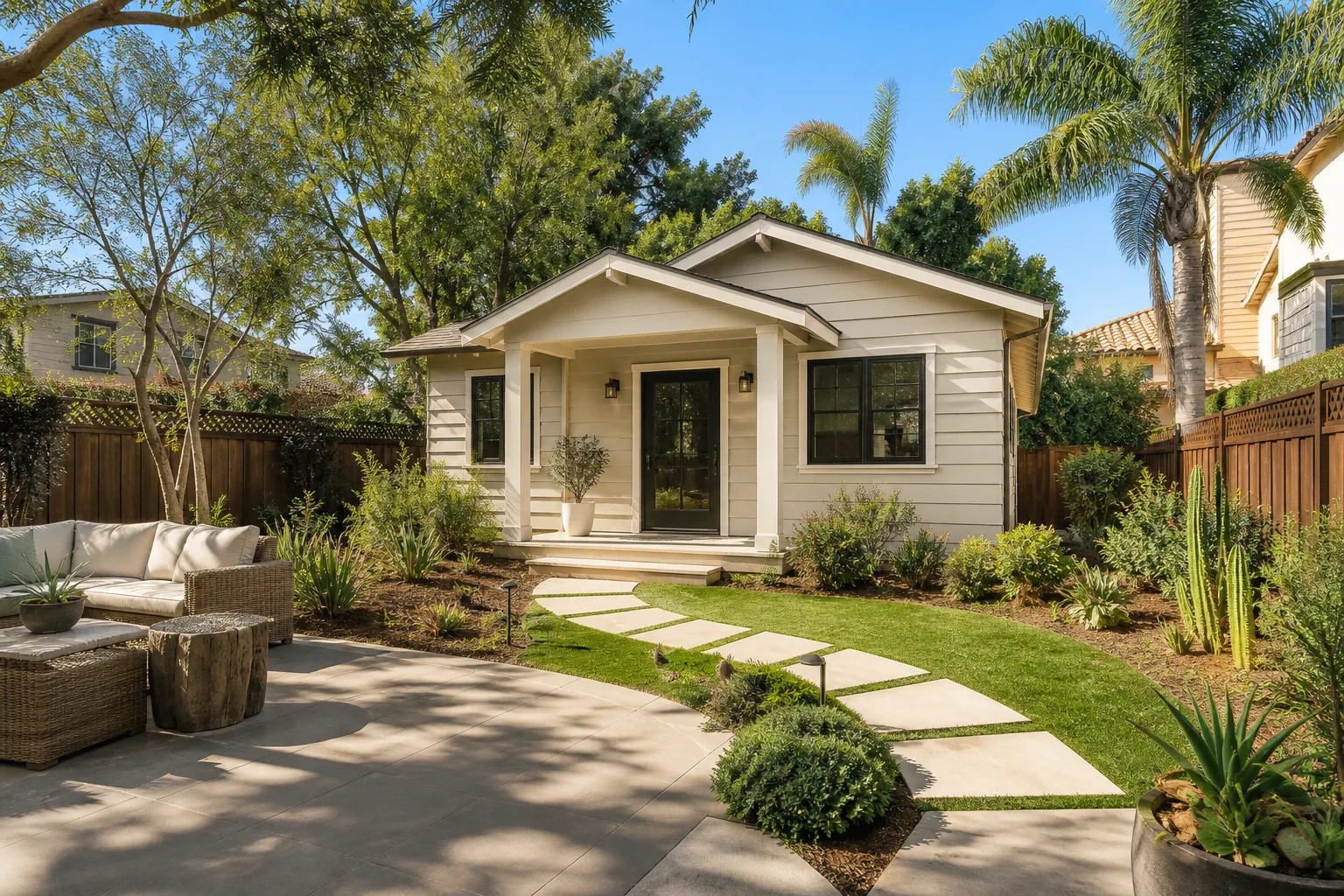
ADU Site Prep & Utilities in Hurst, TX runs $45,000 – $130,000 depending on how much trenching, re-grading, and utility relocation the lot demands, and most projects take six to twelve weeks from first shovel to first inspection sign-off. Site prep is the work that happens before framing: clearing and grading the pad, tying into water, sewer, gas, and electrical, and getting every underground inspection passed. Call (855) 912-5373 to schedule your free on-site estimate.
How the Prep and Utilities Work Actually Happens, Step by Step
Site prep isn’t one phase. It’s five, and each one closes out with a decision you make or a city inspector you pass.
Stage 1: Site survey and utility locate (days 1 – 2). We mark the buildable pad, run the 811 locate so we know exactly where the existing water and sewer laterals sit under the grass, and measure your setbacks against your lot line. In Hurst, where the ranch lots are tight, that measurement often decides where the ADU can legally sit before anything else gets a say. You confirm the footprint here.
Stage 2: Clearing, demo, and grading (days 3 – 6). Out comes the old shed, the struggling pecan stump, the concrete patio slab that’s been there a few decades. Then we grade to slope. On expansive clay this is the step that matters most, because you’re engineering drainage away from both the main house and the new pad. You pick the pad elevation at this stage.
Stage 3: Utility trenching and rough-in (days 7 – 12). Water, sewer, electrical conduit, gas if you’re running it, and any low-voltage get trenched and run to the pad. Sewer is the wildcard. If the existing lateral is shallow enough and the grade works, you tie in. If the ADU sits lower than the main drain line or the run crosses a big oak’s root zone, you’re looking at a lift pump or a longer re-route. You decide fixture locations now, before the pipe gets buried, because moving a toilet after backfill means tearing out slab.
Stage 4: Underground inspection and backfill (days 12 – 15). Hurst’s own city inspections sign off on the buried plumbing and electrical before a single yard of concrete covers it. We schedule this and walk you through what the inspector checked. You don’t have to be home, but you’ll get photos of the open trenches.
Stage 5: Pad pour, utility stubs, and handoff to structure (days 15 – 20). Final grade, form, and pour the slab or set the pier-and-beam foundation, with utility stubs left sticking up exactly where the build needs them. From there the site work is done and the ADU construction phase takes over. You approve the final grade and drainage plan before we pour.
That’s three weeks of the six-to-twelve-week window. Framing, finish, and final inspections eat the rest.
Styles & brands we work with
- Kitchen remodeling
- Bathroom remodeling
- Home additions & ADU
- Roofing
- Windows & doors
- Driveway & pavers
- Fence
The Choices That Actually Change Your Utility and Site Bill
- Sewer tie-in vs. grinder pump. A gravity tie-in is the cheap, quiet, maintenance-free path. A grinder pump unlocks a pad elevation the grade wouldn’t otherwise allow in Hurst but adds equipment, a power drop, and eventual service. Choose gravity when the slope cooperates.
- Concrete slab vs. pier-and-beam pad.Slab is standard on the flat Mid-Cities lots and keeps costs down. Pier-and-beam costs more upfront but gives you access to plumbing under the floor and handles the seasonal clay movement better. On an expansive-clay lot, that access is worth considering.
- Electrical service size. A 60-amp subpanel runs lights, outlets, and a mini-split fine. A 100-amp or 200-amp service costs more but leaves room for a full kitchen, EV charging, or a heat-pump water heater later. Size it for the ADU you might want, not just the one you’re building.
- Trench depth and conduit quality. Deeper conduit in rigid PVC holds up and satisfies inspection cleanly; thinner flexible line is cheaper and more vulnerable to root intrusion over time.
- Water lateral material. PEX and copper both work. PEX is faster to install and cheaper; copper has a longer service life but more cost and a slower run. Most Hurst jobs go PEX.
- Drainage and grading extras. A simple slope and swale is baseline. A French drain or catch basin on the low side of the lot is an add, and it’s the difference between a dry ADU foundation and a wet one after a spring storm.
What ADU Site Prep & Utilities Costs in Hurst, TX
For site prep and utilities specifically, expect $45,000 – $130,000. That range is wide because the variables that move it are genuinely wide, and the ADU structure that follows sits on top of it. (Full ADU construction including the build runs $90,000 – $220,000, which is a separate number.)
What pushes a job to the low end versus the high end:
- Lot and grading condition. A flat, cleared lot grades fast. A lot with mature tree roots, an old slab to remove, or a slope that needs retaining work pushes toward the top.
- Utility run distance. An ADU 30 feet from the existing sewer line costs far less than one 80 feet out with a re-route around a root zone.
- Sewer solution. Gravity tie-in is cheap. A grinder pump, lift station, or long re-route is an add.
- Electrical service size and trench length. 60-amp at short distance is the floor. 200-amp with a long conduit run and a new meter is toward the ceiling.
- Permit scope and inspections. Every underground and grading inspection you have to pass adds time and fee. The city sets those, not us.
Your written line-item estimate breaks out grading, trenching, each utility trade, inspection fees, and the pad pour. It excludes the ADU structure itself and any HOA fees you may owe. Upfront pricing, no surprises: the number you see is the number you pay, backed by the 730-Day Done Right Promise.
See the difference
 Before
 After
 Before
 After
 Before
 After
What Hurst’s Built-Out, Mid-Century Lots Do to This Job
Hurst is a built-out inner-ring suburb, and almost everything we do here is work on 1960s – 1980s brick-veneer ranches on tight subdivision lots in ZIP codes 76053 and 76054. There’s no fresh lot to grade; you’re fitting an ADU onto a lot that’s already fully used. That’s where the real Hurst-specific problems live.
The mature pecan and oak canopies that hang over these properties are the first. Roots run far beyond the trunk line, so a sewer or water trench has to either find a route around them or accept the cost of cutting through, and the city cares about tree health in the process. Second, those same trees and the seasonal movement in North Texas clay make drainage the make-or-break decision on Hurst pads; a poorly graded pad on expansive soil will heave and crack. Third, Hurst’s own city inspections are the gatekeeper on every underground, and inspections here are scheduled, not rushed. Tight lot lines in the established neighborhoods mean setbacks and utility easements do most of the deciding on where the ADU can sit before you ever pick a floor plan. We work in Hurst constantly and know how the inspections and permits flow. It’s part of our Home Additions & ADU in Hurst work, and site prep is where we start every one.
Serving Hurst, TX – Our Local Coverage Area
We serve Hurst and nearby communities. Use the map below to see the area we cover. If you’re nearby, we can almost certainly help.
Frequently Asked – ADU Site Prep & Utilities in Hurst
Three to four weeks for site prep and buried utilities, then the ADU build takes the project to six to twelve weeks total. The variables that slow it down are inspection scheduling and any sewer re-route around a root zone. Call (855) 912-5373 for a timeline based on your lot. Estimates are free.
Yes. Hurst requires permits for grading, underground plumbing, and electrical before anything gets buried, and inspections happen before backfill. We pull the permits and stand for the inspections. Call for a free estimate and we’ll walk you through the permit scope for your address.
Often, yes. If the existing laterals can be extended and the pad elevation cooperates, no relocation is needed. The job that requires relocation is the one where the ADU sits below the main drain line or the buildable pad has to cross existing utility lines. Call (855) 912-5373 and we’ll tell you which side your lot falls on.
$45,000 – $130,000, with the low end driven by flat lots, short utility runs, and a gravity sewer tie-in, and the high end by grading, root removal, and a grinder pump. The written estimate is line-itemed. Call (855) 912-5373 for an exact number; estimates are free.
Yes. All our work carries the 730-Day Done Right Promise: if the grading, trenching, or utility rough-in isn’t done right, we make it right. That’s one of the longest workmanship guarantees in residential construction. Call us with your questions.
Get Your Hurst ADU Ready Before the Build Starts
Site prep decides how smooth the rest of your ADU project goes. Call (855) 912-5373 to schedule a free on-site estimate in Hurst. We’ll walk your lot, measure the setbacks, look at the utility laterals, and hand you a written line-item estimate for the grading, trenching, and pad work. A live person answers around the clock. Most Hurst properties we see here pair the pad work with a fresh approach, and homeowners often combine it with Paver Driveways in Hurst or a Concrete Driveways & Concrete Work in Hurst to finish the access route. It’s all part of our Home Additions & ADU capability across Hurst.
Written by the team at Groundwork Construction Co.