Last updated November 18, 2026


Free written scope consultation - allowances, timeline, and change-order rules on paper before a single trade is scheduled
Driveway & Pavers Warning Signs Every Homeowner Should Know
That one paver that keeps rocking isn’t a quirk. It’s a symptom. In our experience across Fort Worth, we’ve watched homeowners ignore a single loose paver in the spring and call us in the fall needing three times the repair scope, because the real problem was never the paver. It was the base underneath it. Your driveway tells you what’s failing weeks or months before the repair gets expensive, but only if you know what you’re looking at. This guide decodes the visual language of a failing driveway: the five failure patterns to inspect for, how to tell cosmetic wear from subsurface base failure, why Fort Worth’s expansive clay makes diagnosis tricky, and what to document before you call anyone. Read it once, then walk your driveway quarterly.
Quick Answer
The warning signs of a failing driveway or paver system are rocking pavers, low spots or depressions, joint sand washing out, edges separating from the field, and white chalky bloom (efflorescence). Rocking and depressions point to base failure, not surface wear. In Fort Worth, the culprit is usually expansive clay soil moving through wet-dry cycles, which creates a pumping motion under pavers that looks like settling but is actually active heave. Early repair is disproportionately cheaper than waiting: a $400 re-sand and re-level can turn into a $4,000 partial rebuild once the base is compromised.
Styles & brands we work with
- Kitchen remodeling
- Bathroom remodeling
- Home additions & ADU
- Roofing
- Windows & doors
- Driveway & pavers
- Fence
Table of Contents
- The Five Failure Patterns to Inspect Every Quarter
- How to Tell Cosmetic Wear from Base Failure: The Water Test and Straight Edge
- The Fort Worth Clay Problem: Pumping, Heave, and Why It Masks as Settling
- The Cost Curve Isn’t Linear: The Window Between Warning and Failure
- What to Photograph Before You Call a Contractor
- Seasonal Inspection Schedule for North Texas
- Repair Options: From Re-Sanding to Full Base Rebuild
The Five Failure Patterns to Inspect Every Quarter
A paver driveway in Fort Worth has five distinct failure modes, and each one points to a different structural story. Walk your driveway once each season and check for all five. It takes ten minutes.
- Rocking pavers. Step on each paver corner with your heel. If it tips or moves, the bedding layer beneath it has lost support. One or two rocking pavers near a corner or a downspout is a localized fix. A cluster of them in the middle of the driveway means the base is shifting.
- Depressions and low spots. Stand at the top of the driveway and sight down the slope. You’re looking for a bowl or dish where water pools. A depression deeper than about 3/8 inch is a base problem. Shallow dishing you can barely feel is often just wear.
- Joint sand loss. The sand between pavers locks them together laterally. When it washes out, pavers spread, joints widen, and weeds move in. Check the joints after every heavy rain. If you can push a screwdriver blade an inch into a joint, the sand is gone.
- Edge separation. Look at the border where the driveway meets the lawn, the garage apron, or the street. If pavers have pushed outward or the edge restraint has lifted, the whole field may be migrating. Edge failure accelerates fast.
- Efflorescence. That white, chalky haze on the surface is salt brought up from the base by moisture. A light bloom after a wet spring is normal. A persistent, recurring bloom in the same spot means water is trapped underneath and can’t drain.
Any one of these alone is a data point. Two or more together, especially in the same area, is a pattern. That’s when you call for an inspection. If you’ve already got a driveway that shows damage from a past installation or want to compare a repair against a fresh start, our team handles Driveway & Pavers in Fort Worth from the base up.
How to Tell Cosmetic Wear from Base Failure: The Water Test and Straight Edge
This is the skill that saves homeowners the most money: telling the difference between “the surface looks tired” and “the base is failing.” Cosmetic wear is a surface issue you can live with for years. Base failure is structural and gets worse every wet season. Here’s how to test both without special tools.
The Straight Edge Test
Lay a 4-foot level or a straight board across the pavers in several directions over a suspect area. Look for daylight under the middle of the board, or for it rocking on a high paver. A dip of 1/4 inch or less across 4 feet is common and usually cosmetic. A dip of 3/8 inch or more, or a high paver paired with a low paver next to it, tells you the base has lost or gained volume unevenly. That’s base movement.
The Water Test
On a dry day, pour a gallon of water slowly onto the suspect section and watch what happens:
- Water sheets off evenly and drains off the driveway: the base and slope are working.
- Water pools in a depression and sits for more than a few minutes: the base has settled and the slope is wrong.
- Water disappears fast into a joint or a crack: the base has voids, and the sand has washed out. That’s the beginning of a pumping failure.
- Water puddles at the edge where the driveway meets the lawn or street: drainage is being blocked by edge separation.
Combine the two tests. A straight edge that finds a dip plus water that pools in that dip is a base-failure diagnosis. A straight edge that reads flat plus water that drains cleanly, but with some surface staining and a light bloom, is cosmetic. In Fort Worth, we’ve seen dozens of homeowners spend thousands on a surface re-seal that hid the problem for one season before the base failure surfaced anyway.
The Fort Worth Clay Problem: Pumping, Heave, and Why It Masks as Settling
Fort Worth sits on some of the most active expansive clay in the state. Those black and gray clays swell dramatically when wet and shrink when dry, and they move a paver system vertically more than most homeowners and even some out-of-town installers expect. That’s the local context that makes diagnosing a Fort Worth paver driveway harder than a driveway in, say, sandy East Texas.
The motion has two phases. In a wet spring, the clay under the base swells and pushes up. In a hot, dry Fort Worth summer, it shrinks back and the pavers drop. That up-and-down cycle is called pumping, and it produces a pattern that looks like ordinary settling but behaves differently. Settling is one-way and gradual. Pumping is cyclical: the driveway looks fine in July and shows dips in October after the clay has shrunk, or shows heaved pavers in May after a wet April.
Watch for these Fort Worth-specific signals:
- Seasonal reversal. The same area is high in the spring and low in the fall. That’s active movement, not settling.
- A wave pattern. High and low points repeat across the driveway like ripples rather than a single bowl.
- Cracks moving through the mortar or the concrete apron where the paver field ties into a fixed structure. The clay heave has to go somewhere, and it pushes against the fixed elements.
- Failure concentrated on the south and west sides, where the Fort Worth sun bakes the clay driest. We see this constantly in neighborhoods with open, unshaded driveways.
- Failure concentrated along the run-off path from a downspout or a swale. That’s where the clay gets the most water and moves the most.
The clay problem isn’t fixable by better pavers alone. It’s fixable by the base: proper excavation depth, a compacted crushed-stone base, and a geotextile layer that separates the clay from the stone so the pavement system can move independently. When we quote a paver driveway in Fort Worth, we talk about the base more than the pavers, because the base is what fails.
The Cost Curve Isn’t Linear: The Window Between Warning and Failure
Repair cost doesn’t climb in a straight line as damage gets worse. It climbs slowly at first, then steeply, then vertically. The window where early warning signs are cheap to fix is wider than most homeowners realize, and the window where they’re expensive arrives faster than they expect.
| Stage | What’s happening | Typical Fort Worth cost range |
|---|---|---|
| 1. Early warning | Loose joint sand, a few rocking pavers, light bloom | $200 – $600 (re-sand, re-level a small area) |
| 2. Active movement | Depressions, edge separation, recurring bloom, several rocking pavers | $900 – $2,500 (localized base repair and re-set) |
| 3. Partial base failure | Field-wide depressions, pumping pattern, failed edge restraint | $3,000 – $7,500 (partial rebuild of a section) |
| 4. Full base failure | The whole field has lost its base and needs to come up | $9,000 – $18,000+ (full removal, new base, re-lay) |
The jump from stage 1 to stage 3 is the one that hurts. A $400 re-sanding in April becomes a $4,000 partial rebuild by October if the underlying base movement is ignored. In Fort Worth, the wet-dry cycle speeds that timeline up. Every wet spring is a stress test, and every dry summer shrinks the clay back. Two full cycles without a repair can take a driveway from early warning to partial failure. The math is simple: catch the pattern at stage 1 or 2, and you spend a fraction of the stage 4 number.
What to Photograph Before You Call a Contractor
When you do call, the conversation goes far better if you’ve documented the condition first. A contractor who can see what you’re seeing can give you a realistic scope instead of a guess, and you can spot a bid that’s padded or one that’s glossing over the real problem. Here’s exactly what to capture:
- A photo looking down the driveway from the highest point, so the overall slope and any dishing is visible. Take it in early morning or late afternoon light, when shadows show the high and low spots.
- A photo of each rocking paver, with a coin or a marker next to it so you can track whether the same pavers move over the next few weeks.
- A close-up of the joint sand loss where a joint has opened up, ideally with a tape measure laid across the joint.
- The edge condition where the driveway meets the lawn, garage, or street. Photograph any pushed-out pavers and any lifted edge restraint.
- Efflorescence, in its worst state, before you clean it. Water the driveway first and photograph the bloom as it dries. It’s the pattern, not a single bloom, that matters.
- The water test result, from a video. Pour the gallon, film the pooling or draining for two minutes. That footage is worth more than any description.
- Any cracks in the garage apron or adjacent concrete, measured and photographed, because those tell the story of how the whole system is moving.
Bring this to the estimate. A contractor who asks to see your photos and walks the driveway with you is doing it right. A contractor who quotes you over the phone without looking is guessing.
Seasonal Inspection Schedule for North Texas
Fort Worth’s calendar drives driveway behavior. Set a reminder for four checks a year, timed to the local climate:
- Late March, after the last big spring rain. The clay is at its wettest and pumped up. This is when heaved pavers show and when the pumping pattern is most obvious.
- Late June, after the first hot dry stretch. The clay shrinks back. This is when depressions appear and when a rocking paver count is most diagnostic.
- Early September, at the end of summer. The driest point of the Fort Worth year. Any base movement will show its worst here.
- December, after the first cold snap. Freeze-thaw cycles open joints and pop edge restraints. A quick inspection after the first freeze catches winter damage before spring.
Pair each inspection with a quick sweep and a rinse, and check the downspouts are discharging away from the driveway, not onto it. Drainage failures are the most common avoidable cause of premature paver failure we see in Fort Worth, and they cost nothing to fix. If you’re already planning other exterior work, our Fence Installation in Fort Worth team can coordinate the drainage and grading work with a driveway repair so the whole yard drains correctly.
Repair Options: From Re-Sanding to Full Base Rebuild
What you do about a warning sign depends on which stage you’re in and what the base is doing. The repair menu, roughly in order of escalation:
- Re-sanding and joint compaction. For stage 1, when joints have lost sand but the pavers are still stable. Sand, compact, and re-check in 30 days.
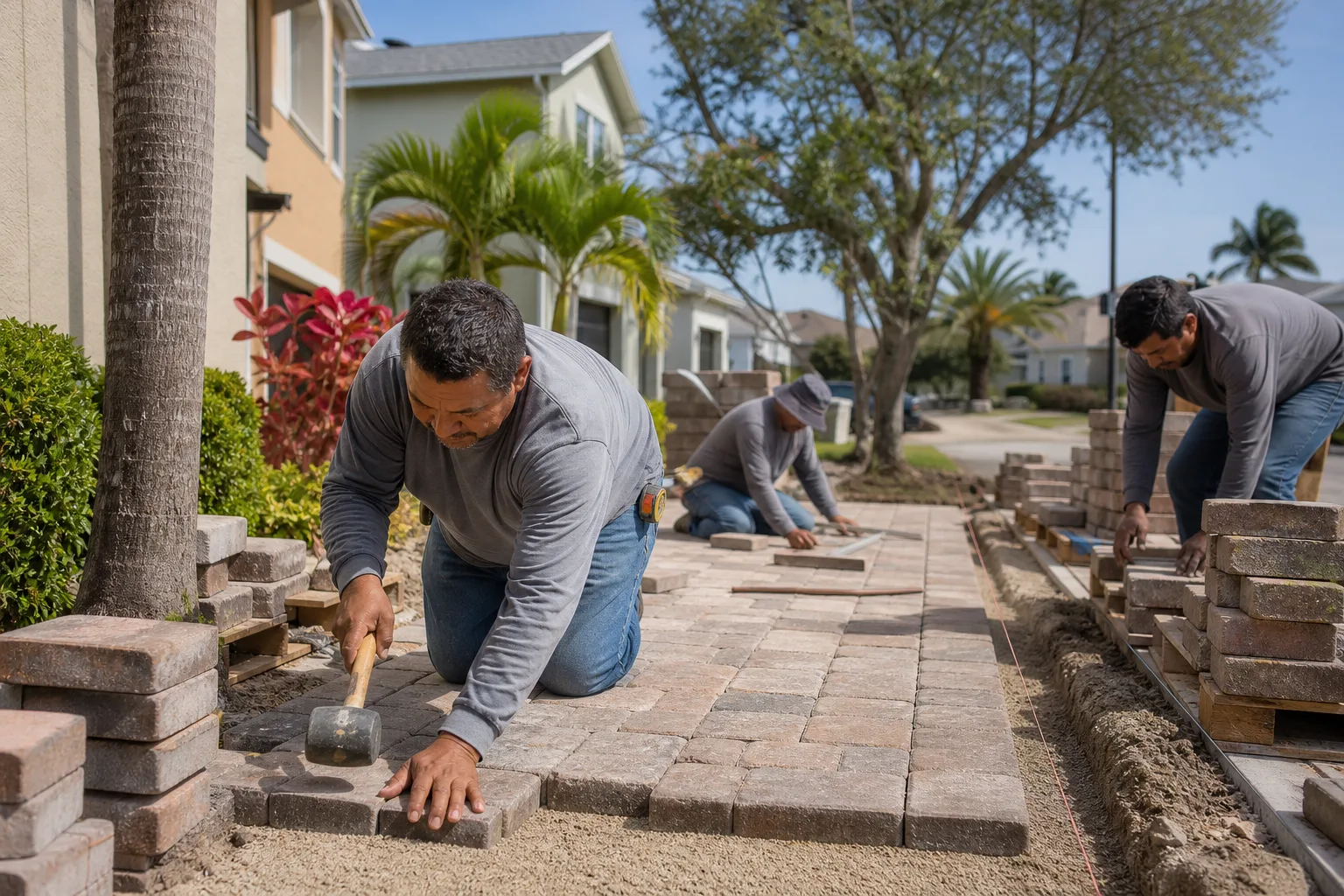
- Localized re-set. For a small cluster of rocking pavers, remove them, re-level the bedding, re-set, and re-sand. Fast and inexpensive.
- Edge restraint repair. Reset or replace the edge, re-pin it, and address the drainage that caused the separation.
- Localized base repair. For a depression or a pumping area, lift the pavers in that section, re-excavate, re-compact the base in lifts, and re-lay.
- Full base rebuild. For stage 4. The whole field comes up, the base is rebuilt with proper depth and separation fabric, and the pavers go back down. This is where the quality of the base determines whether the driveway fails again in five years.
We build the base on every driveway we install, and we back it with our 730-Day Done Right Promise so a base failure comes back to us, not to your wallet. When you’re considering a repair versus a replacement, or a paver driveway versus the alternatives, it helps to look at the whole property. Our team handles everything from the foundation to the finish line in Fort Worth, including the exterior work that ties into the driveway drainage.
Common Mistakes to Avoid
- Waiting for the next season. Fort Worth’s wet-dry swing means the condition gets materially worse in two seasons. A paver rocking in March is often a depression by October. Don’t schedule a repair for “sometime next year.”
- Re-sealing over a base failure. A sealer hides the efflorescence and locks in the moisture. It makes the driveway look fixed while the base keeps moving. Seal a driveway in good structural condition, not one that’s moving.
- Blowing the sand out of the joints with a leaf blower. The sand is structural. Blast it out and the pavers spread and rock. Use a broom or a light rinse instead.
- Discharging downspouts onto the driveway. This is the number-one cause of localized base failure we see in Fort Worth. Extend the downspout across the driveway, or route it to a garden bed.
- Quoting over the phone. Paver base failure can’t be diagnosed from a photo alone. Any contractor who quotes a stage 3 repair without walking the driveway is guessing at your scope and will pad it.
- Hiring a contractor who won’t show the base plan in writing. Ask what depth of crushed stone goes in and whether a separation fabric goes over the clay. If they can’t answer, they’re not a driveway contractor, they’re a paver installer.
- Ignoring the efflorescence pattern. A persistent bloom in one area, recurring every wet season, is a drainage failure in that exact spot. Treating it as a cosmetic stain lets the moisture keep eating the base.
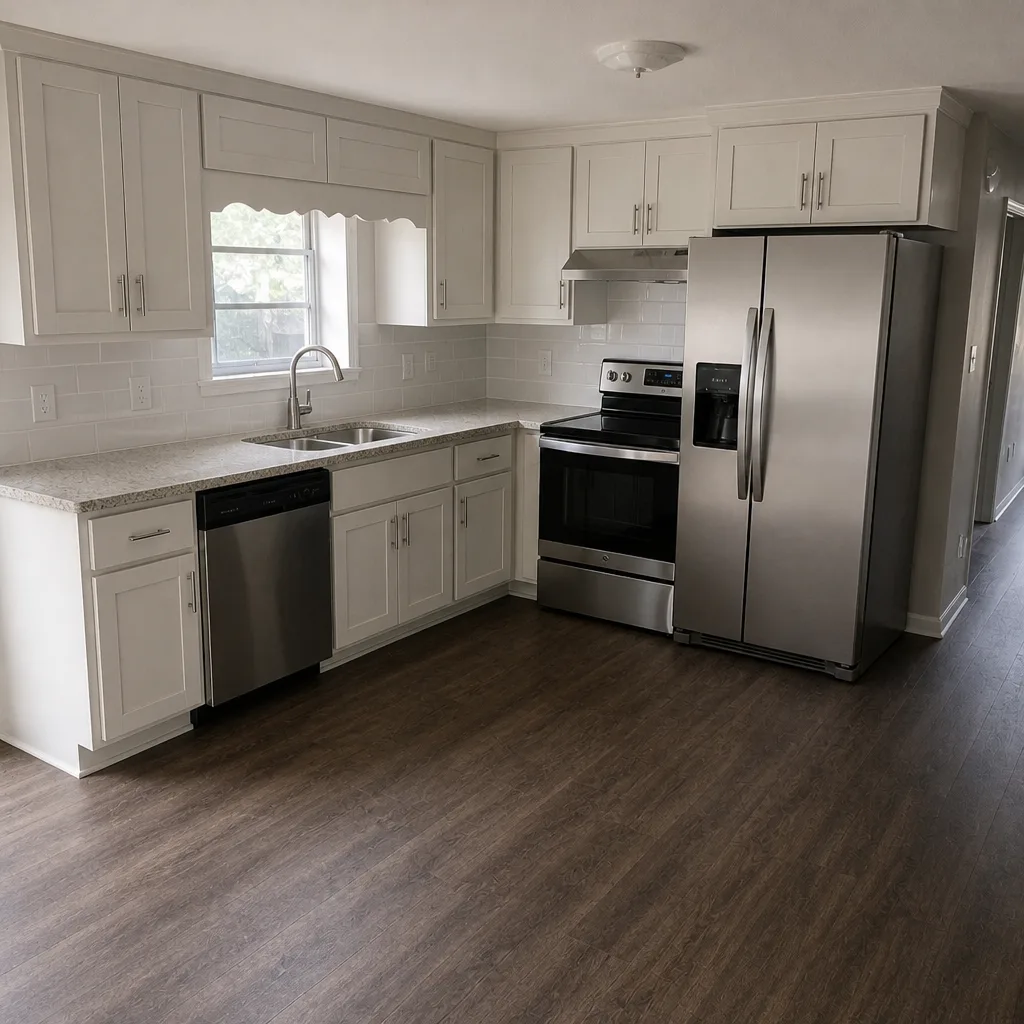
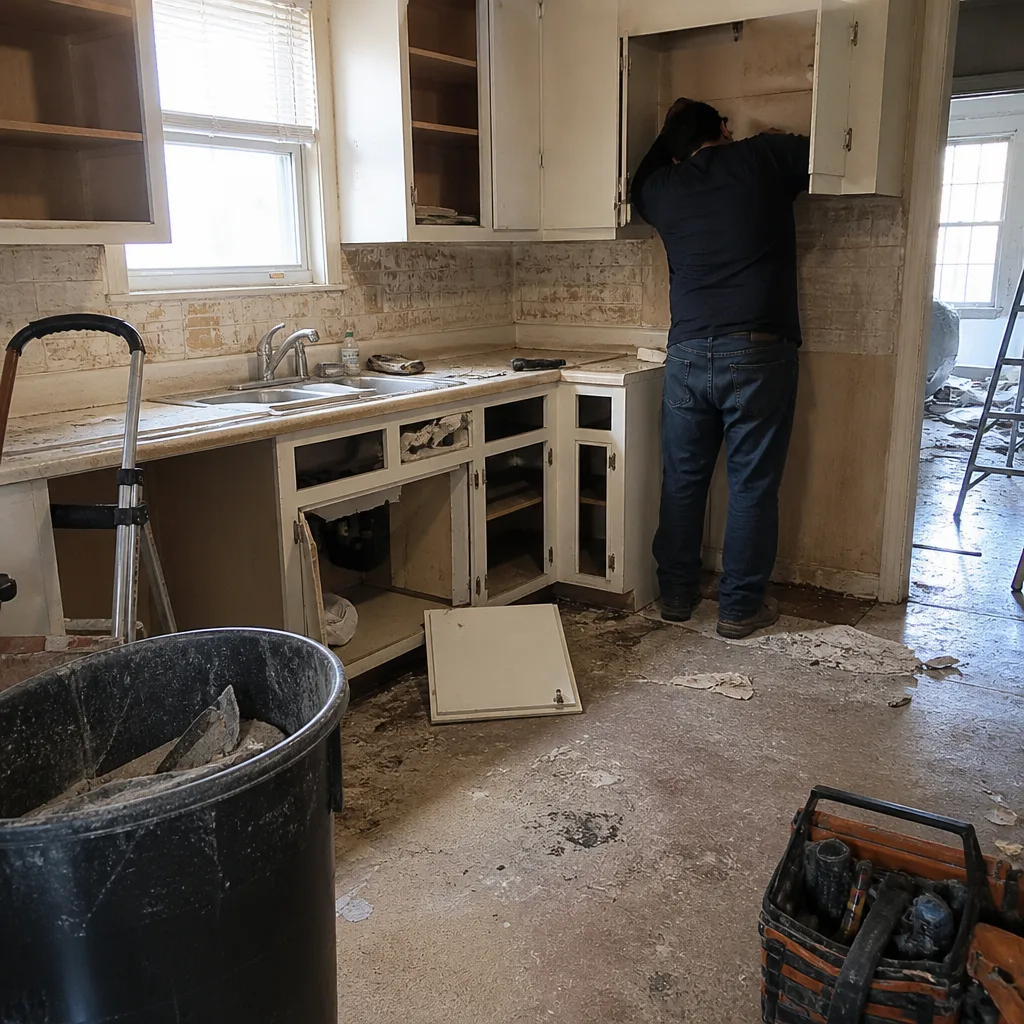
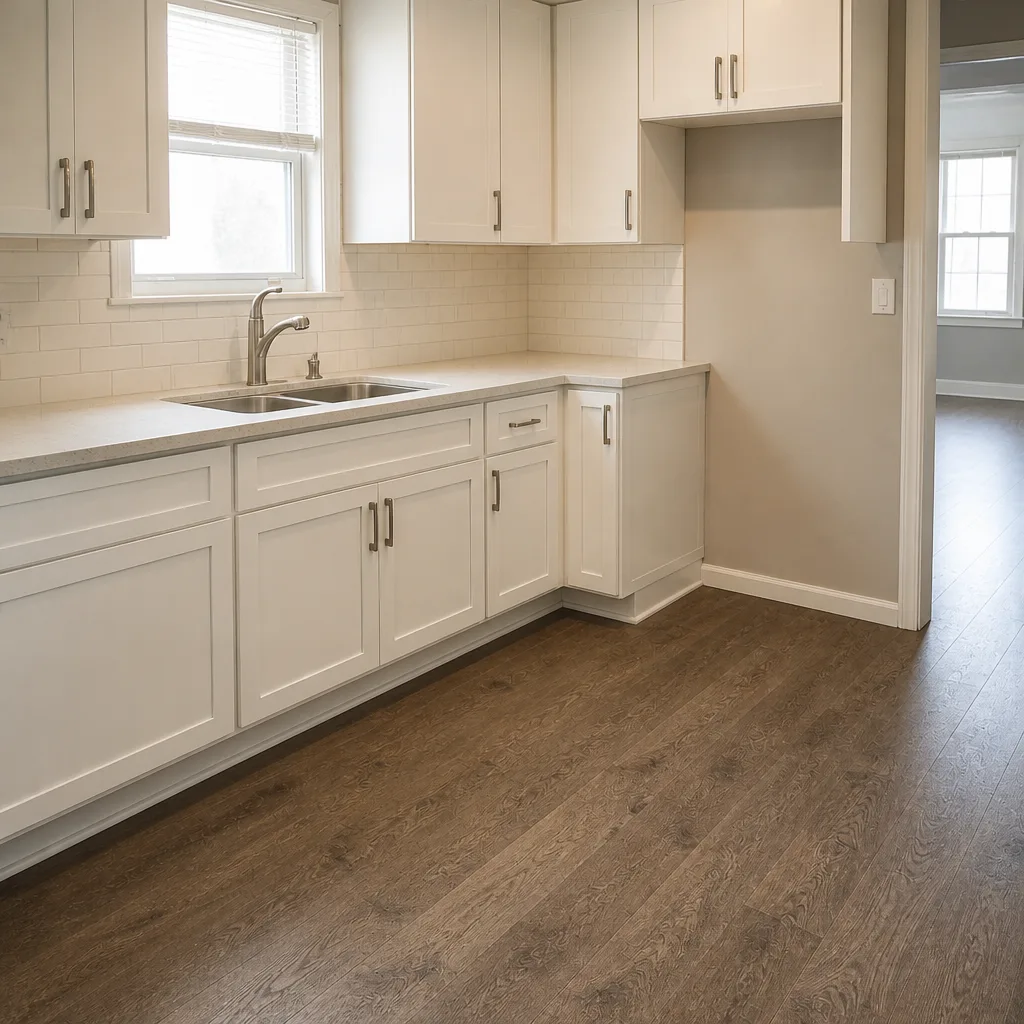
See the difference
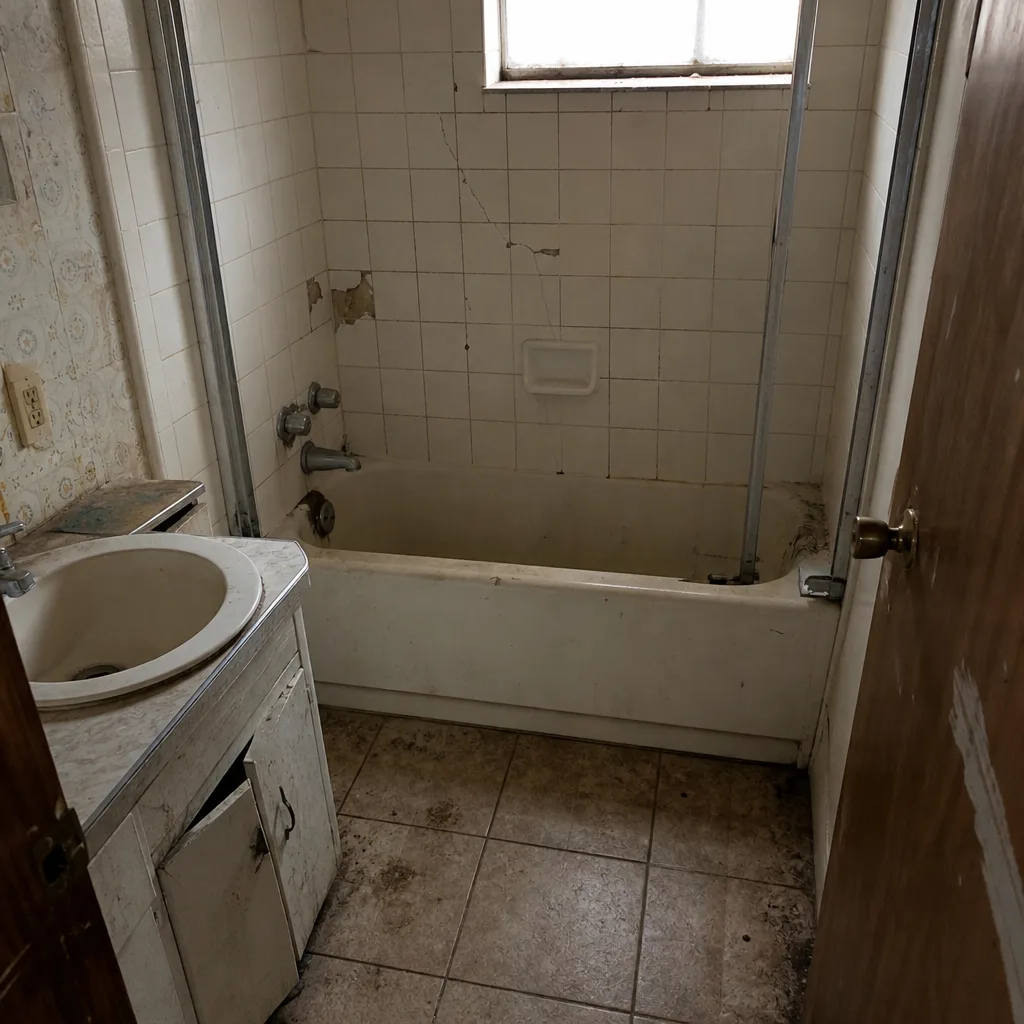 Before
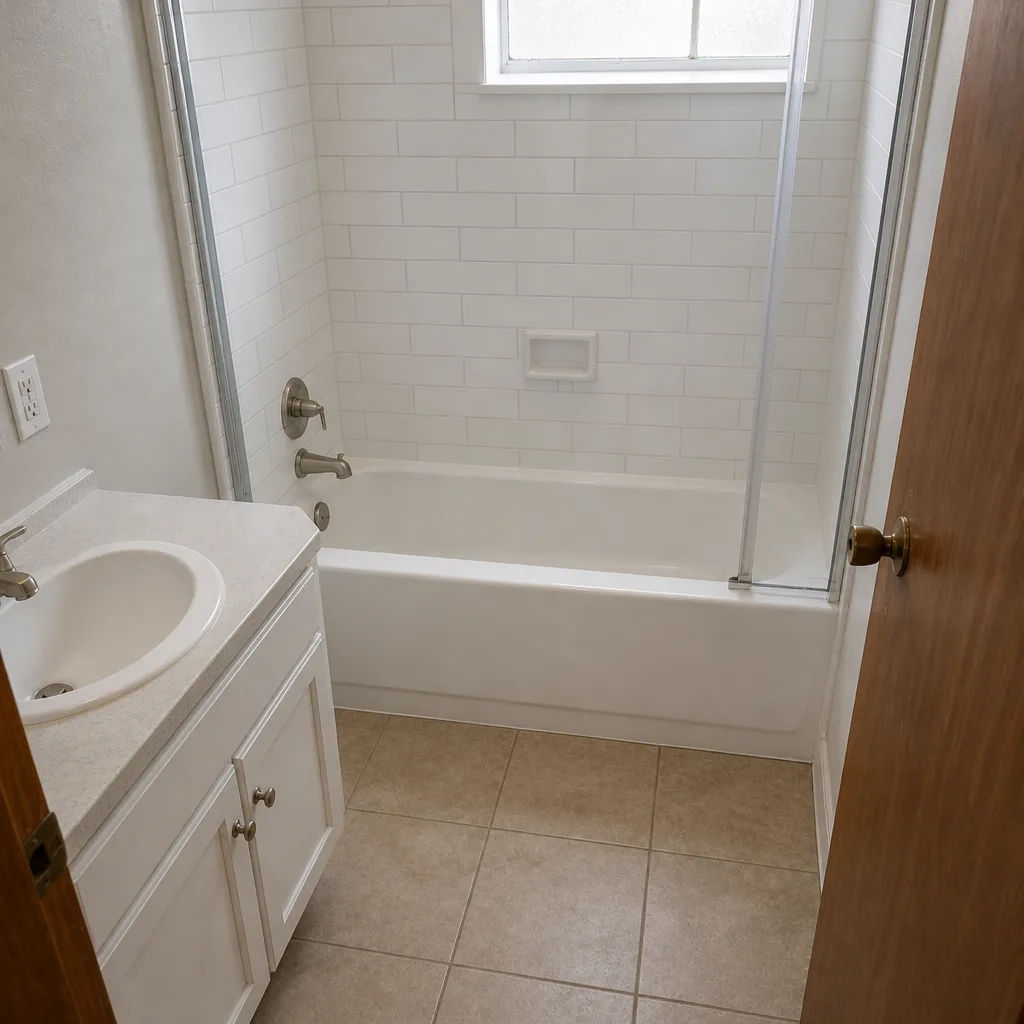 After
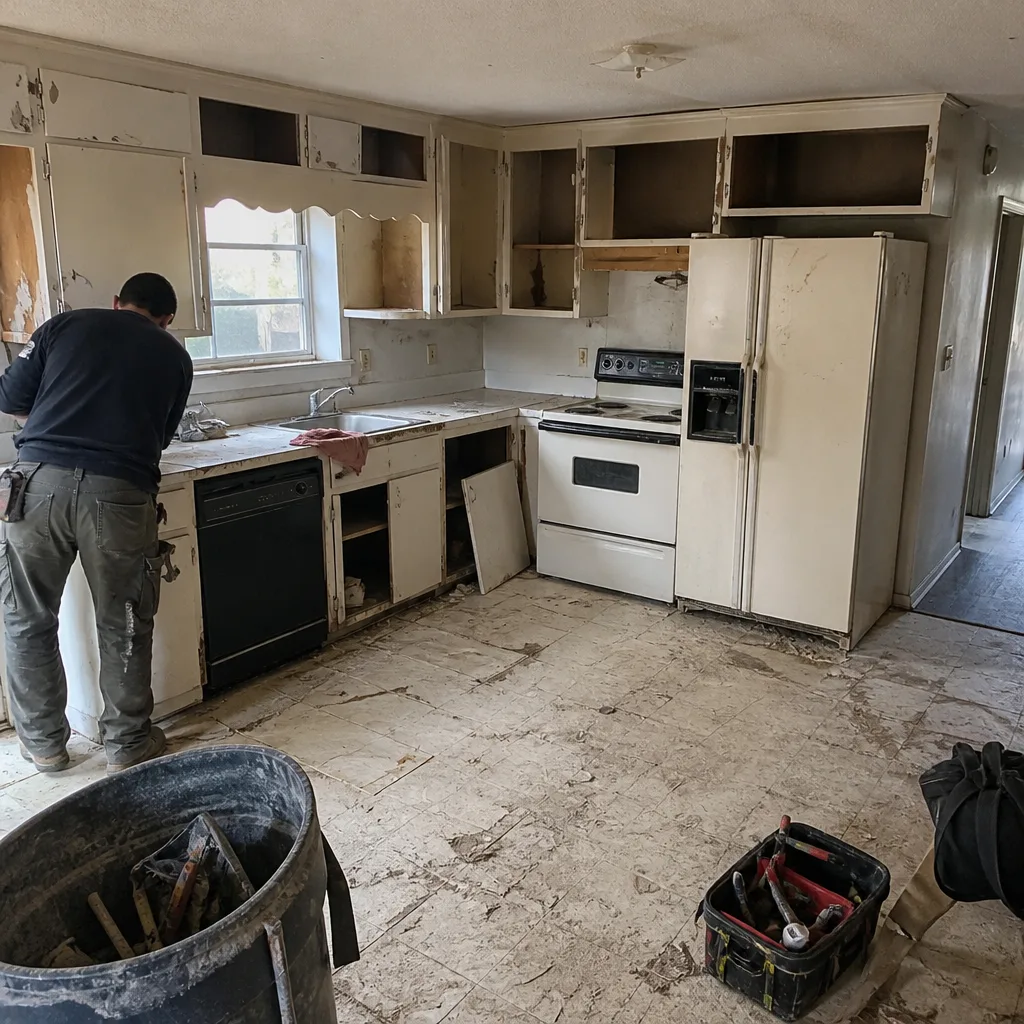 Before
 After
 Before
 After
When to Call a Professional
Call a professional when you find two or more of the five failure patterns in the same area of the driveway, when the straight edge shows a dip of 3/8 inch or more, when water disappears fast into a joint, or when the edge restraint has separated. Call immediately if you see the seasonal reversal pattern we described, because that’s active clay movement and it needs a base diagnosis, not a surface fix. Also call if a single paver won’t stay seated after you’ve reset it once: that’s a base void, and it will spread. Groundwork Construction Co. of Fort Worth offers free estimates in Fort Worth. Call (855) 912-5373 to schedule a walk-through and a written line-item quote, and ask us to show you the base plan before any work begins.
Frequently Asked Questions
Most Fort Worth paver repairs fall into four tiers: $200 – $600 for re-sanding and re-leveling a small area, $900 – $2,500 for a localized base repair, $3,000 – $7,500 for a partial rebuild, and $9,000 – $18,000+ for a full rebuild after base failure. The number depends on the stage you’re in, not the square footage alone. Call (855) 912-5373 for a free estimate and a written line-item quote so you can see exactly what’s included.
Because the expansive clay underneath them is shrinking. Fort Worth’s clay swells when wet and shrinks when dry, and a dry summer drops the pavers that sit on the shrinking clay. The rocking gets worse as the season goes on, then partially recovers after fall rain. That seasonal reversal pattern is the signature of active clay movement, and it’s a base diagnosis, not a surface fix. Call us at (855) 912-5373 to have it inspected before the next wet cycle.
Not a plumbing leak, but a moisture problem: efflorescence is salt drawn up from the base by water that’s pooling or moving under the pavers. A single faint bloom after a wet spring is normal in Fort Worth. A bloom that keeps returning in the same spot means the base isn’t draining, and it’s usually an early signal of a bigger failure. Get it looked at with a free estimate at (855) 912-5373.
You can, but they’ll rock again within a season if the base void is still there. A single loose paver is worth re-setting once; if it comes loose again, the problem is underneath it and re-setting won’t hold. A professional should lift the area and inspect the bedding layer. Call (855) 912-5373 to schedule a free inspection and get a diagnosis with a written scope and price.
A properly built paver driveway with the right base depth, a separation layer over the clay, and correct drainage lasts decades. The failure we see in Fort Worth usually isn’t the pavers: it’s a base that was too shallow or a drainage problem that let water into the subgrade. The pavers are the long-life component. The base is what determines whether the driveway holds up. Ask us about the base plan on a free estimate by calling (855) 912-5373.
Interior surface repairs and re-sanding typically don’t need a permit. A full replacement that changes the driveway’s footprint, ties into the street, or affects drainage or grading often does, and Fort Worth’s development code governs right-of-way and drainage impacts. We pull the required permits and pass the inspections as part of the scope, so you’re not chasing the city yourself. Get a straight answer from the source: call (855) 912-5373 for a free estimate.
The Bottom Line
Your paver driveway tells you what’s failing long before the repair gets expensive. Rocking pavers, depressions, sand loss, edge separation, and persistent efflorescence are the five patterns. A straight edge and a gallon of water tell you whether they’re cosmetic or structural. And in Fort Worth, the expansive clay is what turns a small warning into a full base failure, faster than most homeowners expect because of the wet-dry cycle. Inspect quarterly, photograph everything, and act at stage 1 or 2. That’s the whole guide. Early action is disproportionately cheaper.
If your driveway is showing more than one of these signs, we’ll walk it with you, show you what the base is doing, and put the repair in writing at a fixed price. Groundwork Construction Co. of Fort Worth handles driveways, fences, and additions as part of the same full-scope team, so a driveway repair plus new home additions or an ADU in Fort Worth can be planned and permitted together. Call (855) 912-5373 for a free estimate, upfront pricing with no surprises, and a 730-Day Done Right Promise on the workmanship. Live people answer the phone around the clock, and every project is backed in writing.
Written by the team at Groundwork Construction Co. of Fort Worth.