Last updated November 18, 2026






Free written scope consultation - allowances, timeline, and change-order rules on paper before a single trade is scheduled
Fence Installation Maintenance Schedule: What to Do and When
The average wood fence in Fort Worth lasts 8 to 12 years. The ones that reach 20 years aren’t built from better lumber or installed by magicians – they’re maintained on a sequence, and the homeowners who own them spend about $40 a year on the right products at the right time. That’s the whole secret. What follows is the annual schedule that interrupts the decay cycle before it reaches posts, rails, and hardware, built around Fort Worth’s specific UV load, clay soils, and fast-growing vegetation. You’ll get a month-by-month calendar, the stain-versus-sealer decision, a no-dig post inspection you can do yourself in ten minutes, and the vegetation tasks most homeowners never get around to.
Styles & brands we work with
- Kitchen remodeling
- Bathroom remodeling
- Home additions & ADU
- Roofing
- Windows & doors
- Driveway & pavers
- Fence
Quick Answer
A wood fence in Fort Worth needs four scheduled touchpoints per year: a spring inspection and cleaning (March-April), a summer sealant check (June-July), fall vegetation clearing (October), and a winter hardware check (December-January). Deep cleaning plus stain or sealant reapplication happens every 2 to 4 years depending on sun exposure, and post bases should be probed annually for rot at grade. That’s the entire schedule – two or three consistent tasks, done on time, is what separates a 10-year fence from a 20-year fence in Fort Worth.
Table of Contents
- The Fort Worth Seasonal Maintenance Calendar
- How to Clean a Wood Fence Before Staining or Sealing
- Stain vs. Sealer vs. Paint: What Actually Works in Fort Worth’s UV Load
- Post Base Inspection: The Probe Test That Tells You the Truth
- Vegetation Management: Bermudagrass, Vines, and Tree Roots
- Hardware, Gates, and Fasteners Through the Seasons
- First-Year Schedule for a Newly Installed Fence
- Repair or Replace? Reading the Signs
- Common Mistakes to Avoid
- When to Call a Professional
The Fort Worth Seasonal Maintenance Calendar
Fort Worth’s climate does two things to wood fences that most maintenance guides ignore: it bakes them from April through September with UV that fades stain fast, and it swings them through soil movement from expansive clay that opens and closes gaps at every post. A fence that’s fine in Seattle is a different animal here. North Texas summers also deliver heat and humidity together, which is the exact condition that pushes moisture into end grain while the sun bakes the surface dry – a recipe for checking and splitting if the wood isn’t protected.
Here’s the sequence we’ve watched hold up across Fort Worth neighborhoods from Ridglea to Wedgwood:
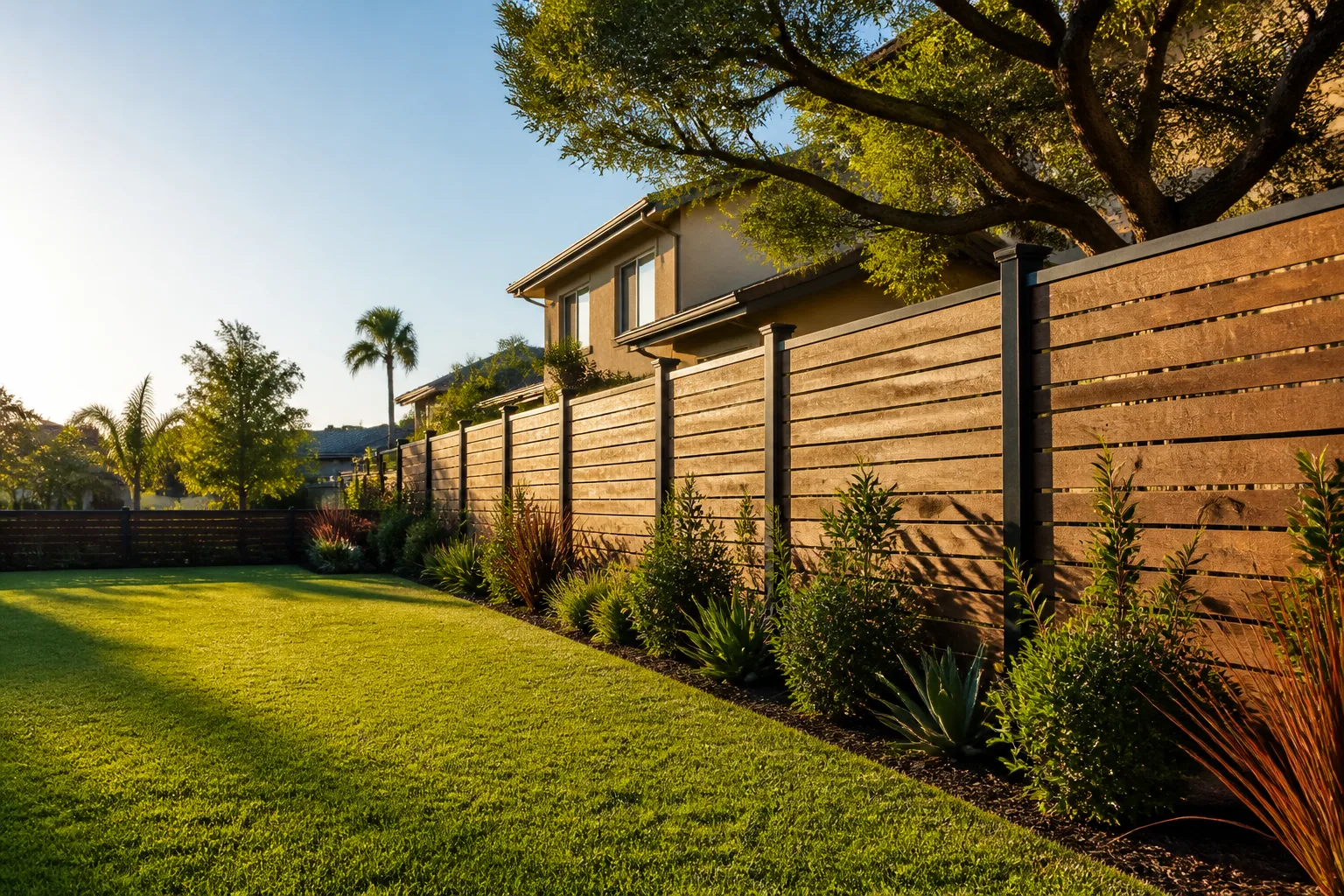
- Spring (March-April): Full inspection, cleaning, and preparation for the season. Walk the fence line, check for loose boards, popped nails, and any post that moves when you lean on it. Clean off winter grime and any mildew that formed during the wet spring.
- Late Spring (April-May): Stain or seal if the surface is due (every 2 to 4 years). Do this before the summer UV peaks. Staining in the heat of July or August causes the product to skin over before it penetrates.
- Summer (June-August): Sealant check, not application. Look for areas where water beads differently or stops beading entirely. Spot-treat any bare wood from board replacement or storm damage.
- Fall (October-November): Vegetation clearing. Cut back vines, trim tree limbs that overhang or rub, remove leaf debris that traps moisture along the bottom rail.
- Winter (December-February): Hardware check. Tighten gate hinges, replace rusted screws, check latch alignment. This is also when you catch any post that’s softened from fall rains.
The winter check matters more in Fort Worth than people expect. Freeze-thaw cycles on clay soil heave posts slightly, and a post that heaves out of level is one that’s working loose at the concrete collar. Catching it in January means a tightening or re-set, not a full post replacement in June.
How to Clean a Wood Fence Before Staining or Sealing
Here’s the part most guides skip: what you do in the hour before staining determines whether the product penetrates the wood or sits on top of it like paint. Stain and sealer need bare, open wood grain to bond. A fence that’s dusty, mildewed, or glazed over from a pressure washer will reject the product, and you’ll be re-doing it two years early.
Pressure washing is the right tool, but technique and timing are where people go wrong:
- Use the right pressure and nozzle. For a wood fence, stay in the 1,200 to 1,500 PSI range with a 25-degree or 40-degree tip held at least 12 inches off the surface. Anything higher gouges the grain and leaves it fuzzy.
- Wash from the top down, in the direction of the grain. Work in overlapping passes along the wood, never perpendicular to it. That keeps water from being driven into the joints and end grain where it causes rot.
- Use a wood-safe cleaner, not just water. An oxygen-bleach-based deck and fence cleaner lifts mildew and ground-in dirt without stripping the wood. Apply with a pump sprayer, let it dwell for the product’s stated time (usually 10 to 15 minutes), then rinse.
- Let it dry completely – 48 to 72 hours in Fort Worth’s summer humidity. This is the step people skip. Staining damp wood traps moisture under the coating and guarantees peeling within a season.
- Do a splash test. Flick a few drops of water onto the surface. If they bead up, the wood still has a coating on it and won’t accept new stain. If they soak in within a minute, the wood is ready.
If your fence is older and has multiple layers of failing stain, a light sanding of the top rail and high-traffic boards before cleaning helps the new product bond. For a fence you’re about to install, this prep matters from day one – our guide on fence installation in Fort Worth covers how we set up new installs for easy long-term maintenance, and it’s worth reading before you put a single post in the ground.
Stain vs. Sealer vs. Paint: What Actually Works in Fort Worth’s UV Load
The Fort Worth sun is unforgiving. UV indexes that climb past 10 several days a week in June and July break down the lignin in wood cells and cause the gray, silvery weathered look most homeowners assume is inevitable. It’s not – it’s accelerated by the wrong coating choice and infrequent reapplication. Here’s what actually works in our climate:
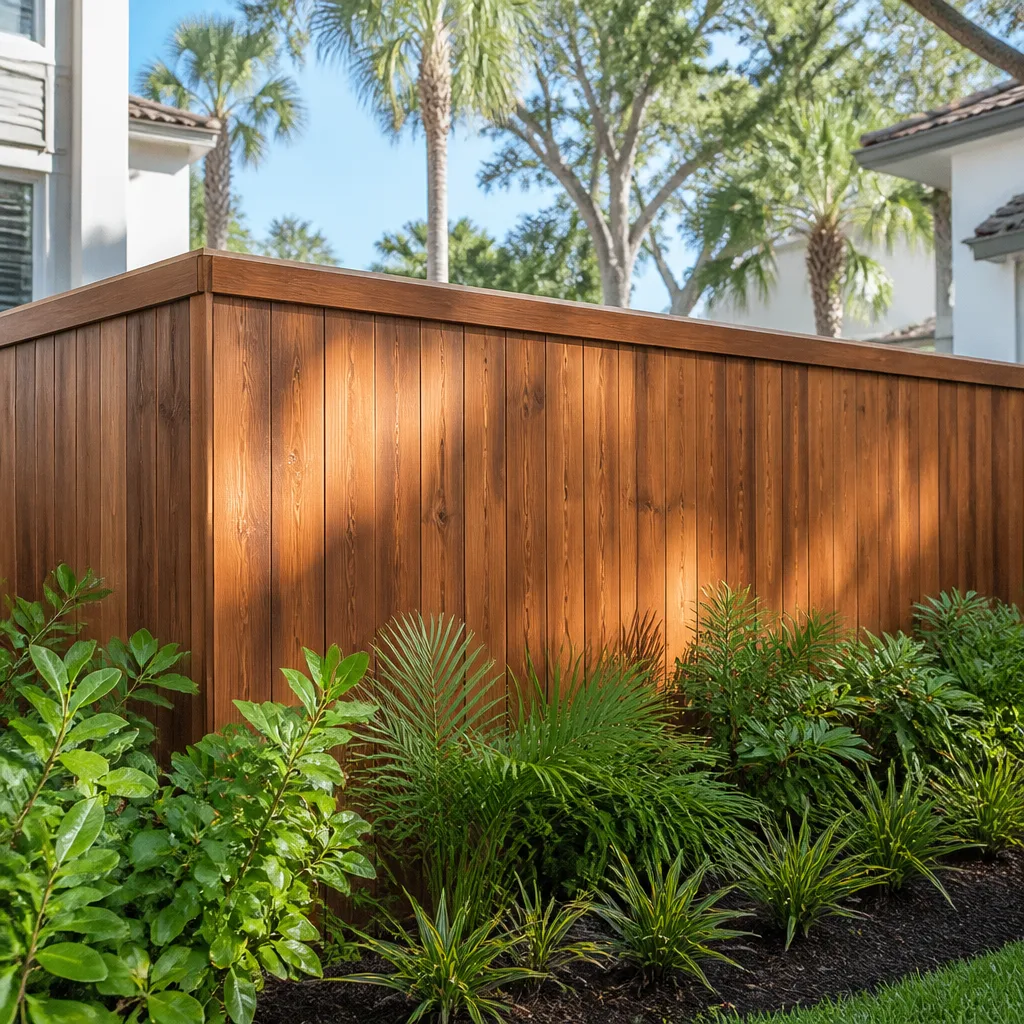
- Semi-transparent penetrating oil or oil-based stain: The best choice for Fort Worth. The pigment blocks UV while the oil soaks into the grain instead of sitting on top. Expect 2 to 3 years between reapplications on sun-exposed runs, 3 to 4 years on shaded runs.
- Clear sealer (no pigment): Protects against moisture but delivers almost no UV protection. It lets the sun gray the wood through the coating. Useful for protecting the back side of a fence and the shaded north-facing runs, but don’t rely on clear sealer for a full-sun west-facing fence.
- Solid-body stain: Delivers the strongest UV block and longest lifespan (5 to 7 years), but cracks and peels as it ages and is much harder to touch up. Better for a fence with a lot of sun exposure that you can afford to live with longer between full re-dos.
- Paint: We don’t recommend paint for a Fort Worth wood fence. It traps moisture, peels from the bottom rail up as moisture wicks up from the soil, and once it starts peeling you’re committed to scraping and repainting or stripping back to wood.
For contract-grade cedar or pine, a quality oil-based semi-transparent stain is the dependable answer. If you’re selecting fence materials and want to talk brand options, we lean on partners like Master Halco and Barrette for components that hold up to our UV and clay, and a quick call to our team can talk you through material selection before install. If your existing fence is at the point where the boards themselves are failing, that’s a different conversation – see our guide on Groundwork Construction Co. of Fort Worth home for the full scope of what we handle across the property.
Post Base Inspection: The Probe Test That Tells You the Truth
Rotten posts are the failure that gets expensive. A fence with a failed post can drop an entire run, and in Fort Worth, the post base is where rot starts because it lives in the sweet spot: soil contact, moisture wicking, and clay that holds water against the wood for days after a rain. You need an honest read on post integrity without digging out the concrete. Here’s the probe test.
- Clear the base. Pull soil and mulch back 3 to 4 inches from the base of each post so you can see the wood at grade.
- Look for the signs. Dark staining, a spongy appearance, visible fungal growth, or a post that looks wetter than the surrounding soil all point to rot.
- Probe it. Take a thin, stiff tool – an awl, a screwdriver, or a stiff wire – and push it firmly into the wood about 1 inch above grade on the side that gets the most moisture (typically the north or shaded side).
- Read the result. If the tool meets solid resistance, the wood is healthy. If it sinks in more than half an inch with light pressure, you’ve got soft wood and a post that’s structurally compromised.
- Lean test. Push the post firmly with your shoulder at about chest height. Any movement at the base that the concrete doesn’t resist means the collar has failed or the post has softened.
A failed probe test is not a wait-and-see situation. In Fort Worth’s clay, a rotting post loses its grip fast once water gets in, and the fix is a post replacement – a full scope job that a good installer handles in a single visit. We’ve seen it dozens of times where a homeowner ignored one soft post in March and lost three adjacent panels by July. If you’re not sure what you’re looking at, that’s when a professional eyes-on inspection pays for itself.
Vegetation Management: Bermudagrass, Vines, and Tree Roots
Fort Worth’s growing season is aggressive. Bermudagrass spreads by stolons that run underground and send up shoots along the fence line, and once it’s established it holds constant moisture against the wood at grade – which is exactly where rot starts. Vines climb and trap moisture between their tendrils and the boards, and tree roots from nearby live oaks and pecan trees crack concrete collars and heave posts. Left alone for a season, vegetation does more damage than the sun does.
Here’s the maintenance approach that actually works:
- Trim the grass strip. Keep bermudagrass and weeds cut back to 2 to 3 inches from the fence base with a string trimmer or edger every 3 to 4 weeks during the growing season. A clean 3-inch gap lets air move and lets the wood dry after rain.
- Install a barrier. A heavy edging or a 6-inch strip of gravel along the base stops stolons from running up against the wood and gives water somewhere to drain. It also eliminates the trimmer contact that nicks the wood and opens grain for moisture.
- Cut vines at the base, don’t pull them. Pulling established ivy or jasmine off the fence takes chunks of the wood surface with it. Cut the vine at ground level and let it die back, then remove the dead material carefully.
- Manage tree limbs. Trim any limb within 12 inches of the fence line. Rubbing branches wear the finish away and hold moisture at the contact point. Remove limbs that shade the fence entirely – sun keeps a wood fence drier and healthier in our climate, even though it fades finish faster.
- Root control before it’s a problem. For a fence line running under established trees, have roots cut by a professional arborist, never someone with a root saw and no understanding of the tree. Hitting feeder roots kills trees.
If you’re adding a fence and have an existing paver patio or walkway running along the same line, plan the planting and drainage at the same time – our Driveway & Pavers in Fort Worth guide touches on how retaining edging and gravel transitions share space with fence lines.
Hardware, Gates, and Fasteners Through the Seasons
Hardware is the part of fence maintenance most homeowners forget until something breaks. In Fort Worth, the failure points are predictable: gate hinges take all the weight and swing freely in our summer heat, galvanized screws that are fine elsewhere corrode faster in the humidity cycles, and a sagging gate is usually a hinge issue, not a frame issue.
A quick hardware check once in winter and again after the first big summer storm catches almost everything:
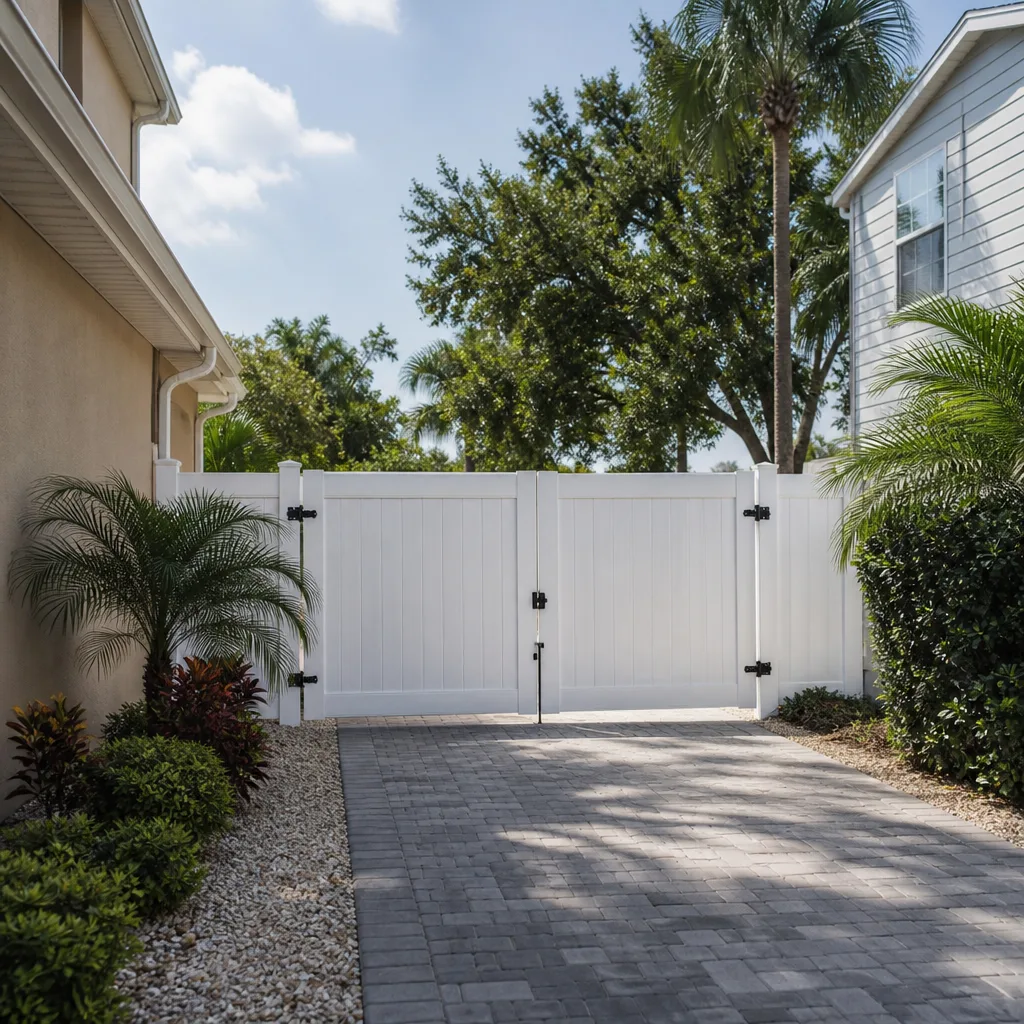
- Tighten all gate hinges and inspect the screws. A gate that’s sagging is usually one hinge screw that’s backed out or rusted. Replace any screw that’s discolored or loose with a coated exterior screw rated for treated lumber.
- Check latch alignment. A latch that takes a second shove to close is a sign the gate has shifted – usually the post or the top rail, not the latch itself.
- Look for popped nails and loose board screws. A quick walk with a hammer and a driver catches 90% of it. Popped hardware is a moisture signal – the board is swelling and shrinking with the seasons.
- Inspect the gate stringers and diagonal bracing. If the diagonal brace is loose or the corner joints have opened up, that’s a structural repair, not a hardware adjustment.
For metal fencing and gates, look at Ameristar and similar brands – their powder-coat and hardware are built to take a beating. For a wood gate that’s failed on the frame, a full re-hang with new hinges and a reinforced frame is a same-visit fix for a pro. That’s the kind of job we handle without drama.
First-Year Schedule for a Newly Installed Fence
The first year of a new wood fence is when you decide whether you’ll get 10 years or 20 out of it. Fresh wood is still curing and shrinking – and in Fort Worth, that first summer of heat does the most shrink. Here’s the schedule for a fence that’s under a year old:
- Month 1: Let the wood dry and acclimate. No stain, no sealer. Fresh lumber has moisture content high enough that a coating applied too soon traps the moisture inside.
- Month 2 to 3: Inspect for board shrinkage, popped nails, and any gaps that open at the joints. Minor movement is normal. Tighten any loose hardware. Note any board that’s cupped or warped significantly.
- Month 3 to 6 (before the first Fort Worth summer peak): Clean and apply the first coat of penetrating oil-based stain. Wood accepts the first coat best – it penetrates deep and sets a foundation for future reapplications.
- Month 6 to 12: Watch for water issues at the base. This is where you’ll see if the drainage plan works. Any pooling along the fence line needs to be addressed by regrading.
- Year 1 end: First probe test on the bases. If any post was set into clay that holds water against it, this is the year you catch it.
Our 730-Day Done Right Promise backs new installs through this whole window. If a post softens in the first two years or a board fails prematurely, we make it right – and that’s a written commitment, not a verbal one. For a fence ranging beyond the property line into an ADU or outbuilding zone, our guide on Home Additions & ADU in Fort Worth covers how to coordinate fence lines with larger site work.
Repair or Replace? Reading the Signs
The maintenance schedule is about maximization – but every fence eventually reaches the point where maintenance stops paying. Here’s how to read it in Fort Worth:
- One or two soft posts, sound boards and rails: Repair. A post replacement is a manageable job and buys another several years.
- More than 20% of posts failed the probe test: Replace. Once a critical mass of posts is compromised, the fence is structurally interdependent, and fixing them piecemeal costs more than a full refresh.
- Boards sound but finish failing every 18 months: Consider a full cleaning and re-stain with a higher-UV pigment. If you’ve been on a clear sealer, upgrading to a semi-transparent stain extends reapplication intervals.
- Visible rot in the bottom 12 inches of multiple boards: Replace. That’s not surface damage – the wood has deteriorated to grade and no coating will save it.
- Fence is over 15 years old in Fort Worth sun without scheduled maintenance: Replace. Even a well-built fence rarely makes it past 15 years with no schedule, and at that point new construction typically costs less than scheduled piecemeal repairs over another five years.
If you’re on the fence between repair and replace, a professional evaluation is worth the call. We offer free estimates in Fort Worth and can give you an upfront number for either path – the number you see is the number you pay.
Common Mistakes to Avoid
- Staining in July or August. In Fort Worth’s heat, oil-based stain skins over before it penetrates, and you end up with a peeling coating by the next spring. Stain in late spring or early fall when the wood isn’t baked dry.
- Pressure washing too hard. Anything above 1,500 PSI gouges the grain and drives water into joints. A fence cleaned with a turbo nozzle is one that will fail earlier than a fence that wasn’t cleaned at all.
- Sealing a wet fence. In Fort Worth’s humidity, a washed fence needs 48 to 72 hours to dry – longer in fall. Staining too soon traps moisture and guarantees peeling.
- Skipping the probe test. Homeowners look at the visible fence line and assume if the boards look fine the posts are fine. In our clay, the post rots from the inside at grade while the surface looks healthy.
- Letting bermudagrass grow against the base. A fence with a 6-inch grass strip along its base will fail 3 to 5 years earlier than the same fence kept clean. It’s the single most neglected task on this list.
- Clearing tree roots with a saw. Cutting the wrong root kills the tree and can destabilize the fence line. Roots under a fence should be cut by an arborist, not a handyman with a saw.
- Ignoring popped hardware after a storm. Each summer storm that passes without a hardware check leaves popped nails and loose screws that open the wood to moisture. Fifteen minutes after every storm prevents a full repair later.
When to Call a Professional
Some of this schedule is genuinely a homeowner job – walking the fence line, tightening a screw, cutting back a vine. A few things aren’t, and it pays to know the difference. Call a pro when: a post fails the probe test and needs replacement, a gate is sagging and the frame is compromised, more than a couple of boards have rotted through at the base, a tree root is heaving a post, or your fence is over 12 years old and you’re weighing repair against a full replacement. Those calls are one-visit fixes for a crew and multi-day ordeals for a homeowner working without the right tools or ground conditions. Groundwork Construction Co. of Fort Worth offers free estimates in Fort Worth – call (855) 912-5373 to schedule yours, and we’ll give you an honest read on what the fence actually needs.
Frequently Asked Questions
Every 2 to 3 years on full-sun runs and 3 to 4 years on shaded runs. Fort Worth’s UV load – the index regularly tops 10 in June and July – breaks down stain pigment faster than in most of the country. Semi-transparent oil-based stain delivers the best protection for the interval; clear sealer needs reapplication every 1 to 2 years because it has almost no UV block. Call (855) 912-5373 for a free estimate if you’re not sure whether your fence needs a full re-stain or just a spot touch-up.
Yes, but only at low pressure – 1,200 to 1,500 PSI with a 25 or 40-degree tip, held at least 12 inches from the surface. Higher pressure gouges the grain and drives water into joints where it feeds rot. Pressure washing is the right prep step before staining, but the wood must dry 48 to 72 hours before the stain goes on.
Probe it with a stiff wire or awl about 1 inch above grade on the shaded side. If the tool meets solid resistance, the post is healthy. If it sinks in more than half an inch with light pressure, the post is soft and needs replacement. A lean test – pushing the post at chest height – confirms it. In Fort Worth’s clay, post rot moves fast once it starts, so a failed probe test is a schedule-a-repair job, not a wait-and-see.
Late spring (April-May) for cleaning and staining, before the summer UV peaks. Fall (October-November) for vegetation clearing. Winter (December-February) for hardware checks. Staining in the middle of summer is the most common scheduling mistake – the product skins over before it penetrates. Call (855) 912-5373 if you want a professional eyes-on to confirm timing before you buy a bucket of stain.
Yes. Bermudagrass runs stolons along the ground and holds constant moisture against the wood at grade, which is exactly the condition that causes rot. Keep a 3-inch clear strip along the fence base with regular trimming, and consider a gravel or edging barrier. This single task adds years to a Fort Worth fence.
Repair if one or two posts failed and the boards and rails are sound. Replace if more than 20% of posts failed – a fence is structurally interdependent, and piecemeal repair beyond that point typically costs more than a fresh install. Our technicians have up to 12 years of experience reading exactly this decision on Fort Worth properties, and a free estimate will give you a straight number for either path.
The Bottom Line
A Fort Worth wood fence lasts 8 to 12 years on average. The ones that hit 20 are not better-built – they’re maintained on the schedule: spring inspection and cleaning, summer sealant check, fall vegetation clearing, winter hardware check, with a stain reapplication every 2 to 4 years depending on sun exposure. Add a once-a-year probe test at the post base, keep a 3-inch clear strip along the ground, and you’ll interrupt the decay cycle before it reaches the structural components. That’s the entire system. The cost is a bucket of stain and a couple of Saturdays a year, and the payoff is a fence that outlasts the ones around it.
If your fence is past the point of maintenance doing the job – failed posts, multiple rotten boards, or a gate that won’t stay aligned – it’s time for an honest evaluation. Call Groundwork Construction Co. of Fort Worth at (855) 912-5373 for your free estimate. We’ll walk the fence line with you, tell you straight what needs repair versus replacement, and back the work with our 730-Day Done Right Promise. Upfront pricing, no surprises, and a real human answering the phone.
Written by the team at Groundwork Construction Co. of Fort Worth.
See the difference
 Before
 After
 Before
 After
 Before
 After