
Last updated November 18, 2026



Free written scope consultation - allowances, timeline, and change-order rules on paper before a single trade is scheduled
Fence Installation Warning Signs Every Homeowner Should Know
A fence that fails in year two isn’t bad luck. It’s the predictable result of a decision made during the estimate. The warning signs were there before the first post hit the ground. In Fort Worth, where clay soil swells with spring rain and bakes hard by August, the gap between a fence that stands for 20 years and one that leans by the second summer comes down to about six decisions made in a single afternoon. This guide walks through the specific, observable red flags that signal you’re about to hand money to someone who won’t be there when the panels start sagging – and how to spot each one before you sign anything.
Quick Answer
The biggest warning signs of a bad fence contractor are: they skip pulling a permit, they refuse to put post depth and concrete mix in writing, they quote cedar but deliver pine, and the crew that shows up on day one isn’t from the company you hired. Any one of these is a reason to walk away. Two or more together mean you’re looking at a fence that will fail before the warranty period ends – and a contractor with no intention of honoring that warranty. In Fort Worth, where expansive clay soil and summer heat punish shortcuts, these red flags show up as leaning posts and cracked rails within 24 to 36 months.
Styles & brands we work with
- Kitchen remodeling
- Bathroom remodeling
- Home additions & ADU
- Roofing
- Windows & doors
- Driveway & pavers
- Fence
Table of Contents
- Why a Contractor Who Skips the Permit Is Handing You the Liability
- The Difference Between a Written Scope of Work and a Verbal Handshake
- The Material Substitution Scam: Quoted Cedar, Delivered Pine
- What Improper Post Depth Looks Like on a Finished Fence
- The Unlicensed Subcontractor Handoff and Who Owns the Warranty
- Estimates That Don’t Add Up: Low Bids and Hidden Line Items
- Payment Red Flags: Big Deposits and Cash-Only Demands
- Fort Worth Climate and Soil: Why Local Knowledge Matters
Why a Contractor Who Skips the Permit Is Handing You the Liability
A fence contractor who offers to “skip the permit to save you time and money” isn’t doing you a favor. They’re transferring legal liability directly onto you as the property owner. In Fort Worth, fences over 6 feet in height – and any fence on a corner lot within the visibility triangle – require a permit through the city’s Development Services Department. A contractor who dodges that process is betting you won’t get caught. If you do, you’re the one paying the fine, and you’re the one who may be ordered to tear the fence down at your own expense.
Here’s what actually happens when a permit is skipped. Say a fence goes up in the Westover Hills area without one, and a neighbor files a complaint six months later. A city inspector arrives, finds no record on file, and the property owner gets the notice – not the contractor, who is by then working in another county. The fence may fail inspection for setback violations or for being too tall on a lot line. Removal and reconstruction come out of your pocket. The contractor didn’t save you money. They deferred a cost you didn’t know you were signing up for.
Legitimate fence installation in Fort Worth includes the permit as a line item. We pull them on every job that requires one. So should anyone you hire. Ask three questions before you sign anything:
- “Will you pull the permit, and will the permit be in your company’s name?” A yes means they’re following the process. A hesitation means they’re planning to skip it.
- “Who pays if the city rejects the fence for a setback violation?” If the answer isn’t “we do,” walk away.
- “Can you show me a copy of a recent permit for a similar job?” A real contractor has them on file and can share one without hesitation.
A permit isn’t paperwork for its own sake. It’s the only way to know the fence meets Fort Worth’s height, setback, and property-line rules before a single post goes in. A contractor who resists pulling one is either unlicensed, unfamiliar with local code, or planning to disappear before the inspection window opens.
The Difference Between a Written Scope of Work and a Verbal Handshake
A verbal agreement on a fence is a handshake with a time limit. The moment the contractor’s truck leaves your driveway, whatever you agreed to verbally becomes a memory against their word – and in a dispute, their word is the one attached to the invoice. A written scope of work is the only document that protects you when something goes wrong. When a contractor resists putting the details in writing, they’re usually not being careless. They’re leaving room to substitute materials, cut corners on post depth, or dispute what was included when you call about a sagging panel.
A real written scope of work for a Fort Worth fence job should specify, at minimum:
- Post depth: The exact depth of each post hole in inches, and whether it varies by soil conditions. In most of Fort Worth’s clay, that means digging below the active soil layer, not just setting posts at 18 inches and moving on.
- Concrete mix: The specific bag or mix ratio, how much concrete goes in each hole, and whether it’s premixed or site-mixed. “Concrete” with no number is a placeholder for “whatever’s in the truck.”
- Material grade and species: “Cedar” is not a specification. Western red cedar, incense cedar, and eastern red cedar perform differently and cost differently. If the quote says “cedar fence,” ask which one and get it on paper.
- Board thickness and width: A 1×6 dog-ear picket and a 5/8-inch thick picket look identical from the street and behave very differently in a Fort Worth hailstorm.
- Rail count and spacing: Two rails or three? Top rail at what height? These determine how much a panel flexes in wind.
- Fasteners and hardware: Galvanized nails or stainless? Coated deck screws or exterior-rated? Corrosion is the silent killer of Fort Worth fences.
- Gate hardware: Hinge type, latch type, and whether the gate is reinforced with a diagonal brace.
- Cleanup and haul-off: Who removes the old fence, and does the price include dump fees?
When a fence contractor hands you a single-page estimate with three numbers on it – total linear feet, material cost, labor cost – and can’t or won’t put the eight items above in writing, the missing details are the ones they plan to cut. They’ll set the posts shallower, use a lower-grade picket, and skip the stainless fasteners, because nothing in the signed paperwork says they can’t.
We put every scope detail in writing, line by line, before a job starts. If it’s not in the scope, it doesn’t get billed. That’s what upfront pricing, no surprises actually means. Any contractor who won’t match that standard is showing you exactly how they’ll behave when you call about a problem.
The Material Substitution Scam: Quoted Cedar, Delivered Pine
Material substitution is the most common bait-and-switch in the fence trade, and most homeowners never catch it until the wood starts graying unevenly or splitting within a year. The scam works like this: the contractor quotes Western red cedar at cedar pricing, then delivers a lower-grade wood – often treated pine or a cheaper cedar species – and pockets the difference. By the time the homeowner notices, the contractor is two neighborhoods over and three jobs past.
The good news is that you can spot most substitutions before work begins, using three senses: grain, weight, and smell.
How to Check Grain
Western red cedar has a fine, straight grain with a warm reddish-brown tone and occasional darker streaks. It’s soft to the touch and lightweight because the wood has low density. Treated pine has a coarser, wider grain with visible growth rings, and the treatment process often leaves a greenish or brownish tint. Hold a picket up to daylight: cedar grain looks tight and consistent, pine looks loose and broad.
How to Check Weight
Heft a single board. A cedar picket of standard 5/8-inch thickness feels noticeably lighter than a treated pine picket of the same dimensions because cedar density is lower. If the pickets feel heavy and dense, ask what species they are before the crew unloads them.
How to Check Smell
Cedar has a distinctive, almost sharp aromatic scent when cut or freshly delivered. Treated pine smells of the chemical treatment – a faint petroleum or bleach-like note, especially on cut ends. Fresh-cut cedar on a Fort Worth job site smells like a cedar closet. If it smells like a treated lumber aisle, it’s not cedar.
What to Do If You Suspect Substitution
- Before work starts, request a sample board from the actual delivery, not a showroom sample. Compare it to the species named in your written scope.
- If the delivered material doesn’t match, stop the job. Don’t let the crew install a single board until the delivery matches the paperwork.
- Take photos of the delivery before acceptance, showing the wood and the delivery slip side by side.
- Call your contractor and request a written confirmation of species and grade before resuming work.
A contractor who quotes one material and delivers another isn’t making a mistake. They’re running a scam. And that same contractor will substitute on the rails, the posts, and the concrete mix. Once you catch one substitution, assume there are others.
What Improper Post Depth Looks Like on a Finished Fence
The single most common reason a Fort Worth fence fails early is improper post depth. A properly set post goes below the active soil layer – the depth that freezes in winter and swells with rain in spring – so the concrete anchors into stable ground. In North Texas clay, that means digging deep enough that the post base is below the zone where soil movement happens. A contractor in a hurry will dig 18 to 24 inches and call it done. The post looks fine on the day of install. By the second summer, the ground has swelled and shrunk twice, and the post has started to lift and lean.
You can spot improper post depth before it becomes a failure, but you have to look carefully. Here’s what to check on the finished job:
- Slight forward or backward lean: Stand at the end of a run and sight down the line of posts. Any post that tilts out of plane by even a half-inch is showing the first sign of inadequate depth. A properly set post in Fort Worth clay sits dead plumb.
- Gaps at the base: Look at where each post meets the ground. If the soil has pulled away from the concrete collar, or if there’s a visible crack in the surrounding soil in a ring around the post, the post is moving. A stable post has soil that sits snug against the concrete.
- Inconsistent panel height: Run a string line or a laser along the top of the panels. If some panels sit an inch higher or lower than their neighbors, the posts under them are set at different depths or have started to lift at different rates. This is the clearest evidence of a job done in a hurry.
- Wobble test: Grip a post and try to rock it. A properly set post with adequate concrete won’t budge. A shallow-set post will show visible movement with moderate force.
- Concrete collar shape: The concrete around a correctly set post forms a rounded mound or a clean collar at grade. A shallow, thin, or missing collar means the contractor skimped on concrete volume.
In Fort Worth, the difference between a 24-inch post and the deeper depth local clay requires shows up fastest on the south and west runs of a fence – the sides with the most sun exposure and the most soil moisture swing. We’ve seen it repeatedly in older neighborhoods where the soil was graded and amended decades ago: a fence that looked fine on install day is at a 10-degree lean within 30 months, and every post on the sunny side is moving while the shaded side holds. That pattern is a signature of inadequate depth, not bad lumber.
Catching it at install is the whole game. Once the concrete cures and the posts are buried, every correction is a removal and re-set. Ask your contractor for the post depth before work starts, and watch the first two holes go in. The depth they dig on hole one is the depth they’ll dig on hole 40.
The Unlicensed Subcontractor Handoff and Who Owns the Warranty
Here’s a scenario that plays out in Fort Worth more often than most homeowners realize. You hire a fence company. You meet the owner, get a written estimate, sign a contract, pay a deposit. On install day, a crew shows up in an unmarked truck, speaking a mix of English and Spanish, with no company signage and no uniforms. They work fast, they finish in one day, and they’re gone. The fence looks fine. Eighteen months later, when a post fails, you call the company you hired. They tell you the crew was an independent subcontractor and the warranty is between you and them – a crew you can’t reach, working under a name you never got in writing.
This is the unlicensed subcontractor handoff. It shifts warranty accountability from the company you hired to a crew you never contracted with. The company keeps the profit and sheds the liability. You’re left holding a failed fence and two companies pointing at each other.
Signs you’re about to get a handoff:
- The estimate came from one person, the install from another: If the person who sold you the job isn’t the person responsible for the crew, ask who’s accountable for warranty work.
- No company branding on the truck or the crew: Not every legitimate contractor runs marked vehicles, but a complete absence of any company identifier – no sign, no uniforms, no business card on site – is a signal worth questioning.
- The contract names a company, but the crew can’t tell you its name: Ask the crew lead, “Who do you work for?” If the answer is a different company, or a shrug, you’ve got a handoff.
- Payment goes to a person, not the company: Checks made out to “Mike” instead of the business entity, or cash handed to the crew lead, is a strong signal that the crew is independent and the company isn’t carrying the paperwork.
The fix is simple: before signing, ask two questions in writing. “Will the crew that performs this work be employees or subcontractors of your company?” and “Whose warranty covers the work, and who do I call if a post fails in year two?” A legitimate contractor has clear answers and puts them in the contract. A contractor who deflects either question is planning the handoff.
Our technicians are background-checked and arrive in uniform, and every project is covered by our 730-Day Done Right Promise. If something isn’t right in the first two years, we make it right. That’s the whole point: one company accountable from first estimate to warranty callback, with no handoff in between.
Estimates That Don’t Add Up: Low Bids and Hidden Line Items
A fence bid that comes in 30 percent under every other quote isn’t a bargain. It’s a forecast of what’s missing from the job. The low bid is the oldest tool in the contractor playbook: quote short, win the job, then explain the missing line items once the crew is already on site and your old fence is already in the dumpster. At that point, you’re paying the add-on because the alternative is a half-finished yard.
Here’s what the low bid is typically leaving out:
- Permit fees and inspection: Often $50 – $150 in Fort Worth depending on scope and height, plus the contractor’s time handling the process. A bid that doesn’t mention the permit is either skipping it or planning to add it later.
- Old fence removal and haul-off: Tear-out and dump fees on a typical Fort Worth residential fence run into the hundreds of dollars. A bid with no demo line is a bid that will add one.
- Deep post setting: The labor and concrete for going deep enough to hold in clay. A low bid often assumes 18-inch posts across the whole run.
- Gate reinforcement: Perimeter framing on the gate and a diagonal brace on the swing side. Skimping here means your gate sags within the first year.
- Hardware and fasteners: Stainless or exterior-rated, not whatever’s cheapest in the truck that day.
- Cleanup and final walkthrough: Hauling off debris, filling post holes, and walking the finished job with you.
The right way to compare bids is line item to line item, not total to total. Ask each contractor for a written scope with the six items above broken out separately, and compare the scopes side by side. The lowest total is often the bid with the most missing, and the contractor who included everything tends to quote a higher total because they’re quoting a complete job. We itemize every scope and put it in writing before work starts, with 0% financing for 18 months and $1,000 off projects over $10,000 available to spread the cost out. Compare the line items, not just the total. That’s the only fair comparison.
Payment Red Flags: Big Deposits and Cash-Only Demands
How a contractor asks to be paid tells you a lot about how they’ll handle a warranty claim. A typical, healthy payment structure puts a modest deposit down at signing, a progress payment when materials are delivered and posts are set, and the balance due at the final walkthrough. A contractor who demands a 50 percent deposit – or the full project price up front – is a contractor with cash-flow problems or worse, and once the check clears, your leverage is gone.
Payment red flags worth walking away from:
- More than a third down at signing: Standard practice in Fort Worth fence work is a deposit that covers materials, with the balance tied to milestones. Anything above 35 to 40 percent up front is unusual and worth questioning.
- Cash-only demands: A legitimate contractor issues a written invoice and accepts a check or a card. Cash-only requests are a way to keep revenue off the books and short-circuit the paper trail you’d need for a warranty claim.
- No written payment schedule: If the payment terms aren’t in the contract, they aren’t enforced. Once money changes hands, the invoice is the only record.
- Pressure to pay before final walkthrough: The last payment is your leverage. Hold it until you’ve walked the completed fence with the contractor and signed off on the finished job.
- Requests to pay a person by name: Payment to a personal name rather than the company name is a sign the entity you signed with isn’t the entity you’re paying, which complicates any future warranty action.
Get the schedule in writing before you sign. Then pay by check or card, with a written receipt at each milestone. A contractor who resists the standard structure is showing you exactly how they’ll treat you when you call about a failed post in year two.
Fort Worth Climate and Soil: Why Local Knowledge Matters
Fort Worth is a hard place on fences. The same weather system that dumps spring rain also drives the clay soil to swell, and the summer heat and dry spells shrink it back. That annual cycle of swell and shrink is what moves posts, opens gaps at the base, and cracks rails. A contractor who sets posts at a depth they use in sandy soil will watch those posts lift and lean within two seasons. A contractor who knows North Texas clay sets them deeper.
What local knowledge looks like in practice:
- Post depth below the active soil zone: In most of Fort Worth, that means going deeper than the homeowner expects, because the clay moves more than sandy or loam soils do.
- Concrete volume per hole: North Texas clay needs a solid concrete collar around the post to hold it against the annual swell. A thin collar cracks.
- Species selection for the climate: Cedar handles the moisture and heat cycles better than treated pine, which splinters and cracks under the same sun exposure. Treated pine is cheaper and shows up in low bids because it is cheaper.
- Neighborhood soil variability: Westover Hills and Ryan Place have older, amended soils from decades of grading and plantings. The newer suburban neighborhoods on the south and west sides can have different grading and fill conditions. A contractor who works across Fort Worth knows which runs need extra depth.
- Hail season awareness: Fort Worth hailstorms do real damage to fences, and thinner pickets, softer wood, and cheap fasteners don’t survive a hard hit. Material grade matters here in a way it doesn’t in, say, coastal California.
When you compare fence bids in Fort Worth, ask each contractor how their post depth and concrete mix respond to clay soil. A vague answer means they’re not thinking about the climate. A specific answer – with a number – means they’ve dealt with Fort Worth soil before and know what it does to a fence in year two.
Common Mistakes to Avoid
- Signing a single-page estimate with no scope detail: The missing details in a one-page bid are the ones that will cost you later. Demand a written scope with post depth, concrete mix, species, and hardware spelled out. In Fort Worth, a scope that doesn’t mention clay-specific post depth is a scope built for somewhere else.
- Hiring on price alone: The lowest bid is almost always the bid with the most missing. Compare the line items, not the total. A bid that’s 30 percent under the others is hiding 30 percent of the work somewhere.
- Paying a large deposit before materials are delivered: A deposit that covers materials is normal. A 50 percent deposit before a board shows up is a red flag. Pay against milestones, not promises.
- Not asking whether the crew is in-house or subcontractor: The crew that shows up on install day determines who carries your warranty. Ask in writing before you sign, and get the answer in the contract.
- Letting the permit slide to save time: Skipping the permit transfers the code liability to you. In Fort Worth, a fence over six feet needs one, and a violation means removal at your cost.
- Skipping the final walkthrough: Walk the finished fence with the contractor and sign off on the job. Check plumb, panel height, gate swing, and post base gaps before the last payment clears.
- Assuming cedar is cedar: Western red cedar and cheaper cedar species look similar on a delivery slip and behave very differently under Fort Worth sun. Get the species on paper and check the delivery against it.
See the difference
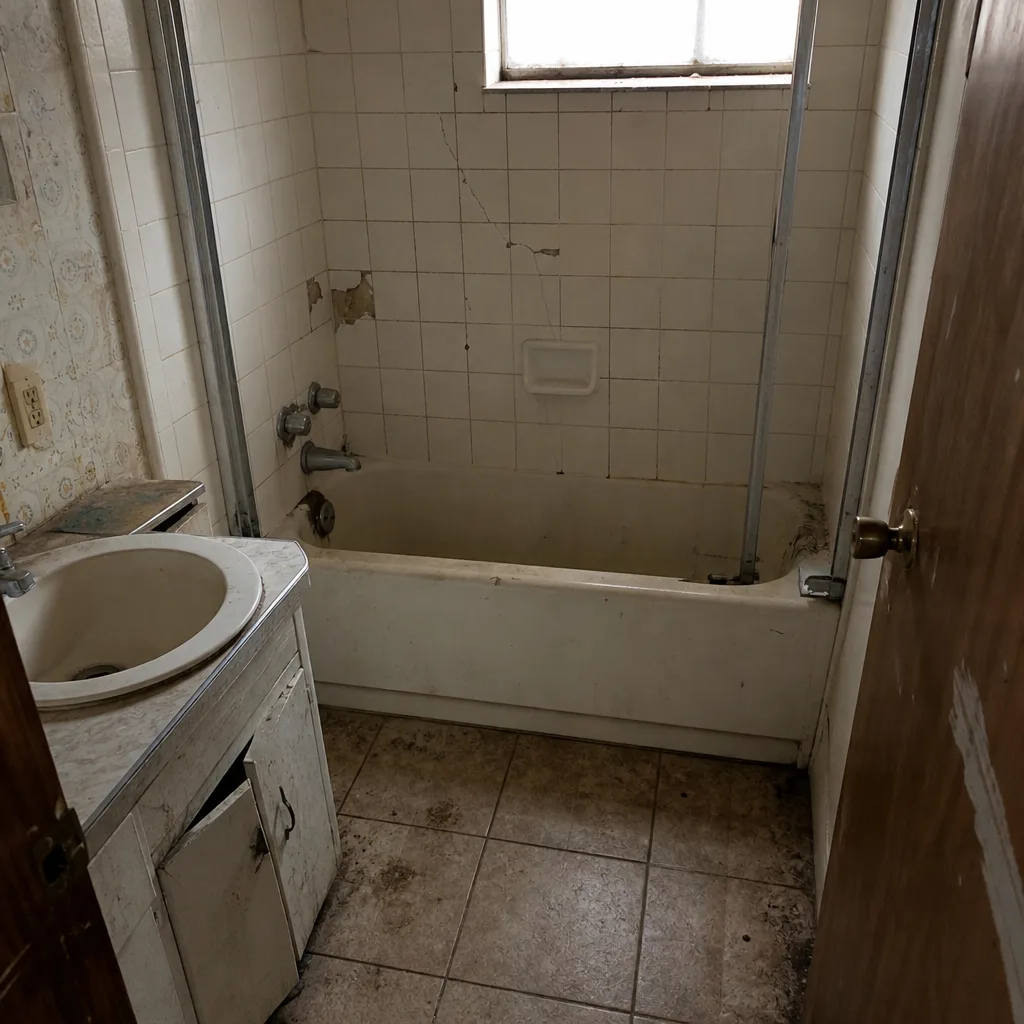 Before
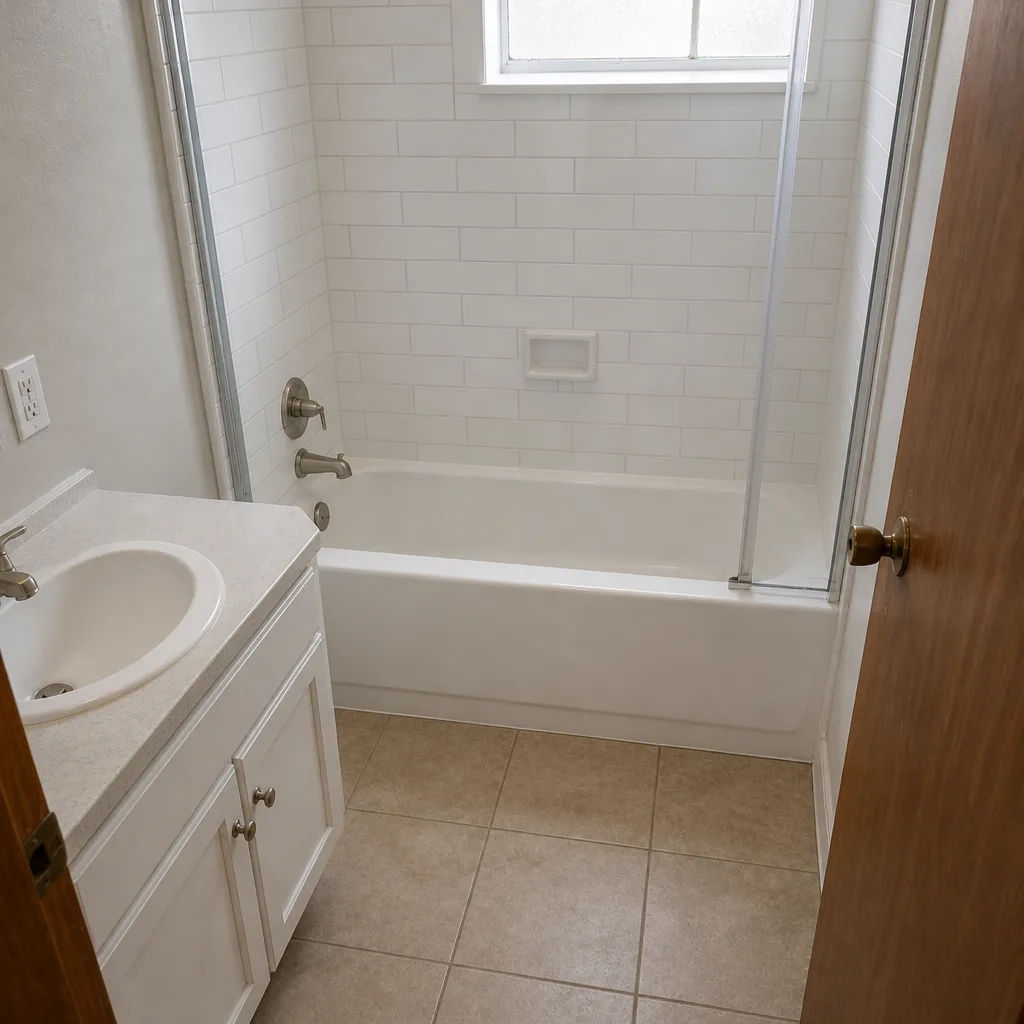 After
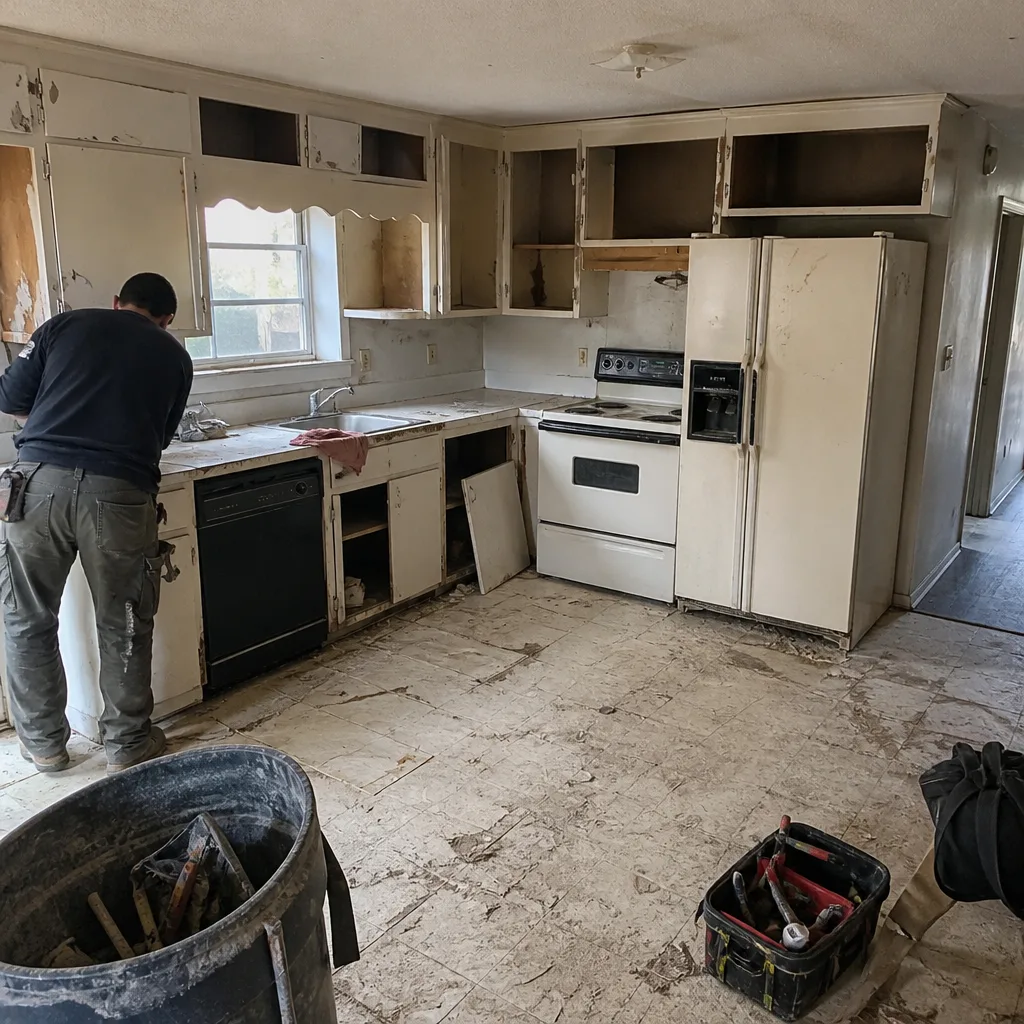 Before
 After
 Before
 After
When to Call a Professional
Some fence problems are a symptom of a bad installation, and some are a sign the fence is past its service life. Call a professional if a set post is moving in the ground, if the gate is dragging or the latch won’t catch, if more than two panels have visible lean, or if post bases are pulling away from the soil in rings. If your fence has failed within five years of installation, the underlying cause is almost always post depth or material grade, and the fix is a partial re-set or a full rebuild. Trying to correct a leaning post without re-digging and re-pouring in Fort Worth clay doesn’t work; the post will move again the next rainy season. Groundwork Construction Co. of Fort Worth offers free estimates in Fort Worth – call (855) 912-5373. Our technicians have up to 12 years of experience, every project is covered by our 730-Day Done Right Promise, and we put the full scope in writing before work starts.
Frequently Asked Questions
A standard wood privacy fence in Fort Worth typically runs $18 – $28 per linear foot for a cedar dog-ear style, and $28 – $45 per linear foot for a taller privacy build with a reinforced gate and deeper post setting. A typical 150-foot yard comes in around $3,200 to $5,600 depending on material grade, gate count, and tear-out of the old fence. The single biggest cost driver is post depth and concrete volume, because shallow posts are what force a rebuild in year three. Call (855) 912-5373 for an exact quote – estimates are free and itemized line by line.
It shouldn’t. A written scope with itemized line items protects you against mid-job surprises. The only legitimate changes are ones you approve in writing, like adding a gate or upgrading the picket grade. If a contractor tells you after the crew is on site that the price went up because “the ground was harder than expected” or “the material cost more,” you’re dealing with a quote that was designed to change. Ask for the full scope in writing before signing, and hold the price to it. Call (855) 912-5373 for upfront pricing with no surprises – we put our numbers in writing.
Yes, we pull the permit on every Fort Worth fence job that requires one, and the permit goes in our company name. In Fort Worth, fences over six feet, and any fence on a corner lot within the visibility triangle, need a permit through Development Services. A contractor who offers to skip the permit is transferring the legal liability to you as the property owner. Call (855) 912-5373 to schedule a free estimate, and we’ll walk through the permit requirements for your specific lot.
A typical residential fence in Fort Worth is completed in one to two days once the permit is issued and materials are on site. The permit process itself adds about three to five business days, depending on the city’s current review queue. Larger properties, complex gates, or jobs that require significant tear-out can run longer. We schedule the crew, and the job is done when the crew finishes, not when they show up. Call (855) 912-5373 to schedule your free estimate and get a timeline in writing.
Check the delivered material against your written scope before any board is cut or installed. Western red cedar has a tight, fine grain with a warm reddish tone and a sharp aromatic smell when cut. Treated pine has a coarser grain, a greenish or brown tint, and a faint chemical smell. If the delivery doesn’t match the species in the paperwork, stop the job and demand a written confirmation before resuming. A contractor who quotes cedar and delivers pine will substitute on the rails, posts, and concrete too. Call (855) 912-5373 for a free estimate with the species written into the scope.
If the fence fails within the warranty period, the contractor who installed it is responsible for the fix. Every project we complete is covered by our 730-Day Done Right Promise: if something isn’t done right in the first two years, we make it right. The reason this matters in Fort Worth is that most fence failures show up between month 18 and month 30, which is when the clay has cycled through two full swell-and-shrink seasons. A warranty that doesn’t cover at least that window is a warranty that rarely gets used. Call (855) 912-5373 to schedule a free estimate.
The Bottom Line
Bad fence contractors don’t announce themselves. They show up with low bids, skip the paperwork, and disappear after the last post sags. The warning signs are specific and observable: a skipped permit, a verbal scope instead of a written one, cedar quoted and pine delivered, shallow posts, a handoff to an unknown subcontractor, and a payment schedule designed to put your money in their pocket before the job is done. Catch any one before you sign, and you sidestep a failure that would have shown up in year two. Fort Worth’s clay soil and hail season make these decisions matter more than they do in most places. The fence that stands is the one whose installation was right from the first post. If you’re planning a fence, fence installation in Fort Worth is where we start – and while we’re on your property, we can also talk through driveway and pavers in Fort Worth or a home addition or ADU in Fort Worth if that’s on your radar. Start at Groundwork Construction Co. of Fort Worth home to see how we run a project from first estimate to final walkthrough, or call (855) 912-5373 for a free estimate. One company accountable from first call to warranty callback, with the scope and the price in writing before the first post goes in.
Written by the team at Groundwork Construction Co. of Fort Worth.