
Last updated November 18, 2026
Free written scope consultation - allowances, timeline, and change-order rules on paper before a single trade is scheduled
DIY vs Professional Driveway & Pavers: What’s Safe to Do Yourself
You can absolutely lay paver borders, do minor re-setting, and handle sealing yourself. But if you touch the base prep without a plate compactor and a transit level, you’re just prepaying for a redo. That’s the whole guide in two sentences, and it surprises most homeowners who’ve been told either “pavers are easy, do it yourself” or “never touch a paver, hire a pro.” Both are wrong. The truth sits in the middle: pavers are a project with a soft top half and a hard bottom half, and the line between them is where skill and equipment requirements outpace what a weekend can deliver. This guide walks through exactly which tasks in a Fort Worth driveway project are genuinely DIY-safe, which ones guarantee you’ll pay twice, and the questions to ask a contractor so you know the base was built right – because you’ll never see it once the pavers go down.
Quick Answer
Re-setting individual pavers, refilling joint sand, sealing, and minor edge repairs are all reasonable DIY tasks for a careful homeowner. Base excavation, grading, compaction, and bedding are not – they require a plate compactor, a transit or laser level, and a tolerance for error that doesn’t exist in a residential driveway. Get the top layer wrong and you fix a few pavers. Get the base wrong and you pay to demo, haul off, and rebuild the entire driveway in 18 to 36 months.
Styles & brands we work with
- Kitchen remodeling
- Bathroom remodeling
- Home additions & ADU
- Roofing
- Windows & doors
- Driveway & pavers
- Fence
Table of Contents
- What’s Actually Safe to Do Yourself
- Why Base Prep Is the Non-Negotiable Professional Phase
- The Equipment Gap: What You’d Need to Rent vs Own
- The Real Cost of a Failed DIY Base Install
- What to Ask a Contractor About Base Prep
- Fort Worth Permits, Grade, and Drainage
- How Fort Worth’s Clay Soil and Heat Change the Math
- Matching the Approach to Your Driveway Type
What’s Actually Safe to Do Yourself
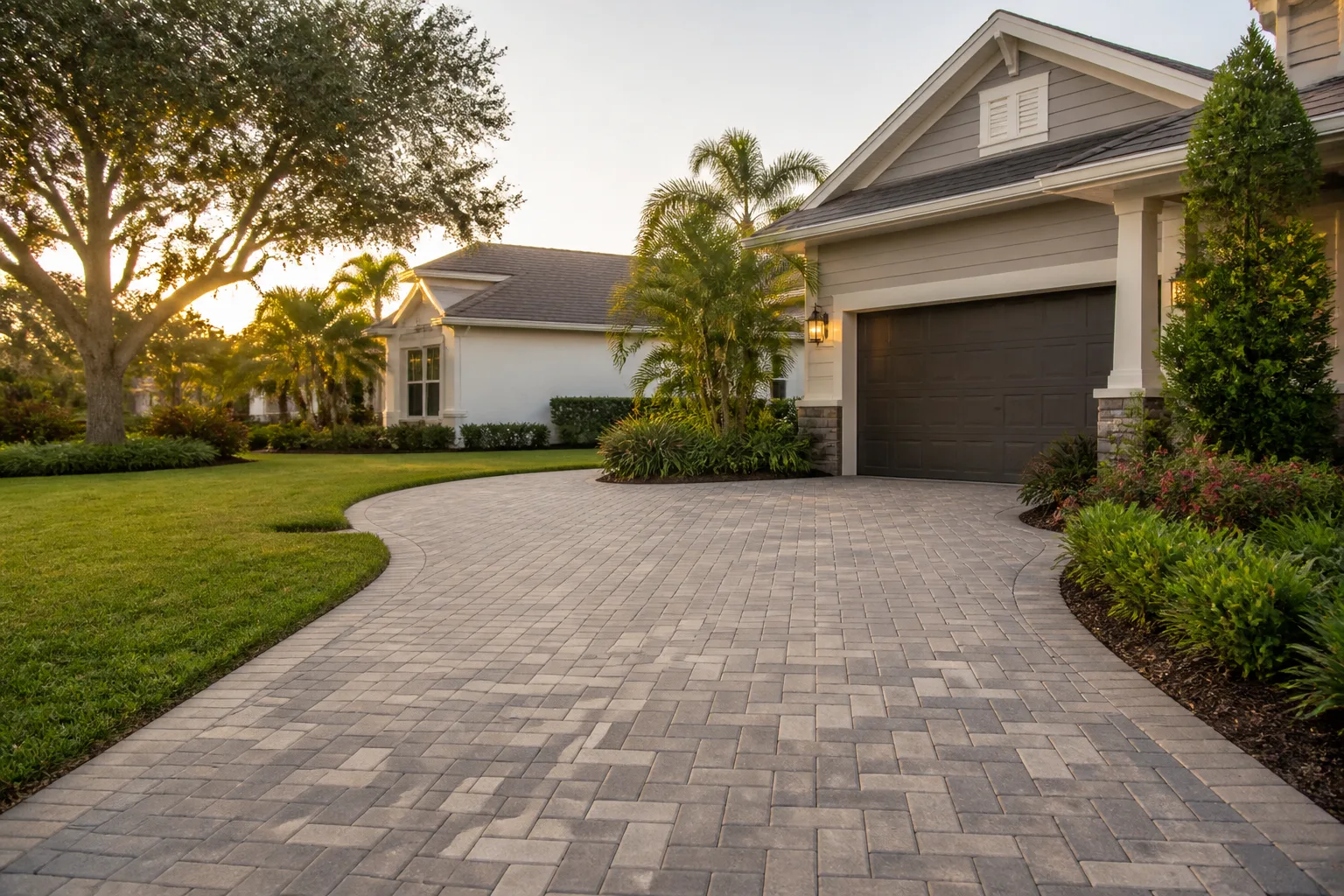
The top of a paver driveway is more forgiving than most people expect. Once the base is right, pavers are a maintenance surface. Individual stones can be lifted, adjusted, and re-bedded without disturbing the structural work underneath. That’s by design. Pavers are modular, and modular surfaces are meant to be serviced in pieces.
Here’s what we see Fort Worth homeowners handle successfully on their own:
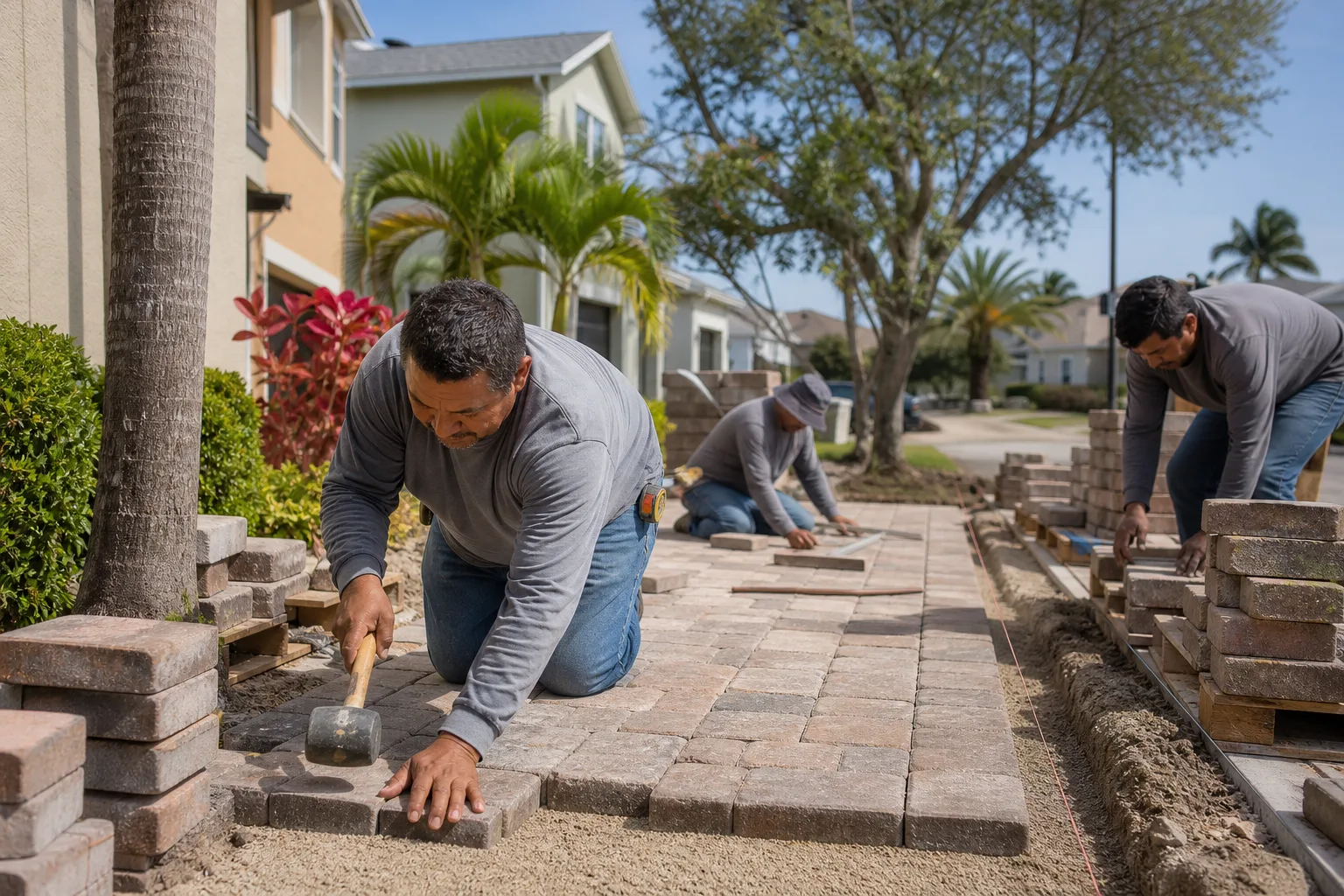
- Re-setting individual pavers. A paver that’s popped up, shifted, or settled can be lifted with two flat pry bars, the bedding sand re-leveled, and the stone tapped back down with a rubber mallet. Twenty minutes per paver. No special tools.
- Joint sand replenishment. Polymeric sand washes out over time, especially after heavy spring storms. Sweeping new sand into the joints, misting it, and letting it cure is a genuine weekend chore that protects the driveway. Plan on re-sanding every two to three years.
- Sealing. A penetrating or film-forming paver sealer applied with a roller or sprayer extends color life and slows joint sand loss. It’s a one-day job on a dry, mild day. Don’t seal in direct summer sun above 90 degrees, which rules out most of July and August in Fort Worth.
- Edge repair and re-anchoring. Paver edges are held by a restraint strip spiked into the ground. If a section of edge has wiggled loose, re-spiking or replacing a short run of restraint is manageable with a hammer drill and the right spikes.
- Weed pulling and moss cleanup. Cosmetic, but real. Weeds grow in joints when the sand has thinned. Pull, re-sand, done.
What ties all of these together: none of them change the structure of the driveway. You’re maintaining the top of a system someone else engineered. The moment you start digging, you’re changing the system, and that’s where the math flips.
Why Base Prep Is the Non-Negotiable Professional Phase
Here’s the thing almost nobody tells you: a paver driveway is not a paver driveway. It’s a compacted base with pavers sitting on top. The pavers are 4 percent of the work and 100 percent of what you see. The base is 96 percent of the work and 0 percent of what you see. That asymmetry is why DIY base prep fails so reliably.
A properly built paver base in Fort Worth generally involves four phases, each with its own failure mode:
- Excavation. You remove 8 to 12 inches of soil, depending on paver thickness and traffic load. The excavation has to be wide enough to accommodate the restraint edge and deep enough for the base layers. Get this wrong and the finished driveway sits at the wrong height against the garage slab, and water runs toward your house.
- Subgrade prep and grading. The exposed soil is graded to a slope that sheds water – typically 1 to 2 percent away from structures. On Fort Worth’s expansive clay, this also means addressing soil movement before compaction, because clay that swells and shrinks seasonally will telegraph through a rigid surface if it isn’t handled.
- Compaction in lifts. Base material is placed in 2- to 4-inch layers and compacted between each layer with a plate compactor or vibratory roller. Not one pass. Multiple passes, perpendicular to each other, at the right moisture content. This is where the equipment gap is widest. Hand tamping a 4-inch layer of crushed limestone feels like work; it compacts to maybe 80 percent of what a machine achieves, and that remaining 20 percent is what fails in year two.
- Bedding sand and screeding. A 1-inch bedding layer of concrete sand is screeded flat and consistent across the entire field. A 1/4-inch variation over a 20-foot run is a visible dip you’ll feel under your tires. Screeding requires a long straight edge, a transit or laser level, and the patience to keep moving the reference point.
Each of these phases has a tolerance – usually a fraction of an inch – and no home-built rig replaces the equipment designed to hit it. That’s the line. Not “have you done this before,” but “can you hit the tolerance with the tools you have access to.”
The Equipment Gap: What You’d Need to Rent vs Own
Most DIY paver projects die at the equipment rental counter, and for good reason. The tool list to build a driveway base correctly looks like this:
- Plate compactor or vibratory roller – $80 to $150 per day to rent, and you’ll need it for multiple days across the compaction phases.
- Transit level or laser level with receiver – $60 to $100 per day to rent, or $300+ to buy a serviceable one.
- Cutoff saw with diamond blade – $70 to $120 per day, plus blades at $50 to $150 each depending on quality.
- Long screed (10 to 12 feet) – $40 to $200 depending on whether you buy aluminum or build a wood screed.
- Wheelbarrow, hand tamper, rakes, shovels, pry bars, rubber mallet – $200 to $400 to buy, and you’ll keep them.
- Haul-away capacity for excavated soil – a dumpster rental at $400 to $700 in the Fort Worth market, depending on size.
Add it up and a homeowner building 600 square feet of driveway is looking at $1,200 to $2,500 in rental and tool costs before buying a single paver. The math starts to look silly when a professional crew arrives with every tool already on the truck and the compaction schedule dialed in.
There’s also a less obvious cost: time. A two-person crew with a plate compactor can compact a 600-square-foot base in a day. A homeowner with a hand tamper will spend three days and still not achieve the same density. If your weekends are worth more than $500 a day to you, the DIY route is already losing money on base prep. The maintenance tasks in the first section have no such problem – you own the tools, or you can rent them for a single day at a fraction of the cost.
The Real Cost of a Failed DIY Base Install
When a paver base fails, the failure isn’t dramatic. It’s a hollow sound underfoot. A paver that pops loose after a heavy rain. A low spot where water pools and the joint sand washes away in a crescent. You notice it in year two, and you convince yourself for another six months that you can patch it.
By the time you call someone – and we get these calls regularly in Fort Worth – the honest fix is full demo. Here’s what that costs:
- Demo and paver removal: $1.50 to $3.00 per square foot.
- Haul-off of pavers and failed base material: $500 to $1,200 depending on volume and dump fees.
- Re-excavation and proper base rebuild: $4.00 to $7.00 per square foot.
- New pavers if the originals can’t be salvaged: $3.00 to $8.00 per square foot depending on material.
- Re-lay, edge restraint, sand, and seal: $3.00 to $5.00 per square foot.
On a 600-square-foot driveway, a full redo lands between $7,000 and $13,000 in the current Fort Worth market. That’s on top of what the DIY install already cost. The homeowner paid twice, learned once.
The failure pattern that produces this outcome is almost always the same: adequate compaction in the middle of the driveway where the compaction tool passed most often, and inadequate compaction at the edges and corners where it was hardest to reach. Those edges are where the water enters. Water enters, the base softens, the pavers move, the joint sand washes out, and the whole field starts to shift. It’s a structural problem from day one that only shows up in year two.
Compare that to the cost of hiring a professional installation done correctly the first time, and the “savings” of DIY base work disappear. The DIY base saved $4,000 in labor on install day. It cost $9,000 in redo work 26 months later. That’s not a savings, it’s an expensive loan.
What to Ask a Contractor About Base Prep
You can’t see the base once the pavers are down, which means the only defense a homeowner has is the questions asked before the contract is signed. Here’s what separates a contractor who builds base correctly from one who cuts corners. Ask these in the estimate meeting, not after:
- “How deep are you excavating, and why?” A real answer references paver thickness, traffic load (foot, car, RV), and the local soil. If the answer is “about 6 inches,” and you’re planning to park an F-250 on it, push back.
- “What base material, and at what depth per lift?” Correct answer references specific crushed stone gradation and 2- to 4-inch lifts with compaction between lifts. Vague answers (“we use base material and compact it”) are a flag.
- “What equipment compacts the base?” Plate compactor at minimum, vibratory roller for larger driveways. Never “we tamp it by hand.”
- “How do you check the grading before the pavers go down?” Transit level or laser level with a slope posted to the drainage direction. Not “eyeball and experience.”
- “Who pulls the permit, and what does the inspection cover?” In Fort Worth, this matters. See the next section.
- “What’s your workmanship warranty?” Ask about years, and ask what it covers. A base failure isn’t a paver defect. It’s a workmanship defect, and it should be covered by the workmanship warranty, not the paver manufacturer’s warranty.
The contractor’s answers to those six questions tell you more about your driveway than any portfolio photo will. If a contractor gets defensive about base questions, that’s information.
Groundwork Construction Co. of Fort Worth answers all six before you sign anything, and every project is covered by our 730-Day Done Right Promise – if it’s not done right, we make it right. That guarantee exists precisely because base failures don’t show up in week one. You need a warranty long enough to outlast a bad base. Two years doesn’t cut it. Call Driveway & Pavers in Fort Worth for a free estimate and a line-item base spec in writing.
Fort Worth Permits, Grade, and Drainage
This is where DIY base work goes from “risky” to “potentially against code.” Fort Worth has specific requirements for hardscape work that affects drainage, and a paver driveway is hardscape.
Fort Worth sits in a mixed climate zone where the clay soil, the summer heat, and the occasional heavy rain event all interact with a finished paver surface. The city’s drainage rules require that new impervious cover – including paver driveways with sealed joints – account for stormwater runoff in a way that doesn’t push water onto a neighbor’s lot or into a drainage easement without authorization. That’s a permitting and grading conversation, not a “let’s see how it looks” conversation.
In practice, this means:
- Most paver driveways in Fort Worth require grading to a defined slope away from the structure, and that slope may need to be documented for inspection.
- Permeable paver systems – open-graded base with wide joint openings – have different permitting paths and different base specs. If you’re considering permeable pavers to manage runoff, the base is a different animal entirely and far less forgiving of DIY execution.
- Drainage easements and swales on the property line or in the public right-of-way are regulated. Modifying grade inside an easement without approval is a real problem, and it’s one that surfaces at resale when a surveyor checks the plat.
- Expansive clay subgrade under much of Tarrant County requires base design decisions (drainage, subgrade stabilization, sometimes a geotextile) that a homeowner working from a YouTube video won’t anticipate.
We see this constantly in neighborhoods with a lot of new hardscape – the homeowner handles the pavers, the grade is off by an inch or two, and the first serious rain sends water toward the house or the neighbor’s fence line. Fixing it means pulling up the pavers anyway. Fort Worth permitting and drainage for driveway work is not DIY territory, and that has nothing to do with your skill level. It’s about which parts of the project require a licensed professional to sign off.
If your project also involves fencing along the driveway line, the same drainage and property-line logic applies. Our Fence Installation in Fort Worth team coordinates the fence installation with the driveway grading so the two don’t fight each other at the property line.
How Fort Worth’s Clay Soil and Heat Change the Math
Fort Worth is uniquely hard on paver driveways, and the reasons are worth understanding before you decide on a DIY approach.
The clay beneath much of Fort Worth expands when wet and shrinks when dry. A driveway base built on top of clay without proper drainage and compaction will move with the seasons. In a wet spring, the clay swells and pushes up. In a dry August, it shrinks and drops. Pavers laid on a marginally compacted base will telegraph those movements as dips, humps, and popped stones. A properly built base absorbs seasonal movement; a DIY base amplifies it.
Then the heat. Fort Worth summers regularly hold above 95 degrees for weeks, and the surface temperature of a paver driveway in direct sun can hit 140 degrees. Two things happen: polymeric joint sand can soften and migrate if it’s applied in the wrong temperature window, and the pavers themselves expand. That expansion needs somewhere to go – typically into the edge restraint – and if the restraint wasn’t engineered for the expansion range, the driveway walks.
Finally the storms. Fort Worth gets intense, short-duration rain events that dump a month of moisture in a few hours. That volume is what finds the weakest compaction zone and turns it into a sinkhole. The compaction you skipped in the corners is exactly where the water concentrates.
None of this means pavers are a bad idea in Fort Worth. It means the base has to be built for the local soil and climate, by someone who’s built for it before. The maintenance tasks in this guide – re-sanding, re-setting, sealing – are all still DIY-safe. The base isn’t, and Fort Worth is a harder place to be wrong about it than most of the country.
Matching the Approach to Your Driveway Type
The DIY-versus-pro line shifts depending on what kind of driveway you have. Not every paver project carries the same base risk.
- Full paver driveway, new install. Base prep and compaction are 100 percent professional territory. No exceptions. This is the highest-risk, highest-cost category and the one where a DIY base mistake produces a full redo.
- Paver border on a concrete driveway. The concrete solves the structural problem the base was supposed to solve. A decorative paver border along the edges of existing concrete can be a reasonable DIY project if the border is dimensional and the soil is properly leveled for the border strip. We still recommend a professional consult on the edge restraint detail.
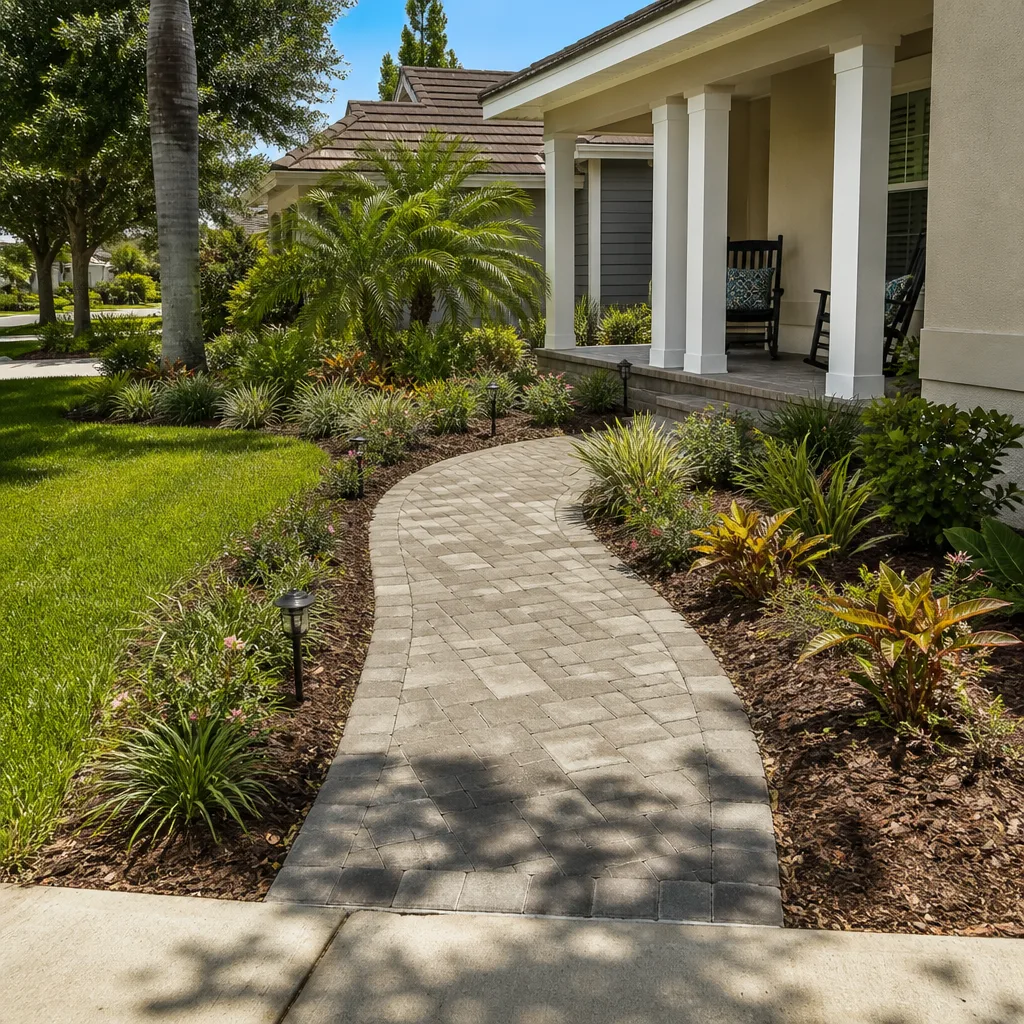
- Paver walkway or patio. Lower traffic load than a driveway, so slightly more forgiving. Still a base project, still a compaction project, but the failure modes are cosmetic rather than structural for the first few years. Many homeowners do these themselves with acceptable results. Many others end up calling us in year three.
- Overlay on failed asphalt. Not a safe DIY project. The failed asphalt has to be removed, the subgrade re-evaluated, and the base rebuilt. If someone offers to lay pavers over existing asphalt “to save money,” the correct response is no.
- Permeable paver system. The most technically demanding category. The open-graded base has to be sized for the drainage rate and the local storm intensity, which is a hydrology calculation, not a “compact it and go” job. DIY permeable base is a recipe for a system that doesn’t drain.
If you’re considering a home addition or ADU that changes the driveway approach or adds impervious cover, the driveway and the addition have to be planned together. Our Home Additions & ADU in Fort Worth work routinely coordinates driveway and approach changes with the build, so the hardscape and the structure share one grading plan. Starting from the Groundwork Construction Co. of Fort Worth home page is the fastest way to see how the trade lines connect.
See the difference
 Before
 After
 Before
 After
 Before
 After
Common Mistakes to Avoid
- Compacting in one thick lift instead of several thin ones. A 10-inch layer of base compacted once from the top only compacts the top 2 inches. The bottom 8 inches stay loose, and the failure shows up in year two. Compaction is 2- to 4-inch lifts, no exceptions.
- Skipping the edge restraint or spiking it into uncompacted soil. Paver edges aren’t decoration. They hold the field against expansion and traffic. A restraint strip spiked into loose soil is a fence post in sand, and it fails on the first hot week of a Fort Worth summer.
- Grading toward the house instead of away. The most expensive mistake on the list. If a 1 percent grade runs toward the garage slab, water pools at the wall and finds its way in. Grade direction is not a stylistic choice.
- Sealing too soon or in the wrong temperature. Fresh polymeric sand needs to cure before sealer goes down, and sealer applied above 90 degrees can flash-dry and leave a haze. In Fort Worth, that means spring or fall for a DIY sealing job.
- Using the wrong joint sand. Regular play sand washes out in one storm. Polymeric sand is the standard for driveways in this climate, and applying it correctly (right moisture, right temp, right fill) is more finicky than it looks.
- Laying pavers over failed asphalt or an old concrete slab. The pavers telegraph every crack and every failed subbase below. The overlay always looks good for six months and then fails at once.
- Hiring on price alone without asking the six base-prep questions. The low bid is usually low because the base scope is where it got cut. That’s the one scope you can’t inspect after the fact.
When to Call a Professional
Call a professional the moment your project involves any of these: new driveway installation, base excavation, compaction of any kind, driveway widening with a new subgrade, paver work over failed asphalt or concrete, permeable paver systems, or anything that requires grading that affects drainage on or off the property. Also call when the project involves pulling a permit or meeting Tarrant County drainage requirements – that’s a code issue, not a skill issue, and it has to be handled by someone licensed to handle it.
For borders, re-sets, re-sanding, and sealing, the DIY path is genuinely fine. Do it, and do it well.
Groundwork Construction Co. of Fort Worth offers free estimates in Fort Worth – call (855) 912-5373 for a written line-item quote, a base spec you can review, and the 730-Day Done Right Promise behind every install. No-hassle upfront pricing, and our team answers the phone as a live person 24/7.
Frequently Asked Questions
You can handle the top layer yourself and you can maintain it yourself, but a full new installation with base prep is a professional project. The base requires a plate compactor, transit or laser level, and multi-lift compaction that a homeowner can’t match with hand tools. Doing the base yourself usually means redoing it within two to three years. Call (855) 912-5373 for a free estimate on the full install, including a written base spec.
In the Fort Worth market, DIY base prep saves roughly $3,000 to $5,000 on a 600-square-foot install, but that’s before counting $1,200 to $2,500 in tool and equipment rentals. Net savings shrink to a few hundred dollars on install day. If the base fails and needs full demo and rebuild, the homeowner spends $7,000 to $13,000 more than the original professional bid. Call (855) 912-5373 to get a line-item bid you can compare against your own project math.
The difference is compaction density and grade accuracy, and neither is visible once the pavers go down. A properly built base is compacted in 2- to 4-inch lifts at documented moisture and graded to 1 to 2 percent away from structures. A base that “looks fine” typically has one or two under-compacted zones – usually the edges – that fail in year two when a Fort Worth rainstorm finds them. Ask your contractor how they verify compaction before the pavers go down.
Often yes, especially when the project changes grading or impervious cover in a way that affects stormwater runoff. Requirements vary by property, drainage easement status, and project scope. This is one of the reasons base prep and permitting go together as a professional phase rather than a DIY one. Call (855) 912-5373 and we can walk through what your specific project scope will likely require before you commit to a design.
You can seal them yourself if the pavers are in good repair, the joint sand is fresh and cured, and you can work on a mild dry day with the surface below 90 degrees. Fort Worth summers rule out most of June through August. If the pavers are older or shifting, have the field inspected before sealing – sealing over a failing base just hides the problem. Call (855) 912-5373 if you’re not sure whether the surface is ready.
The pavers spread outward, the joints widen, sand washes out, and the driveway “walks” out of its original line within a few hot summers. Fort Worth’s temperature swings make this worse because pavers expand and contract more than most homeowners expect. The edge restraint is what absorbs that motion. Skipping it, or spiking a restraint strip into loose soil, is a guaranteed failure. A professional install includes restraint engineering as part of the base system.
The Bottom Line
The driveway is a paver project with a soft top and a hard bottom. Maintenance is genuinely yours to handle: re-setting stones, re-sanding joints, sealing, edge repair. Base prep is not, and the line between them is equipment and tolerance, not experience. In Fort Worth specifically, the clay soil, the summer heat, and the drainage permitting requirements make the base an even worse place for a homeowner to experiment, because the failure only shows up after the driveway looks finished.
If your project is a full install, base work, or anything that touches grading or permits, get a written spec and a workmanship warranty long enough to outlast a bad base. That’s why every Groundwork Construction Co. of Fort Worth install is backed by our 730-Day Done Right Promise – from foundation to finish line, built to last, backed in writing.
Ready to get an honest, line-item estimate on your Fort Worth driveway project? Call (855) 912-5373 today – a live person answers around the clock, and estimates are free.
Written by the team at Groundwork Construction Co. of Fort Worth.


