Last updated November 18, 2026



Free written scope consultation - allowances, timeline, and change-order rules on paper before a single trade is scheduled
The Complete Bathroom Remodeling Guide for Fort Worth Homeowners
Fort Worth’s tap water runs 15 to 20 grains per gallon of hardness on average – hard enough to pit a chrome faucet in 18 months and turn a poorly sealed shower grout line into a chalky, crumbling mess within two years. That single fact reshapes every material decision in a Fort Worth bathroom, and most remodeling guides never mention it. This guide covers the operational side of bathroom work in Fort Worth: what actually needs a permit, which finishes survive our water, realistic local cost tiers instead of national averages, when moving a drain is worth the replumbing bill, and how to vet a contractor’s waterproofing before they set a single tile. If you’re planning a bathroom project anywhere from Arlington Heights to Saginaw, this is the reality behind the showroom lighting.
Quick Answer
A bathroom remodel in Fort Worth ranges from roughly $6,000-$15,000 for a cosmetic refresh to $25,000-$60,000+ for a full gut with layout changes, and the biggest cost driver isn’t tile or fixtures – it’s whether you move plumbing. Anything that relocates a drain, moves a wall, or changes an electrical circuit requires a City of Fort Worth permit and inspection. Matching your new layout to the existing plumbing stack can save $5,000-$15,000 with almost no visible design compromise, which is why the best money you’ll spend on a Fort Worth bathroom is a design conversation before any demolition starts.
Styles & brands we work with
- Kitchen remodeling
- Bathroom remodeling
- Home additions & ADU
- Roofing
- Windows & doors
- Driveway & pavers
- Fence
Table of Contents
- Do You Need a Permit for a Bathroom Remodel in Fort Worth?
- Building a Bathroom Around Fort Worth’s Hard Water
- What Bathroom Remodeling Costs in Fort Worth
- Layout Changes: When to Move Plumbing and When to Work Around It
- Tile, Grout, and Fixture Selection for Tarrant County Homes
- How to Vet a Bathroom Contractor in Fort Worth
- A Realistic Remodel Timeline
- What a Real Workmanship Warranty Should Cover
Do You Need a Permit for a Bathroom Remodel in Fort Worth?
You need a City of Fort Worth permit the moment your bathroom project touches plumbing, electrical, or structural systems. You do not need one for paint, tile replacement over an existing substrate, a vanity swap in the same location, or replacing a faucet and toilet with like-for-like units. The line between the two is where a lot of homeowners get burned.
Here’s the split in plain terms:
- No permit typically required: New paint, new flooring over existing subfloor, replacing a vanity in the same footprint, swapping a toilet and faucets, replacing a mirror or light fixture that stays on the existing circuit.
- Permit required: Moving or adding a drain line, relocating the toilet, moving the shower or tub, adding a wall or doorway, moving a vanity to a different wall, adding a new electrical circuit, installing a fan on a new circuit, or changing the rough-in plumbing in any way.
The trouble starts when unpermitted work surfaces during a home sale. Tarrant County buyers are increasingly savvy about pulling permit history, and a bathroom that shows a relocated shower drain with no record of inspection can turn into a repair credit, a delayed closing, or a lender refusal on an FHA or VA loan. A bathroom remodel is the most permit-sensitive room in the house because water damage from a bad rough-in shows up months later – under flooring, inside the ceiling below, and in the framing. A contractor who says “we don’t need a permit for that” when you’re moving a drain is telling you something about how they work. We pull permits and we pass inspections. Every time. That’s the standard any Fort Worth homeowner should hold their contractor to, and it’s a big part of why the Groundwork Construction Co. of Fort Worth home approach treats permit work as routine rather than an upsell.
Building a Bathroom Around Fort Worth’s Hard Water
Fort Worth water hardness sits between 15 and 20 grains per gallon – classified as “very hard” – and the Trinity River aquifer that feeds most of the city picks up calcium and magnesium as it travels. What that means in practice: cheap fixtures fail early, soap scum sticks like cement, and grout lines pit unless they’re sealed and resealed on schedule. You don’t have to fight the water, but you do have to plan for it.
Three material decisions matter most in a Fort Worth bathroom:
- Fixture finishes: Polished chrome shows mineral spotting within days. Brushed nickel and PVD-coated finishes (the coating Delta uses on its higher-end lines) hold up better against the mineral film. Matte black looks incredible on day one and hates hard water – reserve it for walls, towel bars, and cabinet hardware, not the shower valve.
- Grout: Cementitious grout absorbs minerals. Epoxy grout and a high-quality penetrating sealer on cementitious grout are worth the extra $200-$600 on a full shower rebuild. In our experience across Fort Worth neighborhoods with the hardest treated water, a sealed epoxy grout line outlasts an unsealed cement grout line by years.
- Faucet cartridges: Cheap cartridges fail under mineral buildup. A Delta or Toto valve with a replaceable cartridge will outlast the bargain fixture that “looked exactly the same” at half the price by a wide margin. Toto’s ceramic valves are especially hard-water tolerant.
The same climate that makes Fort Worth summers brutal on HVAC also makes them brutal on bathroom ventilation. A bath fan that runs 20 minutes after every shower isn’t a luxury in Fort Worth – it’s what keeps the humidity from turning grout chalk and paint into a peeling mess. If your existing fan is a builder-grade model from the 90s, plan to replace it. It’s a $150-$350 line item and one of the highest-return upgrades in the room.
What Bathroom Remodeling Costs in Fort Worth
National cost averages are useless here. Fort Worth labor is more affordable than Dallas proper and far cheaper than Austin or the coasts, but material costs are rising and lead times on cabinetry and tile run 3-8 weeks on most projects. Here’s what real Fort Worth jobs run in current dollars:
Fort Worth Bathroom Remodel Cost Tiers
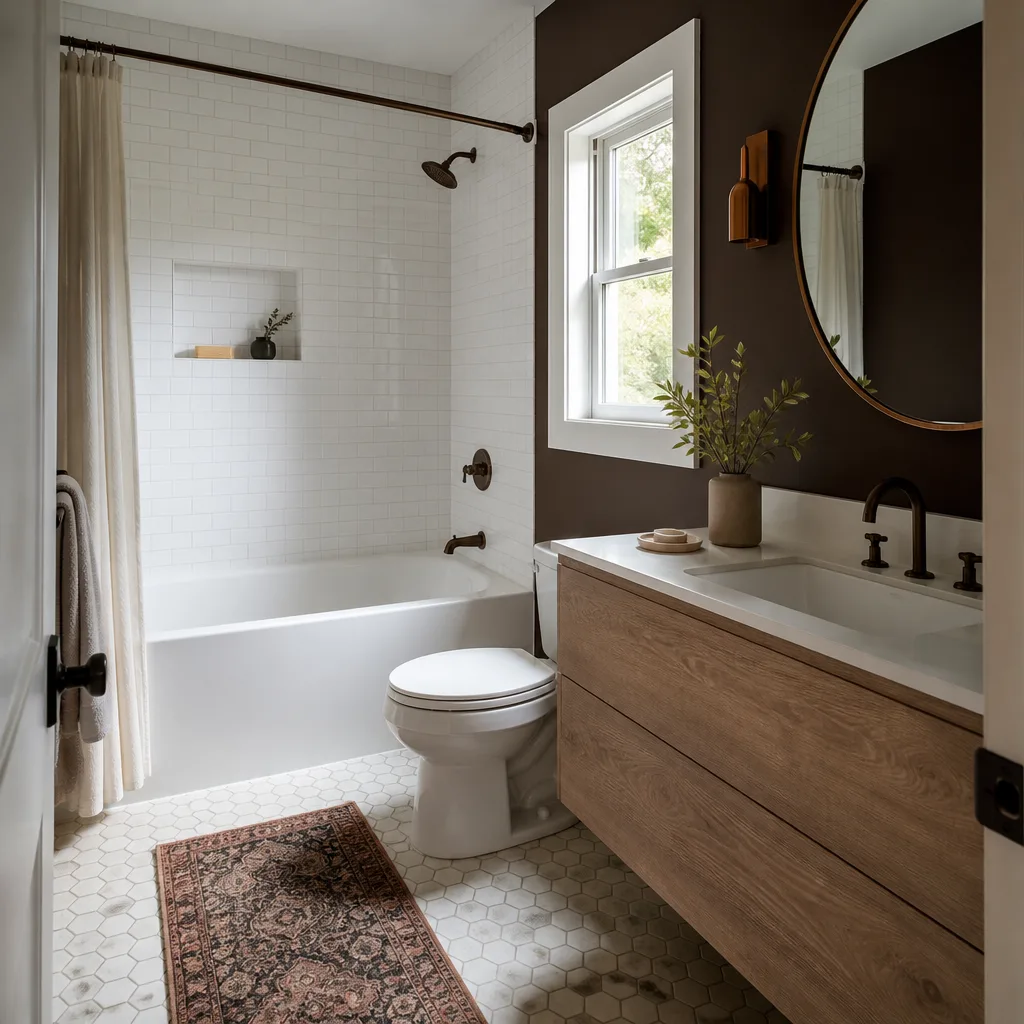
- Cosmetic refresh (no permit, same layout): $6,000-$15,000. Paint, vanity, fixtures, mirror, light bar, tile backsplash. Typical timeline 1-2 weeks.
- Mid-range gut and redo (permit usually required for shower pan rebuild or electrical): $18,000-$35,000. New tile floor and shower walls, new shower pan with proper waterproofing, new vanity, new toilet, new fixtures, new exhaust fan. Typical timeline 3-5 weeks.
- Full layout change with plumbing relocation (permit and inspection required): $35,000-$60,000+. Moving the toilet, shower, or vanity, new rough-in plumbing, new electrical, potentially new framing. Typical timeline 5-8 weeks.
- High-end custom (large footprint, premium tile, heated floors, custom cabinetry): $60,000-$100,000+. Timeline 8-12 weeks.
Line Item Reality Check
Where the money actually goes on a Fort Worth mid-range project:
- Demolition and haul-away: $800-$2,000
- Rough plumbing (replacing shutoffs, valves, shower rough-in): $1,500-$4,000
- Electrical (new fan, GFCI outlets, lighting): $1,000-$3,000
- Tile and installation (floor plus shower walls): $4,000-$12,000
- Shower pan and waterproofing system: $1,200-$3,500
- Vanity and cabinetry: $1,500-$8,000
- Toilet, faucets, shower trim, accessories: $800-$3,500
- Fixtures (towel bars, mirrors, shelving): $300-$1,500
- Paint, trim, and finish carpentry: $500-$2,000
- Permit fees and inspections: $250-$800
No-hassle upfront pricing means every one of those lines is quoted in writing before a hammer swings. The number you see is the number you pay. Call (855) 912-5373 for a free estimate and a line-item quote – estimates are free and no-hassle.
Layout Changes: When to Move Plumbing and When to Work Around It
Moving a toilet, shower, or vanity is the single most expensive decision in a Fort Worth bathroom remodel. It can also be the most oversold. Here’s the honest decision framework we walk every homeowner through before they commit.
The case for working around the existing stack
Every Fort Worth home has a main soil stack running from the top of the house down to the sewer line. Moving a toilet six feet in a slab-on-grade home – which describes a huge share of Fort Worth housing stock, especially in neighborhoods like Ridglea, Wedgwood, and Westcliff – means saw-cutting the slab, running new drain lines underneath, patching the slab, and re-pouring. That work alone can run $4,000-$8,000 before you’ve bought a single fixture. On pier-and-beam homes in older Fort Worth neighborhoods, it’s less brutal but still adds $2,000-$5,000 in crawlspace plumbing work.
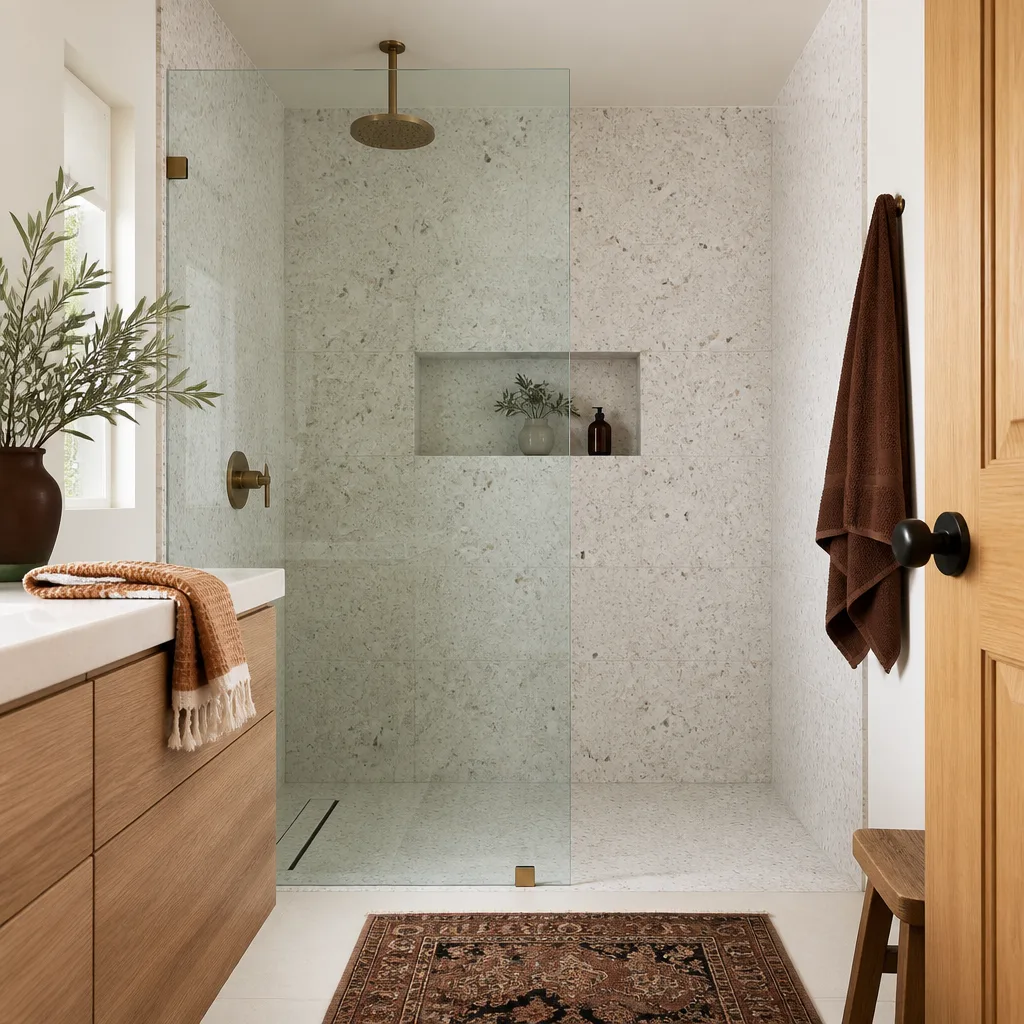
Working with the existing stack means the toilet, shower, and sink stay where the drains already are. A smart designer can transform a bathroom into something that feels completely different – larger walk-in shower, custom vanity, better lighting, better storage – without moving a single drain. In our experience, the vast majority of Fort Worth homeowners who insist on a relocated toilet discover that a redesigned shower footprint and better storage solve the same problem for a fraction of the cost.
The case for moving plumbing
Sometimes it’s genuinely worth it. If the existing layout puts the toilet outside the bathroom door, if the shower is unusable at its current size, or if you’re combining a bathroom with an adjacent closet or hall to gain square footage, moving plumbing is the right call. Just go in with eyes open: budget $5,000-$15,000 in additional cost for plumbing relocation depending on the slab versus pier-and-beam situation and how far the fixtures need to move.
Decision checklist
- Does the current layout actually make the bathroom unusable, or just dated?
- Can a designer solve the same problem with a larger shower footprint in the existing location?
- Is the home slab-on-grade, pier-and-beam, or a second-floor bathroom? (Cost differs by thousands between these.)
- Have you checked whether the existing drain size and vent meet current code?
- Does the additional $5,000-$15,000 buy you enough functional value to justify it?
Answer yes to more than two of those and it’s probably worth the move. Answer no to most of them and you’ll get 90% of the result for half the bill by working with the stack.
Tile, Grout, and Fixture Selection for Tarrant County Homes
Fort Worth bathrooms live between 40% and 70% relative humidity for most of the year, spike past 90% during July and August showers, and then dry out hard in winter. That swing is brutal on materials that don’t tolerate moisture. Here’s what actually holds up.
Porcelain vs. ceramic tile
Porcelain tile has lower water absorption (under 0.5%) and denser composition than ceramic (which can run 3-7% absorption). In a Fort Worth shower or bathroom floor, porcelain is the better choice almost every time. It’s slightly harder to cut, which can raise installation labor 5-10%, but the longevity is worth more than the labor cost. Ceramic is fine for a guest bath with low traffic and good ventilation – it’s just not the right choice for a primary shower.
Grout, sealer, and the Fort Worth hard water problem
Epoxy grout costs more – roughly $300-$600 more on an average shower – and it’s the right call in Fort Worth. Epoxy doesn’t absorb minerals the way cementitious grout does, so a hard-water city is exactly where the premium makes sense. If you’re not going epoxy, use a high-quality cementitious grout and seal it at installation and every 12-18 months after. Skipping that reseal schedule in Fort Worth water is what turns grout from a beautiful detail into a chalky mess by year three.
Shower waterproofing: Schluter vs. mud-set
Two waterproofing methods dominate Fort Worth bathroom work, and they perform differently:
- Schluter Kerdi system: A bonded sheet membrane over cement board or specially designed foam board. Faster to install, arguably easier to inspect because the membrane is visible, and it’s become the standard in mid-range and high-end Fort Worth remodels. The tradeoff: it’s only as good as the installer’s attention to the seams, corners, and pre-formed niche and curb pieces.
- Traditional mud-set pan: A sloped mortar bed with a vinyl liner and a mortar bed on top. Honest, time-tested, and it’s what a lot of Fort Worth contractors grew up installing. The tradeoff: it needs a proper preslope or water pools under the tile, and the weep holes at the drain have to stay clear.
Both work. Both fail if installed wrong. The question to ask your contractor is not “which system do you use” but “show me photographs of one you finished a year ago and let me inspect the corners.” We use both, we install both to code, and both are covered by the 730-Day Done Right Promise. If the pan leaks, we make it right. That’s the point of the warranty.
Fixtures that respect the water
Brands like Delta and American Standard have hard-water-tolerant lines worth considering for any Fort Worth bathroom. Toto toilets are particularly resilient against scale buildup in the fill valve and flush assembly. The right answer isn’t a luxury price tag – it’s a cartridge you can replace and a finish that doesn’t require weekly descaling.
How to Vet a Bathroom Contractor in Fort Worth
Bathroom work is small-scale, so it attracts more than its share of handymen and one-truck operators who can talk a good game and disappear mid-project. Vetting a bathroom contractor is a specific skill. Here’s the checklist we’d want a homeowner to run on us.
1. Demand a written scope of work
A legitimate scope lists every line item in the project: demo, framing, rough plumbing, rough electrical, waterproofing system and brand, tile specification by SKU, fixture model numbers, paint color and sheen, and a clear list of what’s excluded. If a bid is three paragraphs long and says “bathroom remodel – $22,000,” you’re going to discover a lot of “not included” surprises. A real bid is 4-8 pages on a full bathroom project.
2. Ask exactly how they waterproof
Vague answer = red flag. “We use RedGard” is not a complete answer. You want to hear the manufacturer name, the system, and what happens at the seams and corners. Ask to see a photo of a shower pan from a project the contractor finished at least a year ago. A good contractor has these on their phone.
3. Verify licenses and insurance
- State of Texas plumbing and electrical work is performed by licensed tradespeople under permit – ask to see the license record for whoever will do the rough-in.
- General liability insurance and workers’ compensation coverage in force – ask for a certificate of insurance with your address as the additional insured.
- Confirm the company pulls the permit in their name, not yours.
4. Read the warranty carefully
“One-year workmanship warranty” is a low bar in Fort Worth bathroom work. The waterproofing in a shower pan either holds or it doesn’t, and tile failure typically shows up at month 14-30. A warranty that expires at 12 months doesn’t cover the window where water damage actually surfaces. Our 730-Day Done Right Promise covers two full years – if it’s not done right, we make it right – which is long enough to actually catch a leak problem.
5. Check the crew, not just the salesman
You’re going to have tradespeople in your home for weeks. Ask whether the technicians are background-checked and whether they arrive in uniform. We background-check every technician and every technician arrives in uniform. That’s not a marketing line – it’s how we run. If a contractor looks confused by the question, that tells you something.
6. Get a timeline in writing
Most Fort Worth bathroom remodels take 3-5 weeks from demo to final walkthrough. Anything promising two weeks on a full gut is either cutting corners or being honest about how much they’ll extend your project mid-stream. A written timeline with milestones protects you.
And check the phone number. A contractor who only returns calls Monday through Friday during business hours is going to leave you stranded the first Saturday the shower valve leaks. Calls to us are answered by a live person 24/7 – no voicemail black holes, no waiting until Monday. That’s a brand commitment, not an aspiration.
A Realistic Remodel Timeline
Here’s what a Fort Worth mid-range bathroom gut actually looks like in sequence. Use this as a sanity check when a contractor hands you their schedule.
- Pre-construction (1-2 weeks): Order materials, confirm fixture lead times, get the permit if required, finalize tile and finish selections. The biggest cause of project delay is late material selection, not contractor speed.
- Demo day one and two: Tear-out, haul-away, expose the plumbing and framing, document what’s behind the walls. Water damage and code violations surface here – that’s why change orders happen. A fixed-price contractor who walks through this conversation calmly and without a markup surprise is what you’re looking for.
- Rough-in (days 3-7): Plumbing rough-in, electrical rough-in, framing changes if applicable, rough inspection if permit required.
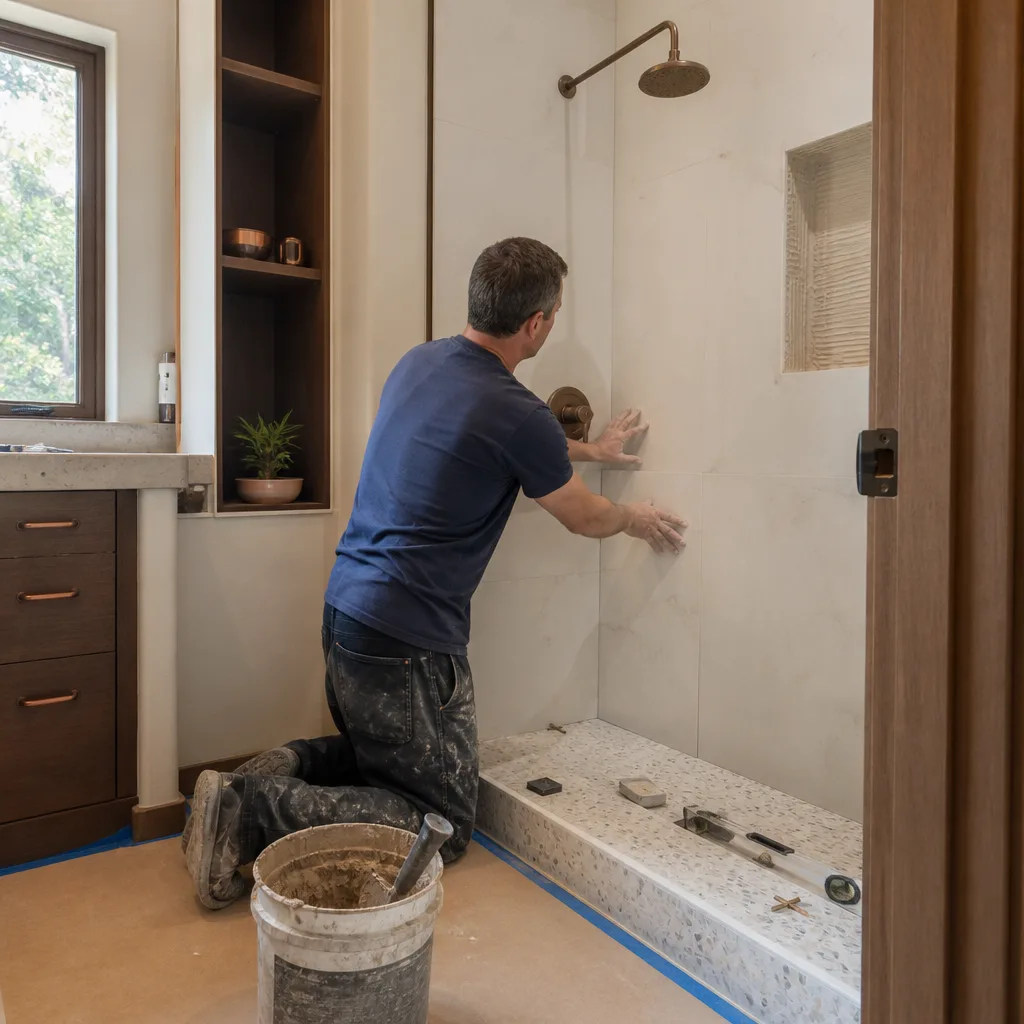
- Waterproofing and tile (days 7-14): Shower pan installation, backer board, waterproofing membrane, tile layout mock-up, tile set, grout, seal.
- Cabinet and fixture install (days 14-21): Vanity, counter, toilet, shower trim, faucets, accessories.
- Paint, trim, and punch list (days 21-28): Final paint, mirror and hardware, exhaust fan installation, walkthrough and punch list.
- Final inspection and closeout: If a permit was pulled, the inspection has to pass before the project is complete. On our projects, permits are pulled and inspections pass – that’s not negotiable.
Add 1-2 weeks to that if your project involves layout changes with plumbing relocation, custom cabinetry (lead times run 6-8 weeks from order), or specialty tile that’s back-ordered. Add 0 weeks if it’s a cosmetic refresh – those really are 1-2 week projects.
What a Real Workmanship Warranty Should Cover
Most bathroom contractor warranties are written to exclude exactly the things that go wrong. Read one and you’ll find the shower pan leak excluded as “normal wear,” the grout cracking excluded as “settling,” and the tile popping off the floor excluded as “substrate condition.” That’s not a warranty – that’s a press release.
A real bathroom workmanship warranty should cover:
- Waterproofing failure in the shower pan or wet area, including leaks that reach the ceiling below
- Tile delamination, cracking, or failure of the bond to substrate
- Grout and caulk failure at seams within the first year of installation
- Plumbing leaks at any new supply or drain connection
- Electrical work failing inspection or function
- Finish carpentry defects – cabinet doors, trim joints, drawer glides
The duration is where most warranties stop being useful. A one-year warranty covers the honeymoon. A two-year warranty covers the period when problems actually show up. Our 730-Day Done Right Promise covers two full years from project completion – if it’s not done right, we make it right – which is one of the longest workmanship guarantees in the residential construction space, and it’s the reason we can quote you a fixed price and stand behind it with confidence.
Financing matters here too. A bathroom remodel is a five-figure spend for many Fort Worth households, and a five-figure cash outlay isn’t realistic for everyone. We offer 0% financing for 18 months and $1,000 off projects over $10,000 – so the number you see is the number you pay and the timeline to pay it is workable.
How Fort Worth’s Housing Stock Shapes the Remodel
Fort Worth isn’t one kind of house. A bathroom remodel in a 1920s bungalow off Magnolia Avenue looks nothing like the same project in a 2015 build in Walsh Ranch. Knowing what’s behind your walls saves money and headaches.
- Pre-war homes (Fairmount, Ryan Place, Mistletoe Heights): Likely pier-and-beam, cast iron or galvanized supply lines, plaster walls. Cast iron drain lines have 80-100 year life – many are at the end of it. Galvanized pipes are often at the point of failure. Budget for a partial repipe if the contractor finds it during demolition, and don’t be surprised if the bathroom wall has an existing lead drain trap that has to be replaced with PVC or ABS to current code.
- Post-war homes (Wedgwood, Ridglea, Westcliff): Often slab-on-grade, copper supply lines, standard framing. Slab work for plumbing relocation is the big cost driver. Ventilation systems are often undersized and worth upgrading on any bathroom remodel.
- 1990s-2000s suburban (Keller, Saginaw, North Richland Hills, Watauga): PEX or copper supply, PVC drains, standard layouts. These are usually the simplest to remodel because the framing is predictable and the plumbing is in good shape. Tile and fixture upgrading is often the biggest win.
- New construction (Walsh Ranch, Veale Ranch, Alliance): Builder-grade finishes are the target – the plumbing and framing are fine, but the fixtures, tile, and vanity are all high-volume builder models. Cosmetic refresh projects dominate here.
The other related work that often pairs with a bathroom remodel is worth planning for. If the bathroom project reveals a failing exterior wall or a roof leak nearby, we handle roofing as a full-scope partner. If the bathroom is part of a larger primary suite addition, that’s a different conversation entirely – take a look at our Home Additions & ADU in Fort Worth guide. If you’re planning to add a bathroom building or refresh the home’s exterior at the same time, our Driveway & Pavers in Fort Worth work pairs well with curb appeal sequencing, and a Fence Installation in Fort Worth project typically runs alongside outdoor remodels to keep the property secure during construction.
Common Mistakes to Avoid
- Choosing tile before choosing the shower waterproofing system. Tile is the visible layer over the waterproofing, and the waterproofing is what makes the shower last. Pick the system first, then the tile, not the other way around.
- Skipping the permit to save money. A $300-$800 permit looks expensive until you’re disclosing unpermitted plumbing work during a home sale and your buyer’s lender demands a $6,000 remediation before closing.
- Buying cheap fixtures for a Fort Worth bathroom. Fort Worth’s 15-20 grain hardness will eat a bargain faucet cartridge within 18 months. The $80 they saved on the fixture becomes a $300 plumber visit at month 20.
- Assuming moving the toilet is a design necessity. In our experience most Fort Worth homeowners who insist on a relocation end up with a design that a competent designer could have achieved in the original location for $5,000-$15,000 less.
- Not verifying the contractor’s waterproofing credentials. “We waterproof” is not a specification. Ask for the manufacturer and the system, and ask to see a one-year-old project you can inspect.
- Timing the project for July or August. Fort Worth summers are miserable for a remodel that leaves the home without a functioning bathroom, and it’s the worst time for a labor crew working in a sealed-off room. Spring and fall projects go smoother.
- Signing a warranty that ends at 12 months. Shower pan failures and grout failures almost always surface between months 12 and 30. A warranty that covers that window is a real warranty; a warranty that doesn’t is a piece of paper.
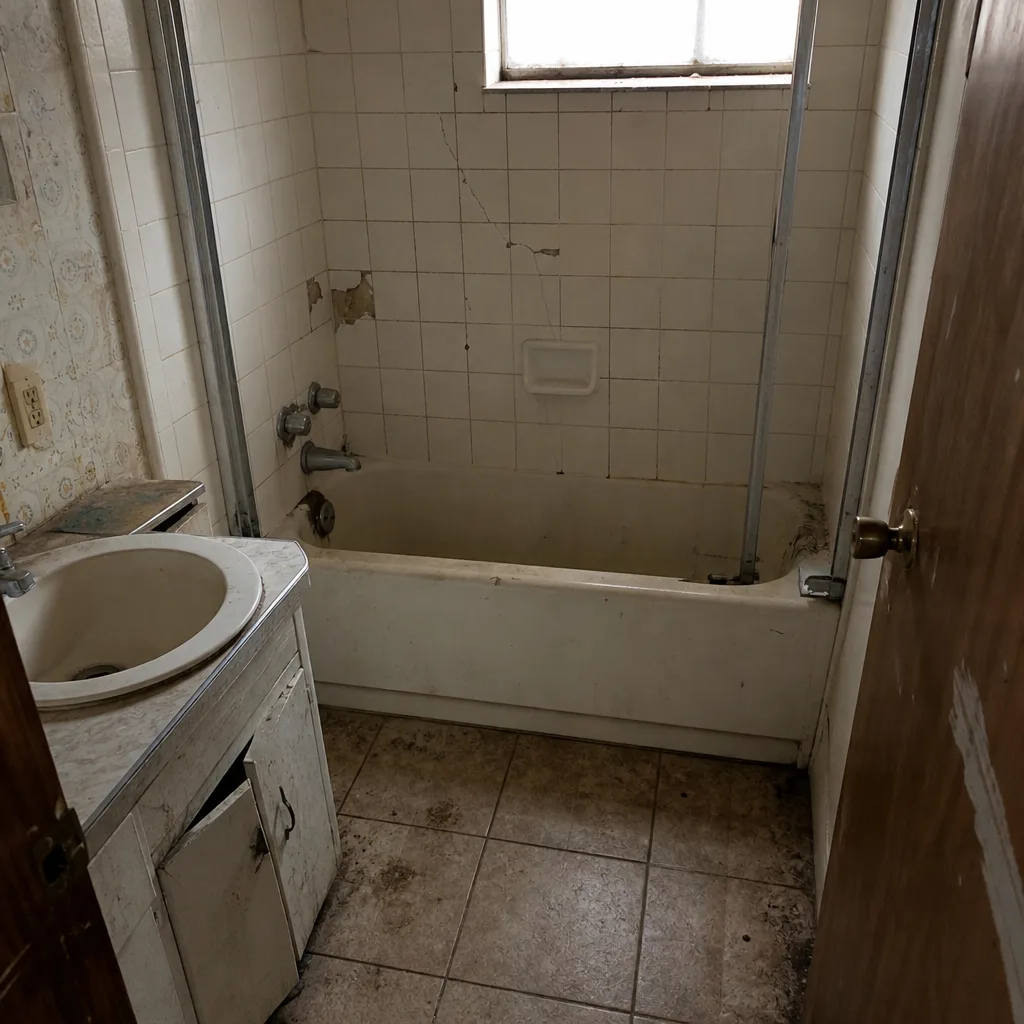
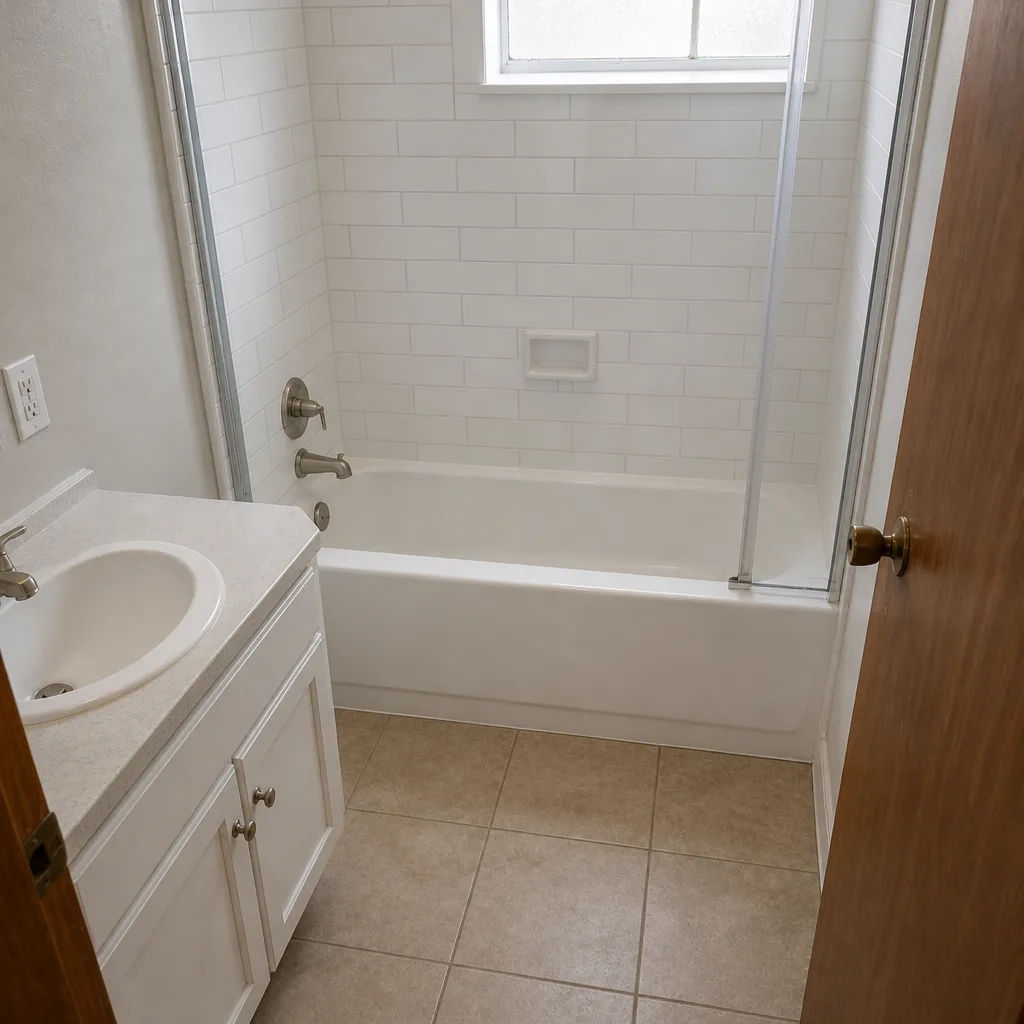
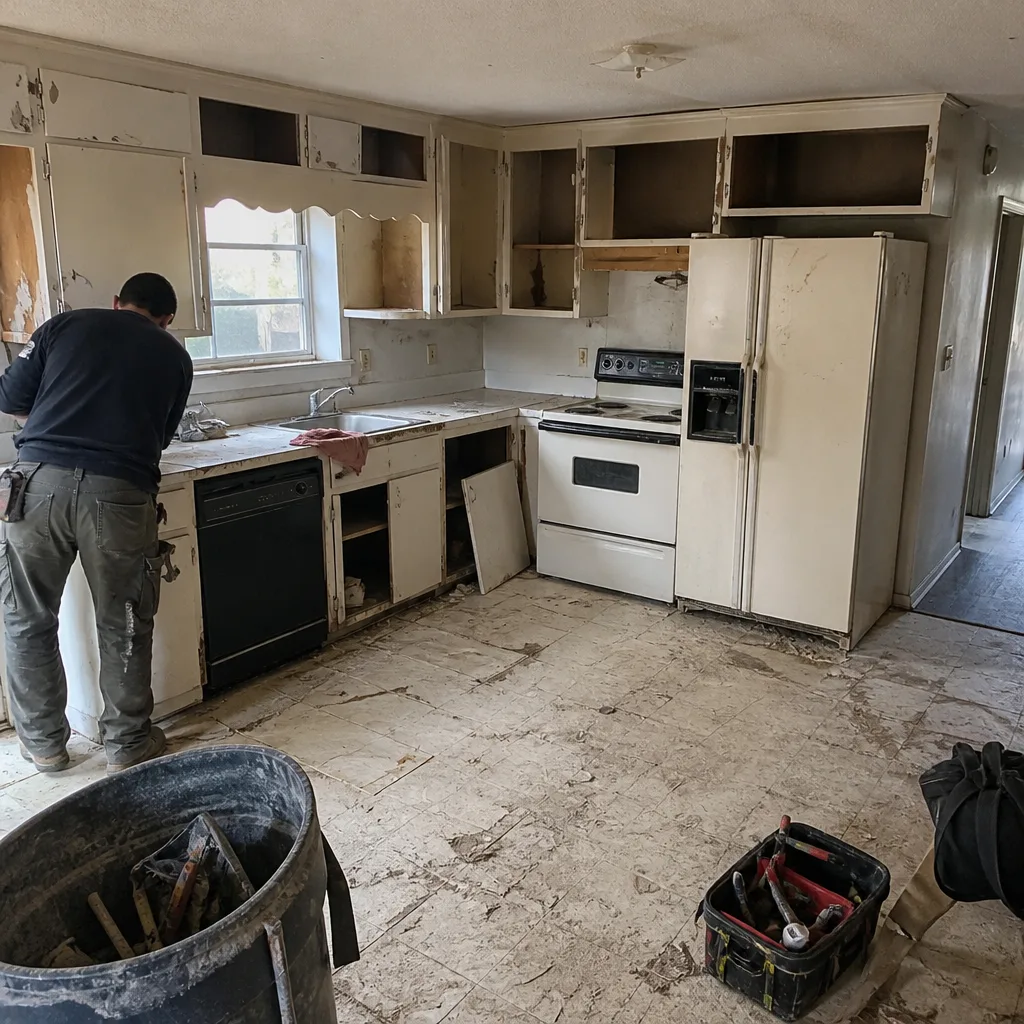
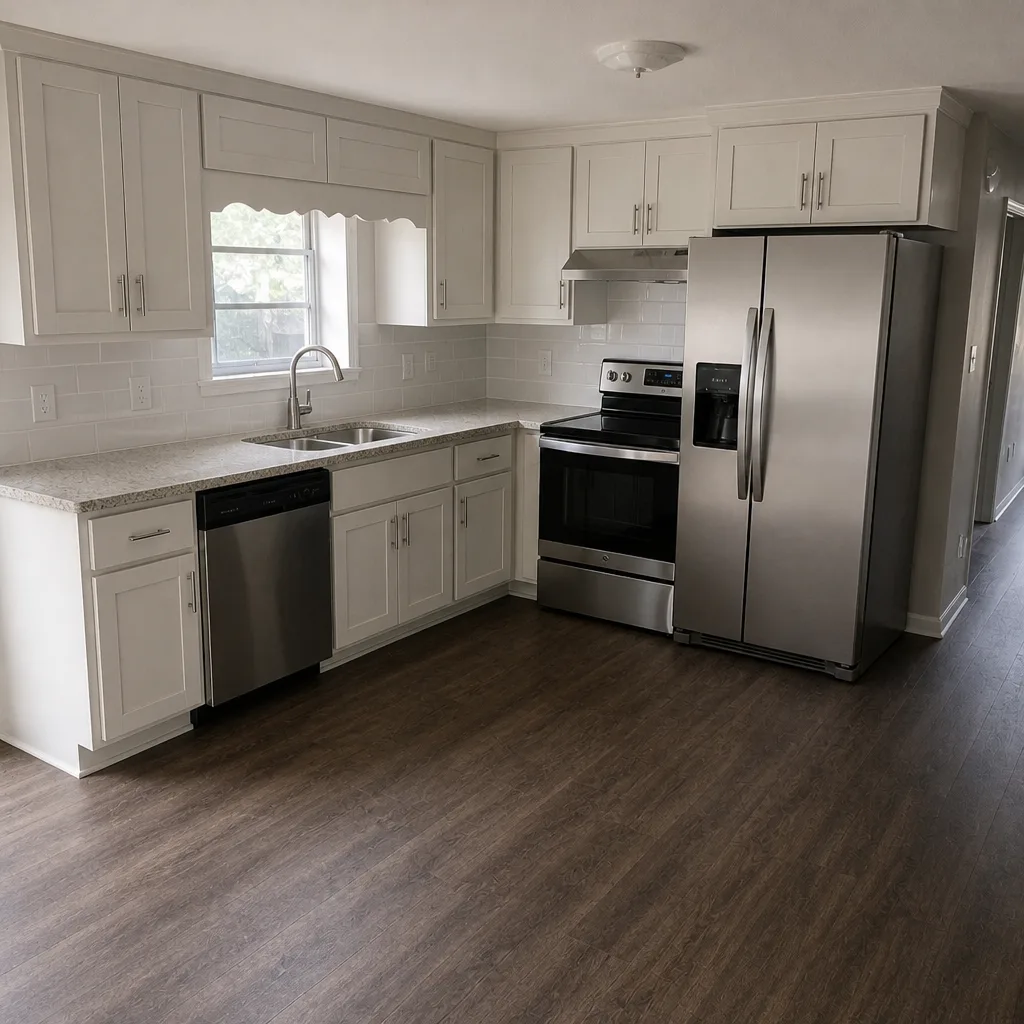
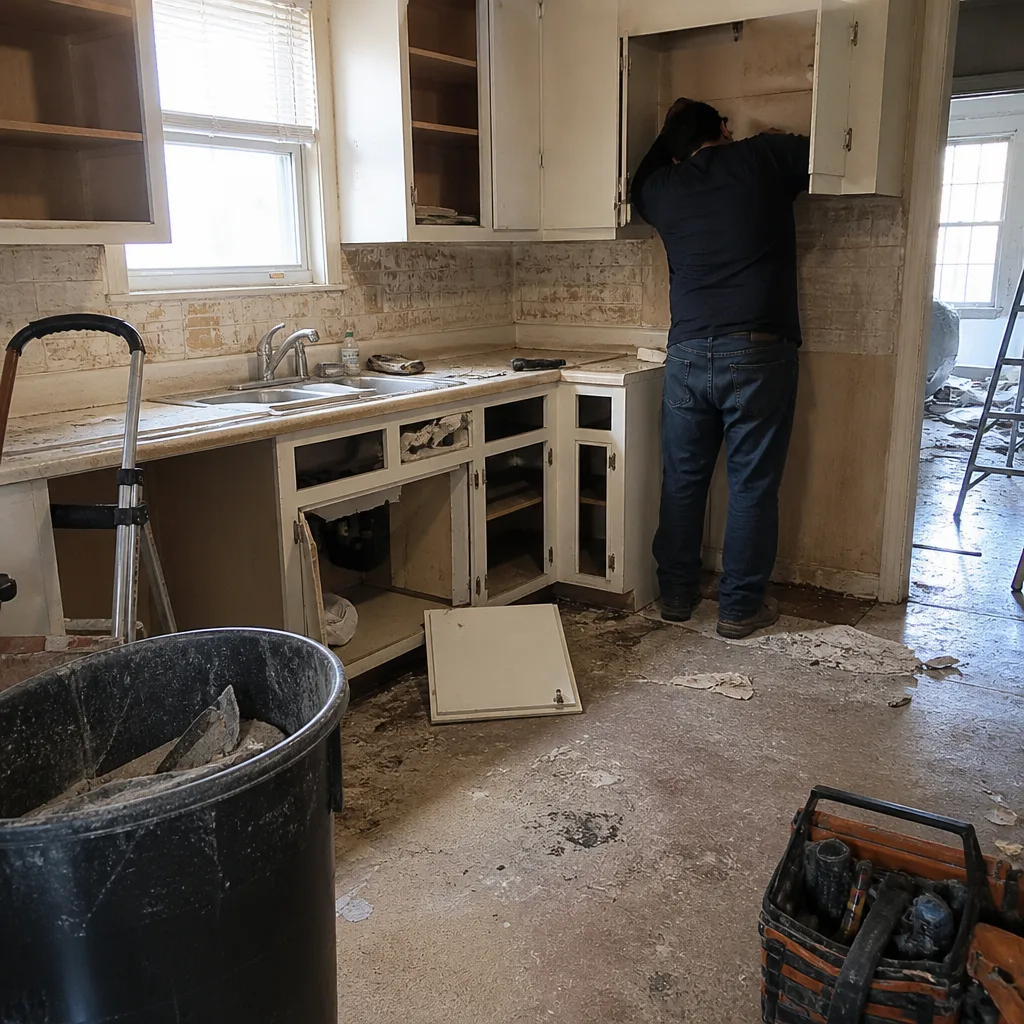
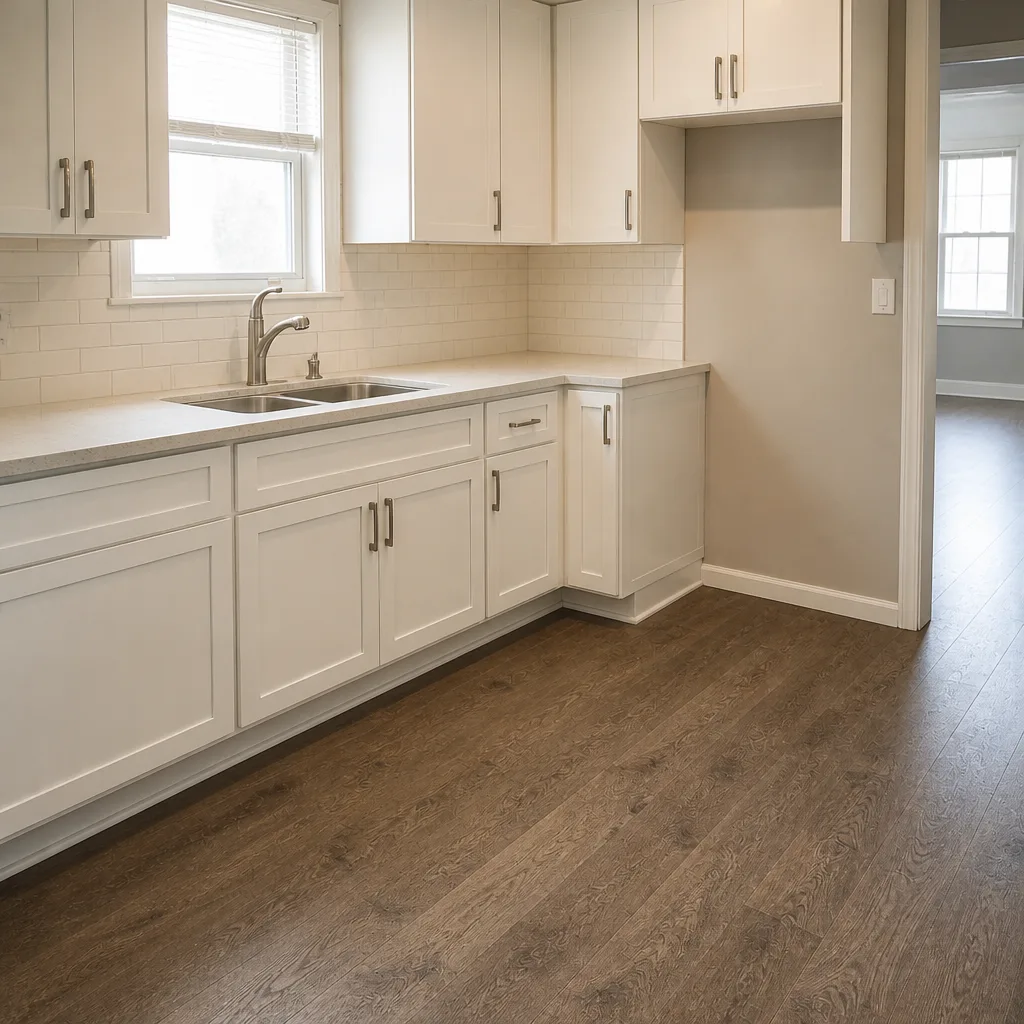
See the difference
 Before
 After
 Before
 After
 Before
 After
When to Call a Professional
Some bathroom work is genuinely a weekend project: repainting, replacing a toilet with an identical model, swapping a vanity in the same footprint. Everything else benefits from a professional. Call a licensed contractor when the project involves moving a drain, adding an electrical circuit, replacing a shower pan, cutting into a wall, or re-tiling a shower. On a Fort Worth bathroom, those are the exact scopes where a small mistake creates a very expensive problem – a water leak into the ceiling below, a failed inspection at sale time, or a shower pan that holds water in the wrong place for two years before you notice. The other cue to call is when you can’t clearly describe what a “fixed price” would mean on your project – if the difference between a $14,000 bid and a $28,000 bid is invisible, that’s exactly the point where a real scope of work and a real warranty matter. Groundwork Construction Co. of Fort Worth offers free estimates in Fort Worth – call (855) 912-5373 to schedule a free project estimate and design consult.
Frequently Asked Questions
A cosmetic bathroom refresh in Fort Worth runs $6,000-$15,000, a mid-range gut and redo runs $18,000-$35,000, and a full layout change with plumbing relocation runs $35,000-$60,000 or more. The biggest variable is whether plumbing has to move. Call (855) 912-5373 for a line-item quote tailored to your specific project – estimates are free.
You need a City of Fort Worth permit any time the project touches plumbing, electrical, or structural systems. Paint, tile replacement, a vanity swap in the same footprint, and like-for-like fixture replacement typically don’t require a permit. If a contractor tells you no permit is needed for moving a drain, that’s a red flag.
A cosmetic refresh takes 1-2 weeks, a mid-range full bathroom remodel takes 3-5 weeks, and a layout change with plumbing relocation takes 5-8 weeks. Custom cabinetry lead times of 6-8 weeks push the entire schedule, so order materials early. Call (855) 912-5373 for a timeline tailored to your scope.
Fort Worth water hardness averages 15-20 grains per gallon, which mineralizes faucets, cartridges, and grout lines faster than most U.S. cities. Combined with the humidity swing from 40% to 90%+ across the year, cheap fixtures and unsealed grout fail faster here than they would in a softer-water, drier climate. Material selection has to account for it.
Usually not, unless the current layout is genuinely unusable or you’re combining rooms. Moving plumbing on a slab-on-grade home runs $5,000-$15,000 in additional cost, and a good designer can typically achieve the same functional result in the existing footprint. Get a design consultation before you commit to relocation.
A bathroom workmanship warranty should cover waterproofing, tile adhesion, plumbing connections, and finish failures for at least two years – not the 12 months most contractors offer. Our 730-Day Done Right Promise covers two full years from project completion: if it’s not done right, we make it right.
The Bottom Line
Fort Worth bathroom remodels succeed or fail on three decisions made before demo day: whether you actually need to move plumbing, which waterproofing system will sit under your tile, and whether the finishes you picked will survive 15-20 grain hard water. Nail those three and the showroom selections become easy. Budget $6,000-$15,000 for a cosmetic refresh, $18,000-$35,000 for a mid-range gut, and $35,000-$60,000+ for layout changes, and insist on a real written scope and a warranty long enough to cover the window when problems actually surface. That’s the standard. Everything else is showroom lighting.
Ready for a Real Estimate?
Groundwork Construction Co. of Fort Worth is the full-scope construction partner for homeowners who refuse to gamble on their biggest investment. We offer no-hassle upfront pricing, 0% financing for 18 months, $1,000 off projects over $10,000, and a 730-Day Done Right Promise on every bathroom we build. Our technicians have up to 12 years of experience, they’re background-checked, and they arrive in uniform. Calls are answered by a live person 24/7 – no voicemail, no waiting until Monday. From foundation to finish line, we handle bathroom remodeling, kitchen remodeling, roofing, windows and doors, fencing, driveways and pavers, and home additions across Fort Worth and the surrounding communities. Call (855) 912-5373 to schedule your free estimate and design consult – the number you see is the number you pay, and the estimate is free.
Written by the team at Groundwork Construction Co. of Fort Worth.