Last updated November 18, 2026





Free written scope consultation - allowances, timeline, and change-order rules on paper before a single trade is scheduled
Construction Emergency Preparedness Guide for Fort Worth Homes
After a severe hail event, Fort Worth-area contractor wait times stretch to 6-8 weeks and material prices spike 15-30% within 48 hours. Homeowners without a pre-established contractor relationship pay both the premium and the delay. That’s not a scare tactic, it’s the pattern we’ve watched repeat across Tarrant County after every major storm cell that rolls through. The homeowners who come out ahead aren’t the ones who scramble fastest when the roof fails, they’re the ones who wrote the plan before the damage happened. This guide shows you exactly what that plan looks like for a Fort Worth home.
Quick Answer
Construction emergency preparedness for a Fort Worth homeowner means three things done ahead of time: knowing which damage types demand an immediate professional response versus safe temporary mitigation, keeping a storm-and-failure-specific kit with materials and contacts ready, and having a contractor relationship established before you need one. Fort Worth homes face a rare combination of expansive clay soil, severe hail, and flash flood exposure, so a generic national checklist won’t cut it. Build the plan for this city’s risks and it will save you weeks of waiting and thousands in inflated post-storm pricing.
Styles & brands we work with
- Kitchen remodeling
- Bathroom remodeling
- Home additions & ADU
- Roofing
- Windows & doors
- Driveway & pavers
- Fence
Table of Contents
- The Fort Worth Construction Emergency Hierarchy
- How to Document Construction Damage for Texas Insurance
- What to Keep in a Fort Worth Construction Emergency Kit
- Three Emergency Contractor Red Flags After Every Fort Worth Storm
- How to Vet a Contractor in Under 2 Hours
- How to Establish a Pre-Emergency Contractor Relationship
- Neighborhood-by-Neighborhood Risk Notes
The Fort Worth Construction Emergency Hierarchy
Not every construction emergency is equal. The mistake most Fort Worth homeowners make is treating a slow roof leak the same as a foundation breach or an active water intrusion into a wall cavity. They’re not the same, and the response time and safety rules differ dramatically. Here’s how we rank the three most common failure types we see around Fort Worth.
1. Foundation Breach (Highest Priority)
Fort Worth sits on expansive clay soil that swells when wet and shrinks when dry. That movement puts continuous stress on slab edges, pier-and-beam supports, and the transition points where the foundation meets exterior walls. When a foundation breach opens, you may see a sudden diagonal crack wider than a quarter inch, a door that won’t close overnight, or water pooling against the foundation line after rain. A foundation breach is not a DIY fix and shouldn’t wait. The risk of structural compromise and the difficulty of a later repair both escalate fast. Call a professional and keep people away from the affected corner until it’s assessed.
2. Roof Penetration (High Priority)
Hail and wind are Fort Worth’s most frequent construction emergencies. A penetration through the roof deck, whether from a fallen limb or a hail impact that’s compromised shingles and underlayment, allows water into the attic within hours of the next rain. A true roof penetration is a professional call, but a safe temporary response is possible: moving valuables and electronics away from the leak point, placing a bucket, and photographing the damage. Never climb onto a wet, damaged roof in Fort Worth weather to attempt a repair yourself. Fall risk is real and the injury rate for homeowners on storm-damaged roofs is brutal.
3. Water Intrusion (Tiered)
A slow leak through a window frame or a seep along a wall is a water intrusion event, but it usually isn’t an active emergency. The tiered response: shut off the water source if it’s plumbing-driven, direct the flow away from finished surfaces, document the intrusion, and schedule a professional assessment. Active flooding through a failed pipe or a roof breach during a storm is different and needs same-day attention. The key distinction is whether water is currently entering a finished space or threatening structural members.
How to Document Construction Damage for Texas Insurance
This is the section most Fort Worth homeowners skip, and it’s the one that costs them thousands in denied or reduced claims. Texas insurance adjusters work from a specific documentation standard, and the homeowners who photograph and record correctly get faster, fuller settlements. Here’s the sequence that works.
The Photo Sequence Adjusters Want
- Wide shot of the whole structure. Stand back far enough to capture the entire side of the house and the damage zone. Adjusters use this to establish scope.
- Mid-range context shot. Move to 6-10 feet from the damage. Capture the relationship between the damage and the rest of the home.
- Close-up detail shot. Get within inches of the damaged material. Show the texture, depth, and character of the failure.
- Scale reference shot. Place a measuring tape, coin, or ruler next to the damage. This lets the adjuster estimate size without visiting.
- Underside or hidden-damage shot. Photograph inside the attic, under the floor, or behind the wall where water traveled. Most Fort Worth claims get trimmed because hidden damage wasn’t documented.
Timestamp and Written Record Requirements
Taken with your phone? Good, almost every modern phone embeds the timestamp and GPS coordinates in the photo’s EXIF data automatically. Don’t strip it. Most Fort Worth insurance adjusters now accept phone photos because the metadata verifies when and where you took them.
Keep a written record parallel to the photos:
- Date and time of the damage event
- Date and time of each photo batch
- A one-sentence description of what each photo shows
- Any temporary mitigation you performed and its cost
- Dates and names of any contractors who viewed the damage
- A separate record of any communication with your insurer, including claim numbers and adjuster names
Store all of it in a cloud folder, not just on your phone. Fort Worth storm-damaged phones get lost, dropped, or water-damaged at exactly the wrong moment. When it’s time to file, a cloud-based record is a settlement lever.
What to Keep in a Fort Worth Construction Emergency Kit
The right Fort Worth construction emergency kit is not a hurricane bucket. It’s a specific set of materials and records that shorten response time and limit damage. Keep it in the garage, watertight, where you can grab it quickly.
Materials
- Heavy-duty 6-mil plastic sheeting and a roll of stretch wrap for covering roof penetrations, window frames, and exterior wall breaches temporarily
- Blue tarp (at least 20×30). Standard size for a partial roof coverage in Fort Worth homes
- Roofing nails and a hammer to pin tarps into shingle edges if you’re able to safely reach a ground-level roof edge. Anything higher calls a professional
- Multiple 5-gallon buckets for ceiling leaks and active water capture
- A shop vac and a water extraction pump for interior water intrusion
- Heavy duty gloves, work boots, and safety glasses
- Moisture meter (a $30 handheld model) to check whether walls are wet behind the drywall
- Flashlight and headlamp with backup batteries
- Fire extinguisher, ABC rated
Records and Contacts
- Printed copy of your homeowner’s insurance policy declarations page
- Insurer’s 24/7 claims line, adjuster name, claim number if already opened
- At least two contractor contacts, one for roofing and one for foundation and general
- Utility shutoff locations and valve photos
- The property survey or plot plan
- A USB drive or cloud QR code with all your original photos from the pre-damage state of the house
That last one is the secret weapon. If you have a documented pre-storm condition of your home, adjusting a claim becomes far easier. Spend 20 minutes photographing every room, the roof, the foundation line, and the attic once a year.
Three Emergency Contractor Red Flags After Every Fort Worth Storm
Fort Worth has seen the pattern repeat: storm rolls through, out-of-town trucks appear within 48 hours, and some homeowners end up with shoddy work, a disappearing contractor, or a warranty that doesn’t exist. Here’s what to watch for.
Red Flag 1: They Show Up Before Your Insurance Adjuster
Legitimate contractors do take storm calls immediately, but the ones who pressure you to sign a contract before you’ve spoken to your insurer or adjuster are working the gap between damage and claim. A real professional wants a written scope and a claim number before starting work. If the pitch is “sign today and we start tomorrow, worry about insurance later,” walk away.
Red Flag 2: A Storm-Only Business Address
Ask for a physical business address and check that it matches a Google Maps result with real reviews that predate the storm. A truck with an out-of-state plate and a paper business card but no verifiable local footprint is a warning sign. If they can’t show you a history of work in Fort Worth or surrounding Tarrant County, they’re transient.
Red Flag 3: Cash-Upfront or Full-Payment Demands
A legitimate Fort Worth contractor collects a deposit, not the full contract price before work begins. Demands for cash payment, the full amount up front, or payment before a scope is written are strong indicators of a scam. So is any contractor who won’t put their warranty in writing. At Groundwork, every project is covered by our 730-Day Done Right Promise in writing because we expect to stand behind the work long after the storm season ends.
How to Vet a Contractor in Under 2 Hours
If a storm hits and you don’t have a pre-existing relationship, you can still conduct a fast, defensive vetting in about 2 hours. Here’s the step-by-step.
- First 10 minutes: Search the business name and phone number. Check Google, the BBB, and your local Fort Worth neighborhood Facebook group. Anything less than 2 years of verifiable history needs extra scrutiny.
- 10-25 minutes: Check the Texas Department of Licensing and Regulation (TDLR) database. Verify the contractor’s license, insurance status, and complaint history.
- 25-40 minutes: Call the business. Ask how long they’ve been in business, for a written scope, and for a copy of their warranty language. Listen for whether they answer the phone or bounce you to voicemail.
- 40-60 minutes: Discuss the specific damage and ask for a written estimate by end of day. A legitimate Fort Worth operator will give you upfront pricing in writing, not a verbal ballpark.
- 60-90 minutes: Ask for three local references from work in the last 12 months and call at least one.
- 90-120 minutes: Compare the written scope to your damage documentation. Make sure the scope covers what you photographed. If it doesn’t, ask why.
The 2-hour constraint is a test of a contractor’s operational maturity. A professional will answer a live person, provide written scope, show their insurance and licensing, and hand you references. A storm-chaser will stall, deflect, and push for signatures.
How to Establish a Pre-Emergency Contractor Relationship
The bottom line of this entire guide is that the Fort Worth homeowner who prepared gets better outcomes than the one who scrambles. A pre-emergency contractor relationship is the concrete action that makes your preparedness real.
Here’s what to ask a construction company in Fort Worth before you ever need them in a crisis:
- “How do you handle after-hours calls?” A company that answers with a live person at 2 a.m. is operationally different from one that routes to voicemail. Groundwork answers calls with a live person 24/7.
- “What’s your emergency response process?” Ask for the exact steps from call to on-site evaluation. If they can’t describe it, they haven’t built one.
- “What’s your warranty in writing, and for how long?” Anything shorter than a couple of years on storm repair is telling.
- “Who actually shows up on-site?” Background-checked, uniformed technicians versus unknown subcontractors is a real distinction when you’re dealing with storm repair.
- “Can you give me a written scope and pricing before I need an emergency?” A pre-priced emergency response scope is the gold standard. Ask for it.
- “What brand partners do you use?” Roofers working with GAF or CertainTeed materials get access to their manufacturer warranties. Window contractors tied to Andersen or Pella do the same. For kitchen and bath work after a storm-related interior repair, brands like Kohler and Moen carry certified-installer programs that matter when a claim touches finish replacements.
Establishing a relationship doesn’t cost you anything. Schedule a free estimate and design consult. Have the company walk your home with you, note vulnerable spots, and confirm contact information. That’s a plan you can rely on and a relationship that exists before the storm.
Why Fort Worth Homeowners Benefit From Pre-Emergency Relationships
The math is simple. After a major Fort Worth hail event, the companies with established customer lists triage existing relationships first. New callers go into the queue and wait 6-8 weeks. Materials pricing spikes 15-30% within 48 hours as regional supply gets pulled toward the most damaged neighborhoods. The homeowner with the pre-established relationship doesn’t just get a faster appointment, they get pre-negotiated pricing that isn’t subject to the post-storm market shift. That’s what preparedness looks like in dollar terms.
Neighborhood-by-Neighborhood Risk Notes
Fort Worth isn’t one climate. The soil, drainage, and exposure profile shifts from neighborhood to neighborhood, and it matters for your emergency plan.
West and Southwest Fort Worth
Areas like Ridglea, Westover Hills, and Benbrook sit on tighter, more reactive clay. Foundation movement is faster here after weather swings. If you live on the slopes that drain toward Benbrook Lake, your flood exposure and your foundation exposure are both elevated. Keep your foundation documentation current.
North Fort Worth and Keller-Aligned Areas
North Fort Worth subsoil near the Keller corridor mixes in more limestone and expansive clay in a way that creates a distinct pattern of foundation failures versus the west side. Hail exposure is also elevated along that northern arc, and roof penetrations show up with more frequency after severe cells that move northeast across the city.
East Fort Worth and the Handley-Meadowbrook Area
Older structural stock and mature tree canopies here mean limb-fall roof penetrations are more common. If you’re in Handley or Meadowbrook, your kit should include a saw for cutting fallen limbs away from the roof edge. Never trim a limb that’s leaning on a live power line, call Oncor first.
Fort Worth’s Flood-Prone Corridors
The Trinity River corridor and low-lying areas near the Clear Fork have real flood exposure. Homeowners in those zones should have a water-intrusion response plan that includes the shutoff valve location, a way to elevate items in the garage, and a plan to document basement or crawl space water before it spreads. Flash flood events in Fort Worth can move water into homes fast, so the pre-event plan matters more than the event response.
Common Mistakes to Avoid
- Waiting to file a claim until a contractor confirms the scope. In Fort Worth, insurance claim timelines start when you call, not when the contractor signs off. File the claim and document the damage on day one.
- Signing a contract before the insurance adjuster visits. Storm-chasers know the pressure window is short, and they exploit it. Verify the scope and the claim number first.
- Photographing damage without a scale reference. Adjusters can’t size damage from an uncalibrated photo, and Fort Worth claims get trimmed for exactly this reason. Always include a ruler or tape measure.
- Skipping the annual home photo walk-through. If you don’t have a pre-damage record of your Fort Worth home, an insurance claim becomes a he-said-she-said on condition. Twenty minutes a year prevents this.
- Assuming every slow leak requires emergency rate pricing. Many water intrusions in Fort Worth are safely mitigatable for a few days. Correctly tiering your response saves you a real amount of money.
- Calling a random out-of-town phone number that shows up 48 hours after a hailstorm. Verify local business footprint, TDLR record, and reviews before you call them back. No exceptions.
- Doing your own storm roof repair to save a few hundred dollars. Fall injuries on wet, damaged Fort Worth roofs are common and hard on families. Save the money for the repair; let the technician do the intake.
See the difference
 Before
 After
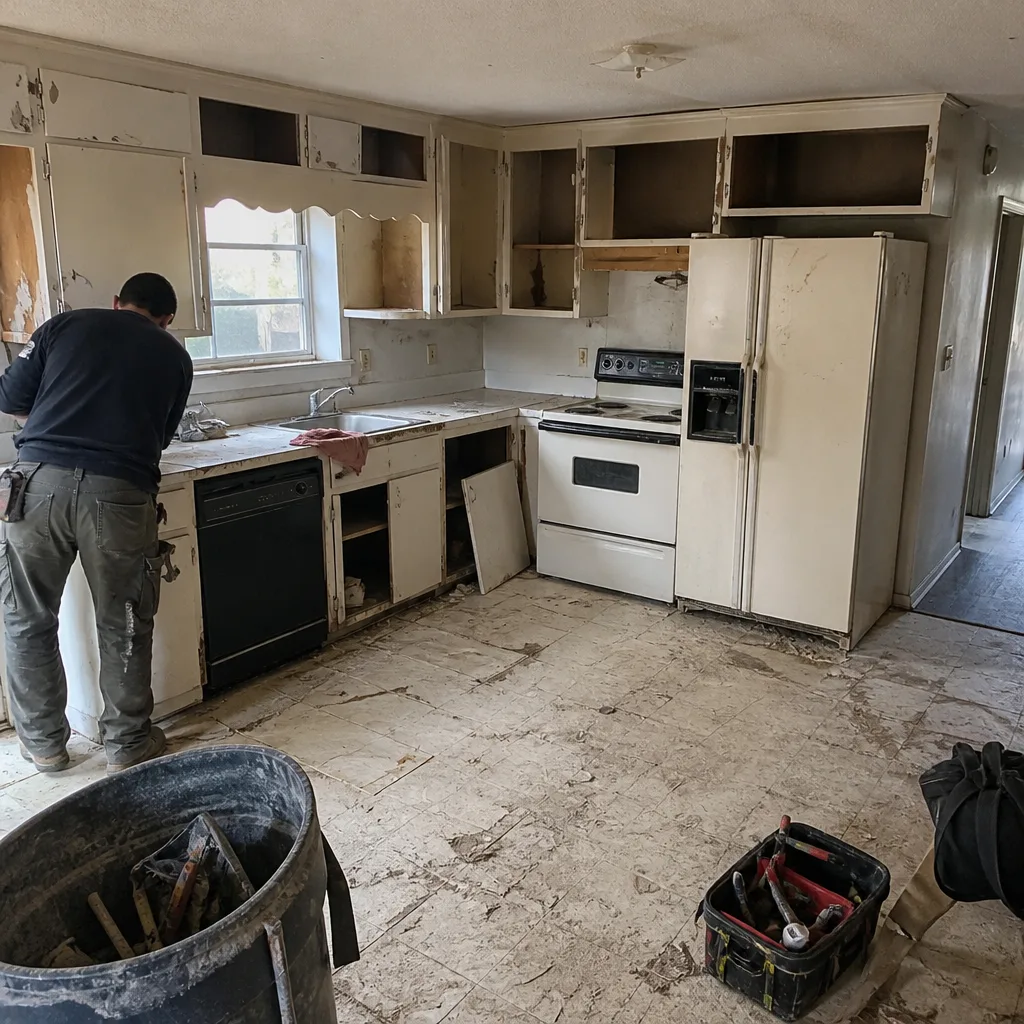 Before
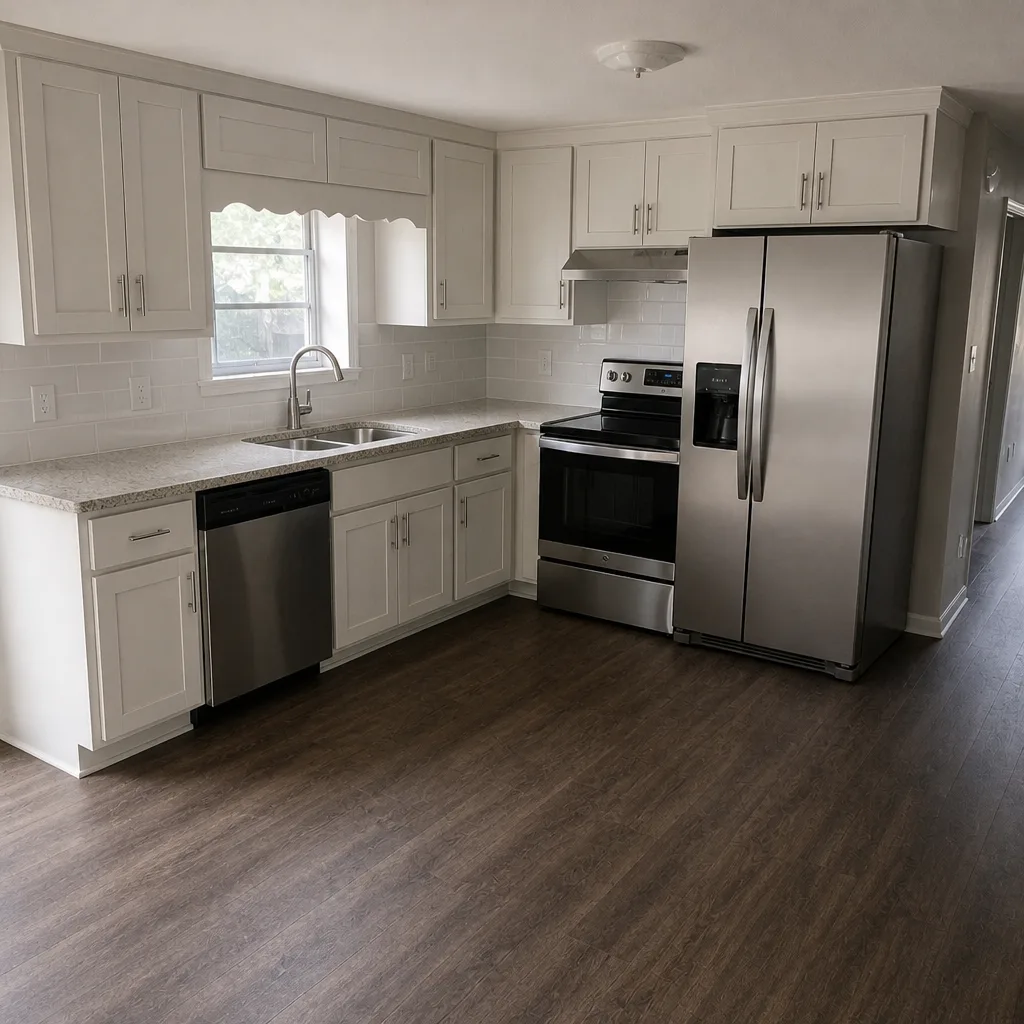 After
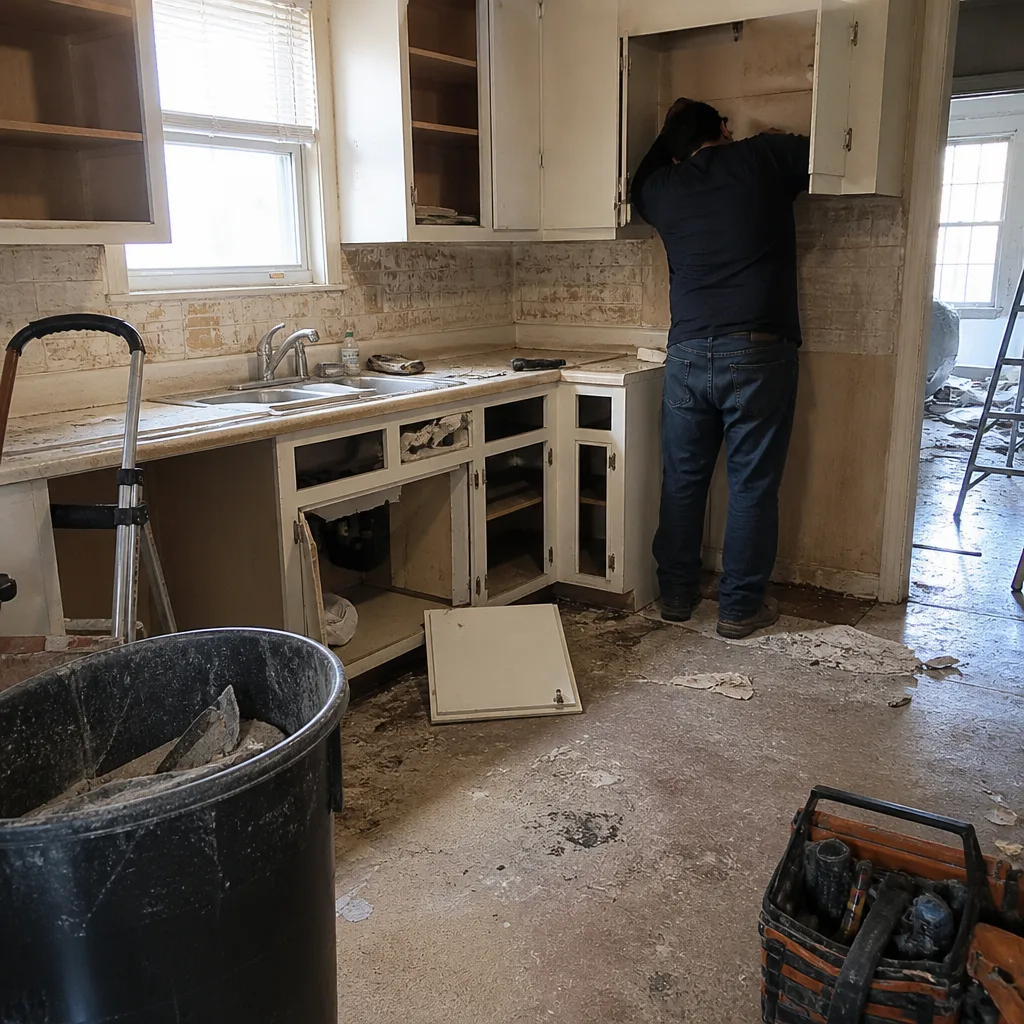 Before
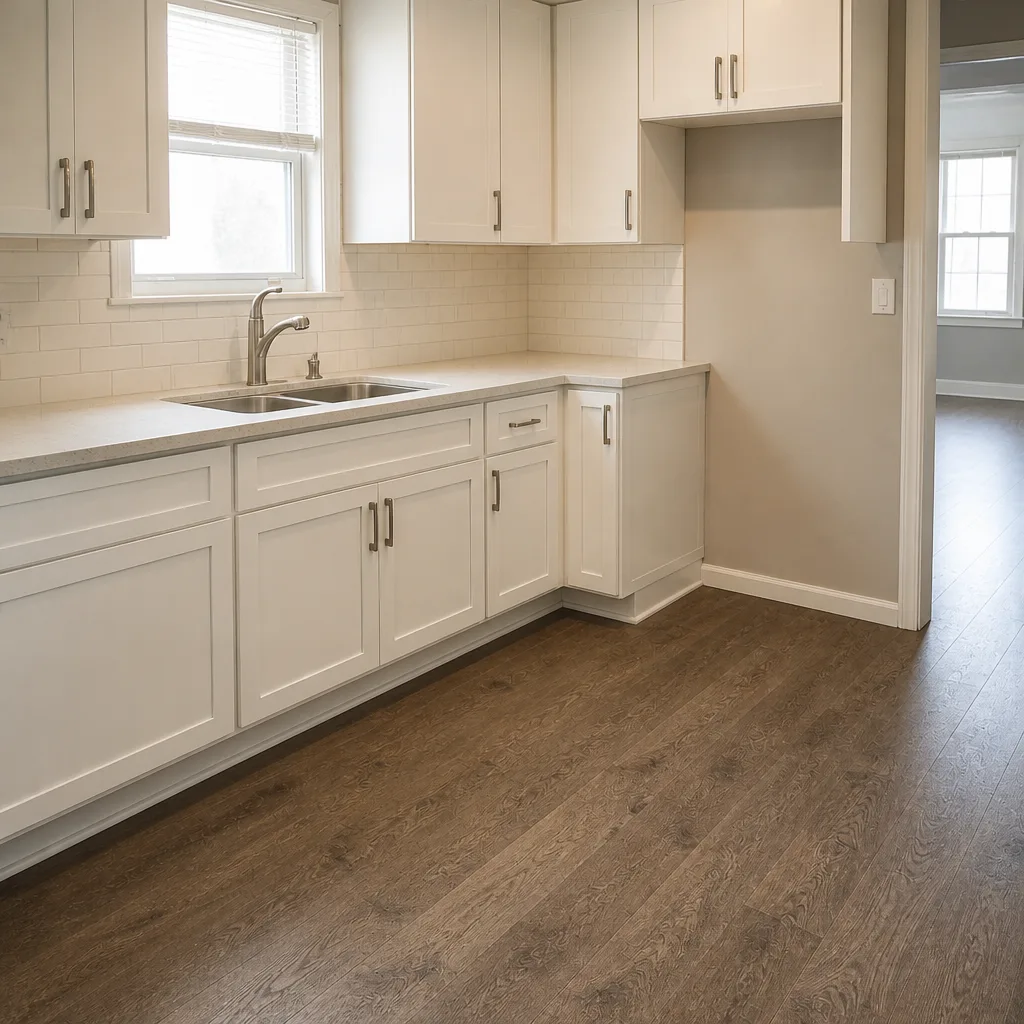 After
When to Call a Professional
These are the specific scenarios where we tell Fort Worth homeowners to stop assessing and start calling. If there’s a diagonal crack in the brick wider than a pencil, call. If water is actively flowing into a finished room during or after a storm, call. If a roof penetration is above head-height and the tarps can’t reach it safely, call. If a limb is resting on the roof surface or on a utility line, call. If an electrical panel or outlet has been exposed to water, call. If you smell gas near a foundation or exterior wall, leave and call. The rest (a slow window leak, small interior ceiling spot, minor exterior siding damage) can often be safely documented and scheduled.
For Fort Worth homeowners establishing their plan, Groundwork Construction Co. of Fort Worth offers free estimates. Call Groundwork Construction Co. of Fort Worth home at (855) 912-5373 and we’ll walk you through a pre-emergency assessment, confirm the vulnerable points on your specific property, and give you written upfront pricing before anything happens. That’s what preparedness actually is.
Frequently Asked Questions
Emergency construction repair in Fort Worth typically runs $400-$900 for a temporary roof tarp-and-stabilize response, $1,200-$3,500 for a water intrusion mitigation and dry-down, and $3,000-$12,000+ for foundation stabilization depending on pier count and location. Post-storm pricing spikes 15-30% within 48 hours of a major event, so pre-storm pricing is meaningfully lower. Call (855) 912-5373 for a free written estimate before you need it, so the number on file is the number you pay.
Yes, most structural, roof, and post-storm reconstruction work in Fort Worth requires a permit from the City of Fort Worth’s Development Services Department. Roof replacement, structural repair, and foundation work all trigger permits. A legitimate contractor pulls the permit and can show you the permit number. If a contractor says permits aren’t needed for your scope, that’s a red flag, not a favor.
Hail damage is generally covered under a standard Texas homeowner’s policy, subject to your deductible and any policy limits. The key is proper documentation: date-stamped photos with scale reference, a written record of the damage event, and prompt filing. Roof age matters too, since many Texas policies use actual cash value for roofs over a certain age, meaning you’ll get a depreciated settlement rather than full replacement cost. Read the declarations page and understand the roof schedule before the storm.
After a severe hail or wind event in Fort Worth, wait times for new-call customers typically stretch to 6-8 weeks for any scope larger than a temporary stabilization. Wait times for homeowners with an established contractor relationship are typically days to a couple of weeks, depending on severity. That difference alone is a compelling reason to build the relationship before the event.
Only on a ground-level or safely accessible portion of the roof, and only to install a tarp from a ladder, never climbing onto a wet or damaged roof surface. Fall risk is the leading hazard for homeowners making storm repairs, and wet shingles are worse than dry ones. Anything above head-height on a sloped or compromised roof calls a professional for safety, and it’s also often the fastest way to protect the underlying structure before mold sets in.
The 730-Day Done Right Promise is Groundwork Construction Co.’s written workmanship guarantee: if the work isn’t done right, we make it right, for two full years after project completion. That’s one of the longest workmanship guarantees in the residential construction space, and it’s in writing because we expect to stand behind every project. For Fort Worth homeowners protecting a major investment, it matters more than the short-term bid number.
The Bottom Line
Fort Worth homeowners don’t get to choose whether the next storm, foundation shift, or water intrusion happens, but they do get to choose whether they’re ready. Preparedness is the difference between paying post-storm prices on a 6-8 week wait and getting a pre-priced response from a contractor you already know. The core actions: build the kit, document your home now, tier your response correctly, and establish the relationship before you need it. That’s the plan. If you want to establish it on your specific property, the team at Groundwork Construction Co. of Fort Worth has technicians with up to 12 years of experience who can walk your home and build the plan with you.
Related reading from Groundwork: understanding Driveway & Pavers in Fort Worth and how hardscape failure interacts with foundation movement, our guide to Fence Installation in Fort Worth for wind-damage response planning, and Home Additions & ADU in Fort Worth for homeowners considering structural changes after a major event.
Contact Groundwork Construction Co. of Fort Worth

Build the plan before you need it. Groundwork Construction Co. of Fort Worth offers free project estimates and design consults, upfront written pricing with no change-order surprises, 0% financing for 18 months, and $1,000 off projects over $10,000. Every project is covered by our 730-Day Done Right Promise, and every technician arrives background-checked and uniformed. Call (855) 912-5373 to schedule your free estimate, and a live person will answer, day or night. Build the relationship now, and when the storm hits, you’ll be starting from a plan instead of a scramble.
Written by the team at Groundwork Construction Co. of Fort Worth.