
Free written scope consultation - allowances, timeline, and change-order rules on paper before a single trade is scheduled
Styles & brands we work with
- Kitchen remodeling
- Bathroom remodeling
- Home additions & ADU
- Roofing
- Windows & doors
- Driveway & pavers
- Fence
See the difference
 Before
 After
 Before
 After
 Before
 After
Window Design Pressure Ratings in Fort Worth: What the Number on the Spec Sheet Actually Means
A design pressure (DP) rating is the wind load, in pounds per square foot, that a window is tested to withstand without breaking, leaking, or permanently deflecting. In Fort Worth, most single-story ranch homes need a DP rating of at least DP35 to DP40, while taller custom builds pushing past two stories toward Alliance or Walsh Ranch commonly require DP50 or higher under ASCE 7 Exposure Category C. Most homeowners never see that number on a quote. If you want a straight read on what your windows actually need, call (855) 912-5373 and we’ll walk through it with no pressure.
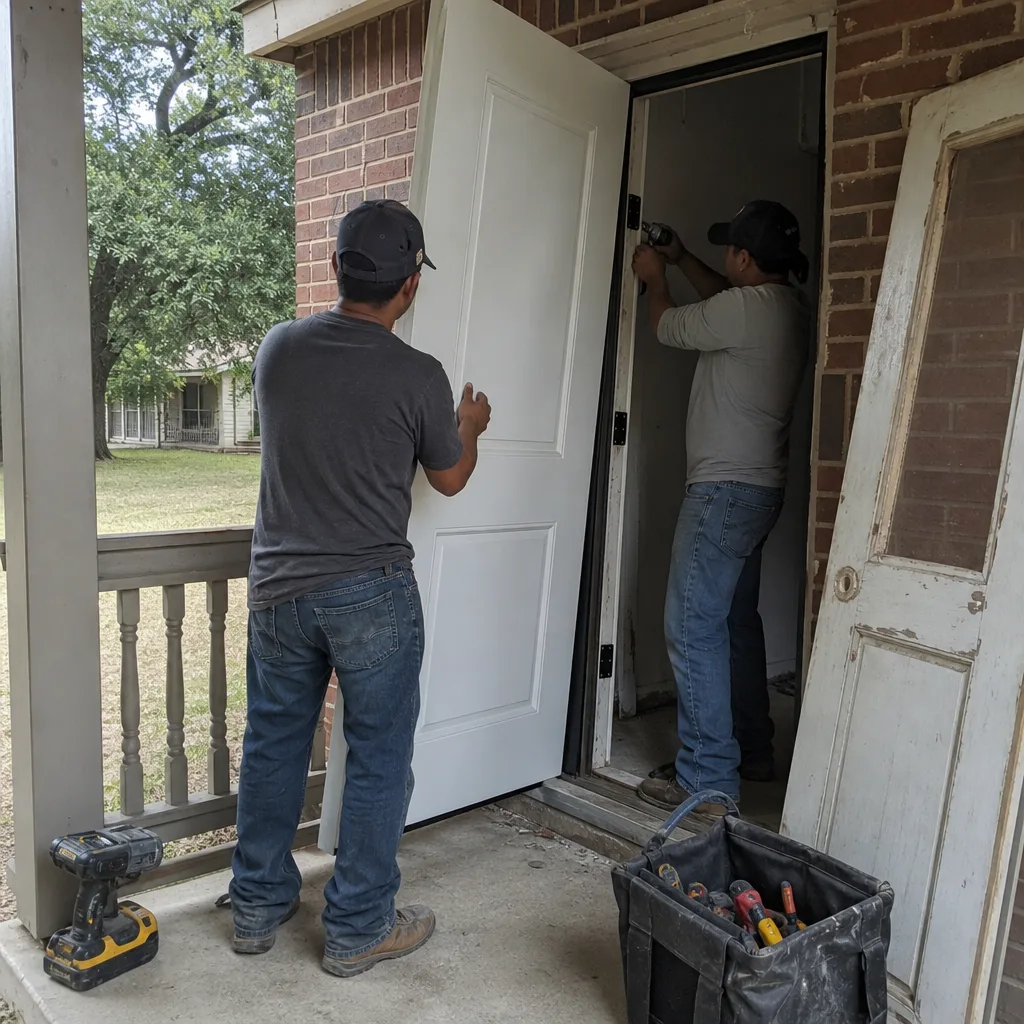
A straight-line wind event can slam Fort Worth at 70 to 80 mph without a tornado ever touching down. We’ve seen it after spring fronts roll through Fairmount and Summerfields: shingles gone, fence panels flat, and windows that suddenly whistle or fog at the seal. The difference between a window that holds and one that fails usually traces back to a spec sheet nobody read closely enough at purchase.
What Goes Into a DP Rating?
DP is not one test. It’s a composite rating a window earns after passing three separate performance tests, each governed by the American Architectural Manufacturers Association (AAMA) and published in the National Fenestration Rating Council (NFRC) label. When you see DP40 on a sticker, it means that window cleared all three at that load level:
- Structural load (AAMA 1304 / ASTM E330): A pressure chamber pushes wind against the window at the rated PSF and measures deflection. A window rated to DP40 can hold 40 psf without the frame bowing past limits.
- Water resistance (AAMA 501 / ASTM E547): Water is sprayed at the exterior while pressure drops, mimicking wind-driven rain. This is the test that catches leaks before they rot your framing.
- Air infiltration (ASTM E283): Measures how much air leaks past the seals at a given pressure differential. Low leakage means fewer drafts, lower summer cooling loads, and less dust pushed into the home.
Most windows sold in North Texas are rated somewhere between DP25 and DP50. That’s a wide spread, and the number you actually need depends on your exposure category, the height of the opening above grade, and the local wind speed map in the current building code. Fort Worth falls under the International Residential Code (IRC) as adopted locally, which references ASCE 7 for wind pressure calculations. The short version: where your home sits matters as much as what it’s built of.
Why Fort Worth’s Flat Prairie Exposure Raises the Bar
Exposure Category C (ASCE 7) covers open terrain with scattered obstructions – exactly what much of Fort Worth looks like. The prairie stretches west toward Weatherford and north past Loop 820 toward the Alliance corridor with little to break the wind. A window on a sheltered urban lot in Near Southside might genuinely get away with DP30. The same window on an open western Tarrant County lot facing the prevailing southerly wind in summer can need DP40 or higher. Wind pressure coefficients in Exposure C are meaningfully higher than in Exposure B (suburban or wooded terrain), and the code math reflects that.
Height compounds it. Wind speed increases with elevation, so the second-floor windows on a tall custom build in Walsh Ranch see higher pressure than first-floor windows on the same lot. We rarely quote the same DP rating for a single-story ranch in Ryan Place that we would for a two-story custom on an exposed lot in the northwest. A general rule of thumb from code tables:
| Build Type / Location | Typical Minimum DP | Notes |
|---|---|---|
| Single-story ranch, sheltered lot (e.g. Fairmount, Ryan Place) | DP35 | Lowest exposed-wall height, some tree cover |
| Single-story ranch, open western lot | DP40 | Exposure Category C |
| Two-story home, open exposure | DP45 to DP50 | Height increases pressure |
| Custom build, tall walls, northwest exposure (e.g. Alliance, Walsh Ranch) | DP50+ | Code-calculated per ASCE 7 |
These aren’t marketing ranges. They’re the numbers a proper wind-load calculation produces, and they belong on your quote. A builder who won’t show the DP is a builder asking you to trust a guess.
Third-Party Verified Versus Self-Reported Ratings
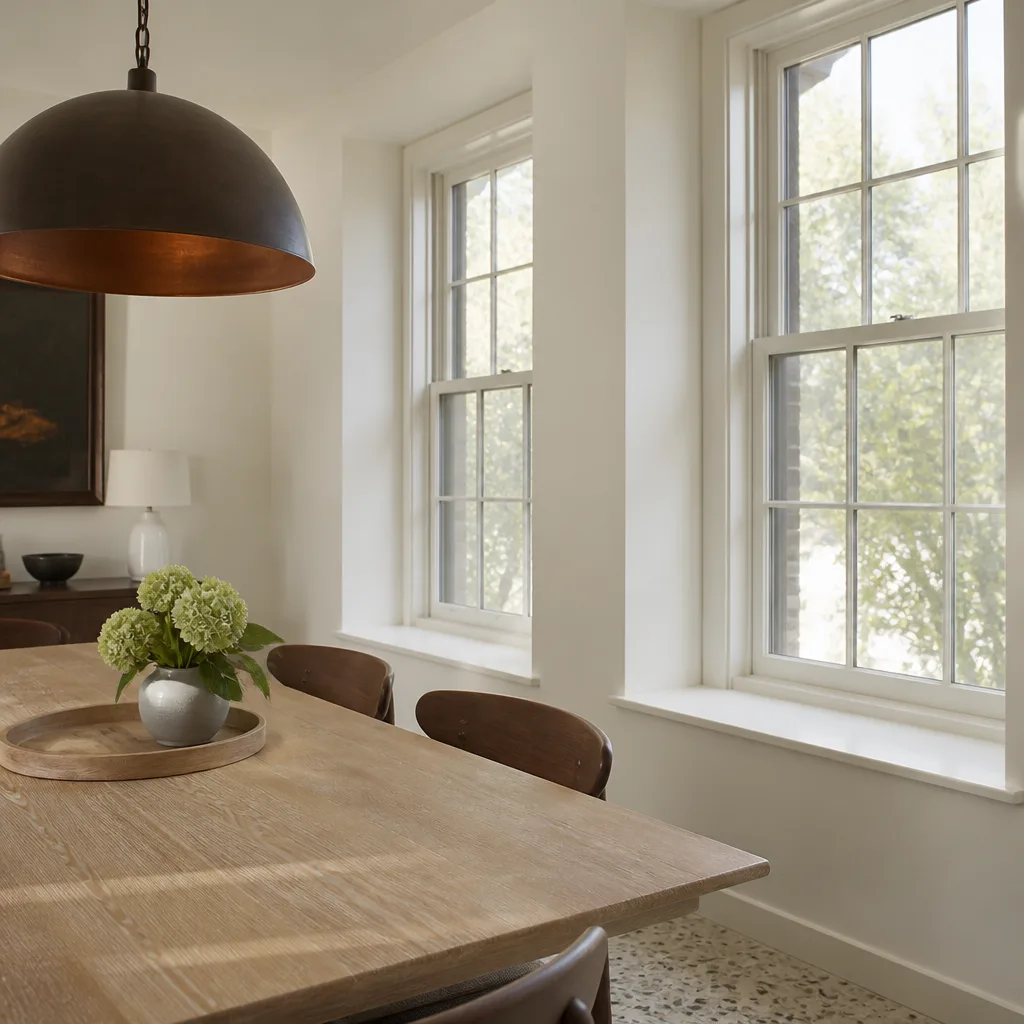
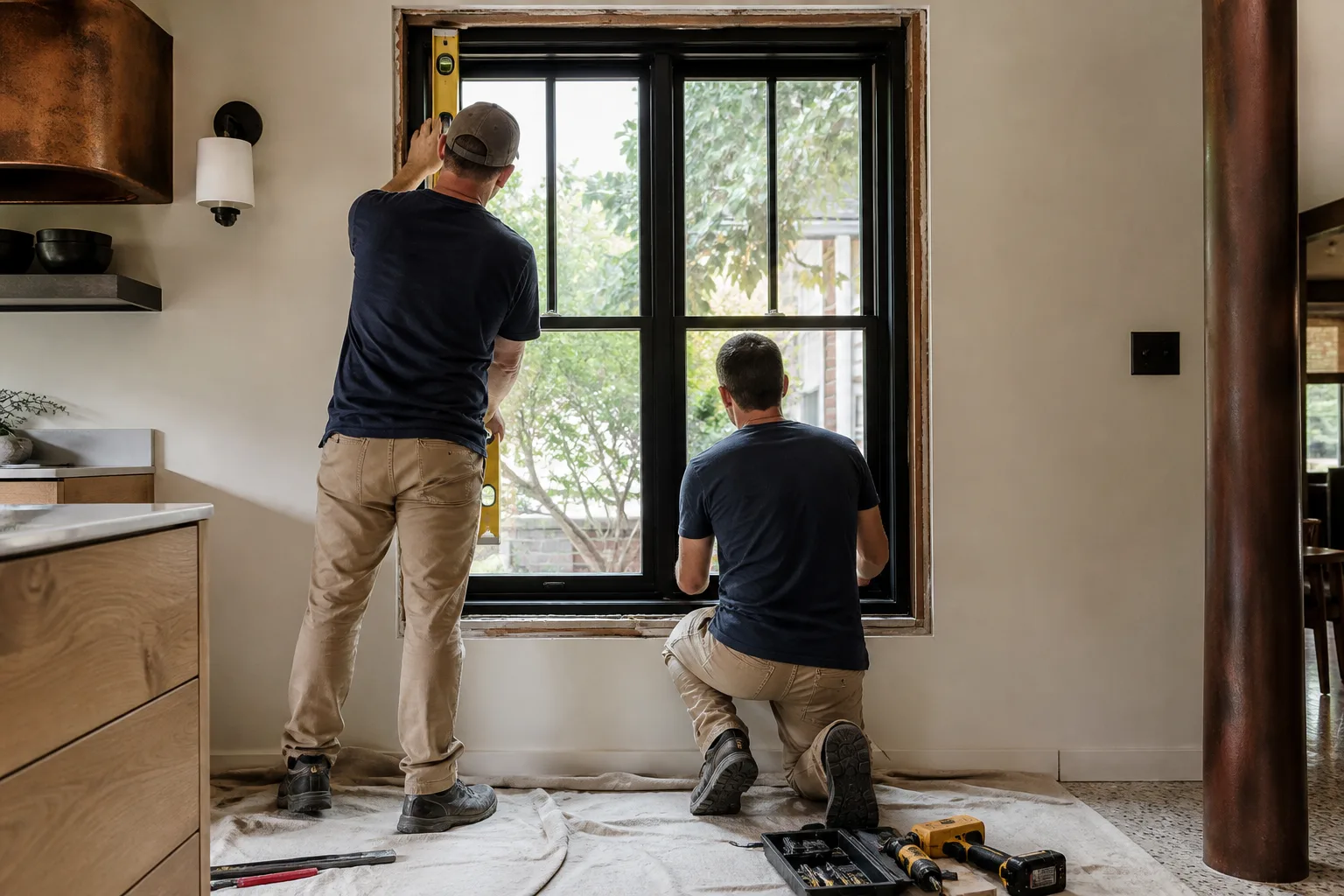
Here’s where the brand on the label earns its keep. Andersen and Marvin both publish DP ratings validated by independent third-party testing labs under AAMA and NFRC protocols – the numbers are auditable and consistent across product lines. Some manufacturers self-report, which technically satisfies the code but leaves room for interpretation. When we walk a Fort Worth homeowner through their Windows & Doors options, we pull the actual NFRC label and read the DP off it, not the dealer brochure.
This matters more in Fort Worth than in most markets because of what hits us every spring: hail, straight-line wind, and the occasional derecho. A window that just meets the minimum can fail narrowly. A window rated two steps above the minimum tends to shrug off the event. If the DP isn’t on the quote, ask. If the salesperson hesitates, ask why.
Common Fort Worth Scenarios We See
The homes here carry a wide spread of construction types. Early-1900s Craftsman bungalows in Fairmount sit on pier-and-beam foundations with true-dimension lumber and non-standard window openings – a replacement window here has to be sized exactly, and the DP figure must account for a wall assembly the original builder never calculated for wind. Mid-century brick ranches on the east side are more forgiving on framing but often have original single-pane aluminum windows that whistle in any breeze above 20 mph. And new mass-produced tract homes out past Loop 820 come engineered for code minimum, which is not the same as “engineered for the 15-year storm.”
Design review overlays add their own wrinkle. Fairmount, Ryan Place, and the Stockyards area all carry design guidelines, so even a straightforward window swap can stall on exterior profile or muntin pattern approvals. Factor review timelines into your schedule along with the DP spec.
Fort Worth is also a city that keeps building over its own history – century-old stockyards and Near Southside brick warehouses sit a few miles from master-planned sprawl pushing toward Alliance. That means crews here toggle between historic-district remodel work and slab-on-grade new-construction installs almost daily, and each has different DP implications. Groundwork Construction Co. of Fort Worth handles both ends of that spread, from foundation to finish line, and every job is covered by our 730-Day Done Right Promise. If a window leaks or deflects after a storm event within two years of installation, we make it right – no fine-print escape clause, no finger-pointing at the manufacturer. That guarantee is why the DP number matters to us before we install, not after.
Our technicians have up to 12 years of experience fitting and sealing windows across North Texas, and they carry a background-checked, uniformed presence on every job. Typical window replacement in Fort Worth runs $4,500 to $15,000 for a whole-home scope, and impact-rated installations run $8,000 to $25,000. Upfront pricing means the number on the quote is the number you pay. We also offer 0% financing for 18 months and $1,000 off projects over $10,000. For a closer look at what we install, visit our home page or check what we’re doing in the Fort Worth service area.
FAQs
Most Fort Worth homes fall between DP35 and DP50 depending on height and exposure. Single-story ranch homes on sheltered lots usually need DP35 minimum, while two-story or open-exposure builds on the western edge of Tarrant County commonly need DP45 or DP50. Call (855) 912-5373 with your address and we’ll give you a specific answer – estimates are free.
A DP rating is the wind pressure, measured in pounds per square foot, that a window has been tested to withstand without breaking, leaking, or twisting out of shape. Higher is stronger. A DP40 window has passed structural load, water resistance, and air-infiltration tests at 40 psf – roughly the pressure of a strong North Texas thunderstorm gust. Call us for an exact quote on your home, free of charge.
Yes, for two reasons: Fort Worth sits in ASCE 7 Exposure Category C, which carries higher wind pressure coefficients than sheltered urban sites, and the region gets straight-line wind events and hail that no coastal rating scheme was designed to filter for. A window rated at DP25 might pass code on a sheltered lot but underperform the first time a 70 mph gust rolls through. Call (855) 912-5373 for a Fort Worth-specific read on your address.
Yes – that’s exactly what the 730-Day Done Right Promise is for. If a window we installed leaks, rattles, or deflects within two years of install due to workmanship, we return and make it right. Manufacturer defects fall under their own warranty; we handle the installation end. Call (855) 912-5373 to schedule a no-pressure assessment in Fort Worth.
Get a Straight Answer on Your Windows
If you’d rather have it looked at, Groundwork Construction Co. of Fort Worth offers a no-pressure assessment in Fort Worth – call (855) 912-5373. We’ll pull the DP number on your existing windows, run the wind-load math for your lot, and give you a written quote with no hidden line items. Live person, 24/7, no voicemail.
Written by the team at Groundwork Construction Co. of Fort Worth, serving Fort Worth, TX.


