
Free written scope consultation - allowances, timeline, and change-order rules on paper before a single trade is scheduled
Styles & brands we work with
- Kitchen remodeling
- Bathroom remodeling
- Home additions & ADU
- Roofing
- Windows & doors
- Driveway & pavers
- Fence
See the difference
 Before
 After
 Before
 After
 Before
 After
How Are Custom Windows Made? A Fort Worth Homeowner’s Guide to Factory Process and Historic-District Approval
Custom windows are made after a design and approval process, not before it: a manufacturer takes a site measurement from your actual rough opening, engineers the unit to that opening and its performance spec, and only then builds it. In Fort Worth, that first step is the one that trips people up. Andersen and Marvin can fabricate almost any window configuration you can draw. The Fairmount Historic District can reject it anyway. Custom windows in Fort Worth’s historic neighborhoods get designed backward, with approval first and the factory second, and that single fact changes the whole timeline. Call (855) 912-5373 and we’ll walk you through what your specific block will actually allow.
What actually happens inside the factory (the short version)
Most explainers stop here, so we’ll keep it brief. Window frames get built one of three ways, and the material determines the method.
- Vinyl frames are extruded as hollow lineal profiles, cut to length, and the corners are welded with a hot-plate process that fuses the material into one continuous piece. There’s no seam to leak at the corners, which is why vinyl holds up well against North Texas rain.
- Fiberglass uses pultrusion: glass fibers are pulled through a resin bath and cured into a rigid profile. The result expands and contracts far less than vinyl, which matters in a climate that swings from 105°F summers to hard freezes.
- Andersen’s Fibrex is a composite of reclaimed wood fiber and thermoplastic polymer, extruded into profiles that hold paint and resist moisture without the swelling you’d get from a wood frame.
Once the frame exists, glass gets set into an insulating unit, weatherstripping and hardware go on, and the whole assembly is tested for air and water infiltration before it ships. The engineering is real. But it all waits on a number: the rough opening. And in Fort Worth, that number is rarely a clean one.
Why Fort Worth’s true-dimension lumber homes change the order
If you live in Fairmount or Ryan Place, your house was likely framed in the early 1900s with true-dimension lumber – a “2×4” that actually measures two inches by four inches, unlike the nominal lumber used today. Those pier-and-beam bungalows and Craftsman blocks have rough openings that match no standard size in any manufacturer’s catalog. In a new tract home off Walsh Ranch or out toward Alliance, the builder framed to a plan and a stock unit drops in. In a 1921 bungalow on a Fairmount block, nothing drops in.
This is where the 1/8-inch increment matters. Andersen and Marvin can produce units sized to the nearest eighth of an inch, which turns a “we’ll build a filler frame around it” compromise into a window that actually fits the hole the carpenter left a century ago. That’s not marketing language. It’s a functional necessity for Fort Worth’s older housing stock, and it’s the difference between a window that seals and one that lets the summer heat push your electric bill up every July.
If you’re weighing replacement scope, our Windows & Doors page covers the full range of what we install and why the material choice matters so much in this climate.
Custom versus special-order: a distinction worth money
Here’s where a lot of Fort Worth homeowners pay custom prices for a stock product. A custom window is engineer-specified to a unique rough opening and a specific performance requirement. A special-order window is simply a non-stocked standard size that the supplier doesn’t keep on the shelf. Both take weeks to arrive. Only one carries engineering documentation behind it.
When a contractor quotes you a “custom” Andersen or Marvin unit, ask for the engineering drawings. On any permitted work in Fort Worth, and especially anything touching a historic-district review, the reviewer and the inspector will want to see the performance specs and the profile documentation. A big-box window brand typically can’t hand you that paperwork. That’s a big part of why Groundwork Construction Co. of Fort Worth carries Andersen and Marvin specifically: both manufacturers produce engineering documentation alongside custom configurations, which is what keeps a permitted project moving through the city instead of stalling in review.
Approximate cost ranges for Fort Worth window work
| Scope | Typical Fort Worth range |
|---|---|
| Window replacement (standard units) | $4,500 – $15,000 |
| Impact window installation | $8,000 – $25,000 |
Impact-rated units command more because the glazing is engineered to a higher standard, and in a hail belt like North Texas that carries real value. The number you see is the number you pay with our upfront pricing, and projects over $10,000 get $1,000 off. We also offer 0% financing for 18 months to spread the cost out.
The part most explainers skip: Fort Worth’s design-review overlays
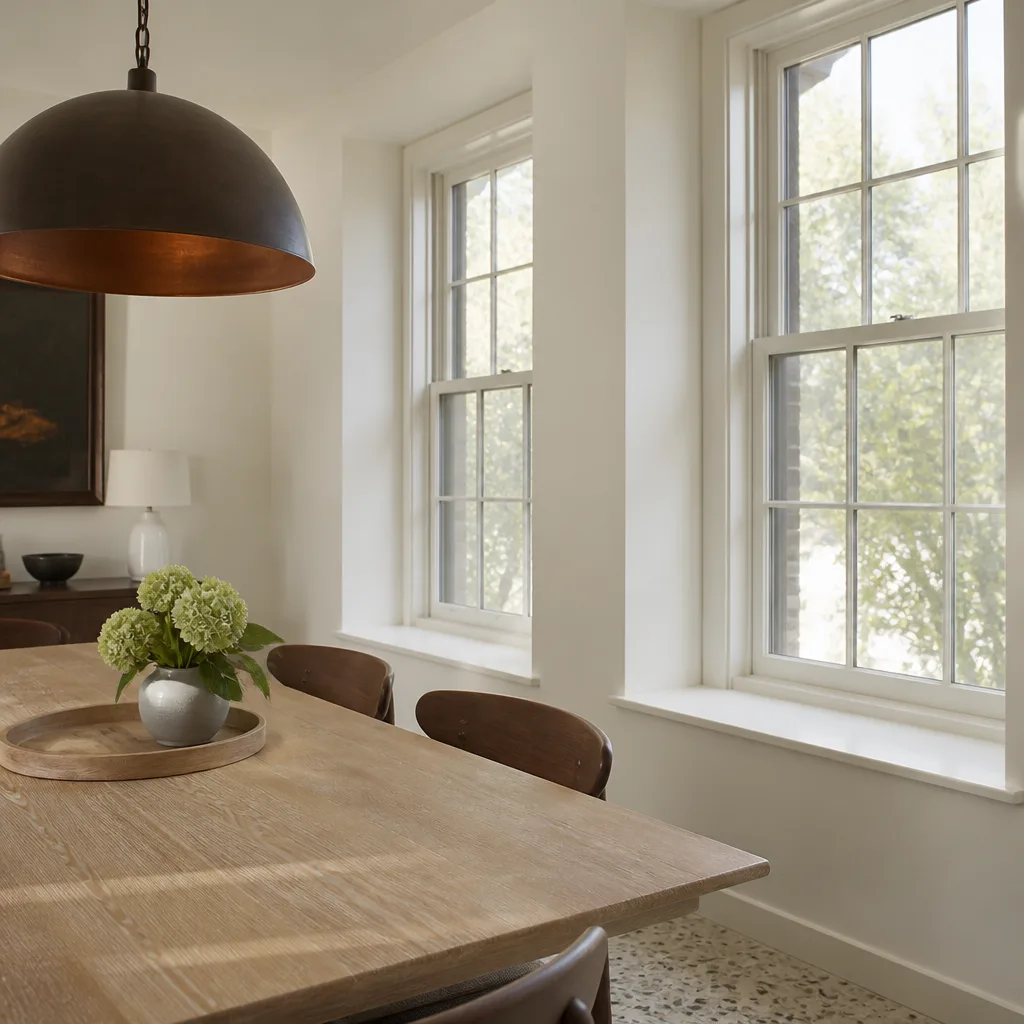
Before anyone cuts a piece of glass, the question in a historic district is what the neighborhood will permit. Fairmount, Ryan Place, and the Stockyards area carry design-review overlays, and those overlays dictate allowable profile shapes, divided-light patterns, and exterior finish colors. A window that’s a perfect engineering solution can still fail a district review because the muntin pattern doesn’t match the block or the finish color is wrong for the period.
Even a straightforward porch rebuild can stall on a district review, and crews pulling permits around here learn fast that what flies in a new subdivision won’t pass in a 1920s bungalow block. That’s why the process here runs in this order:
- Read the overlay and the design-review requirements for your specific district.
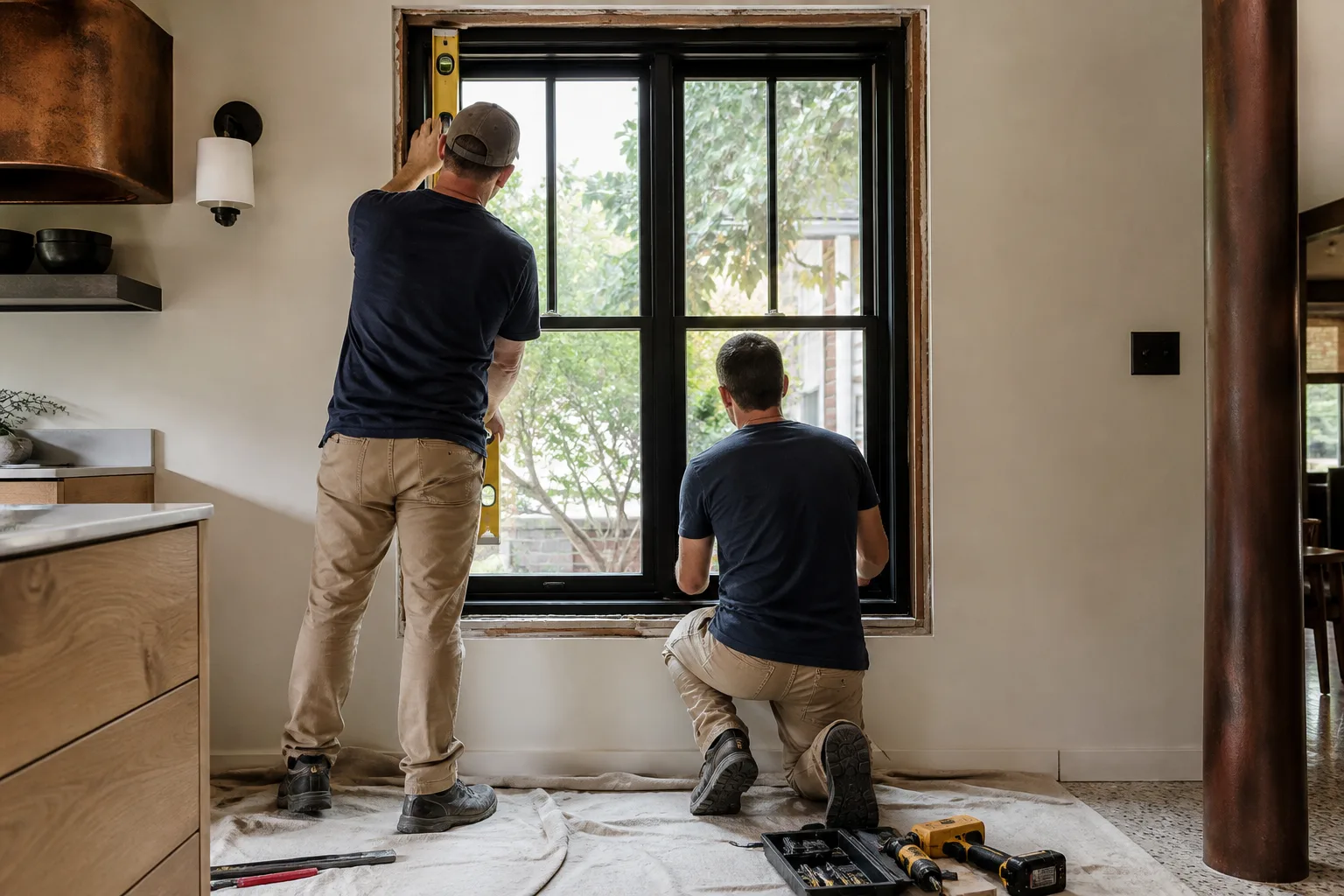
- Do the site measure to the actual rough opening, in eighth-inch increments.
- Select the profile, divided-light pattern, and finish color that satisfy both the district and the engineering.
- Submit for design approval.
- Place the custom order once approval is in hand.
Do that in order and the lead time doesn’t wreck your schedule. Do it out of order and you reorder glass. If you’re still mapping out the full scope of exterior work on an older home, our Fort Worth service area page lays out how we sequence these jobs across the city.
The lead-time reality, stated plainly
Custom Andersen or Marvin units run 4 to 8 weeks from order to delivery. That’s the honest number. The way we keep it from extending the overall project timeline is to front-load the site measure and the design approval before the order ever goes in, so the clock isn’t running while paperwork sits in a review queue. On a Fairmount bungalow, the approval step can eat more calendar time than the fabrication. Sequencing it correctly is what separates a six-week window wait from a project that somehow takes four months.
For historic-district homes, our technicians bring up to 12 years of experience to the site measure, and every unit we order is covered by the 730-Day Done Right Promise. If it’s not done right, we make it right. From foundation to finish line, we handle the measurement, the approval coordination, and the install under one contract, which removes the finger-pointing you get when the window dealer and the installer are two different companies.
Common local scenarios we see in Fort Worth
A Fairmount bungalow with a failing front window. The rough opening is true-dimension and irregular, the district overlay sets the divided-light pattern, and the finish color has to pass review. Sequence it right and it’s a clean one-day install after the 4-to-8-week lead time.
A Ryan Place remodel where the contractor quoted “custom” but meant special-order. The paperwork doesn’t exist for the inspector. We re-measure to the eighth inch, confirm the engineering documentation, and correct the order before the old units come out.
A mid-century ranch brick in an east-side neighborhood. Fewer overlay constraints, but pier-and-beam settlement means measuring carefully and accounting for soil-moisture movement from the black clay. Frost line is shallow here, so foundations are engineered for soil movement, not freeze depth, and your window frames need to tolerate that same movement.
FAQs
Yes. Andersen and Marvin both build to rough openings in 1/8-inch increments, which is exactly what Fairmount and Ryan Place homes with true-dimension lumber require. Your older opening won’t match a catalog size, so the manufacturer sizes the unit to your actual opening and engineering spec rather than forcing a stock size with filler framing. Call (855) 912-5373 to schedule a measure.
Custom Andersen or Marvin units typically run 4 to 8 weeks from order to delivery, and design-review approval in a historic district can add time before that order is placed. We front-load the site measure and approval so the lead time doesn’t push your overall project timeline. The best way to pin down your actual date is a site measure – estimates are free.
A custom window is engineered to your unique rough opening and performance requirement, with documentation behind it; a special-order window is a non-stocked standard size. That distinction matters when you’re paying custom prices and when a city inspector wants the performance specs. Ask any contractor for the engineering documentation before you sign, or call us and we’ll show you what it looks like.
Often yes. Fairmount, Ryan Place, and the Stockyards area carry design-review overlays that can dictate allowable profiles, divided-light patterns, and exterior finish colors before a custom order is even placed. We read the overlay for your specific block first and sequence the design review ahead of fabrication so you don’t order glass that fails review. Call (855) 912-5373 and we’ll tell you what your block requires.
If you’d rather have it looked at, Groundwork Construction Co. of Fort Worth offers a no-pressure assessment in Fort Worth. We’ll measure the opening, check what your district allows, and give you a straight answer on custom versus special-order – call (855) 912-5373 for a free estimate.
Written by the team at Groundwork Construction Co. of Fort Worth, serving Fort Worth, TX.


