Free written scope consultation - allowances, timeline, and change-order rules on paper before a single trade is scheduled
Styles & brands we work with
- Kitchen remodeling
- Bathroom remodeling
- Home additions & ADU
- Roofing
- Windows & doors
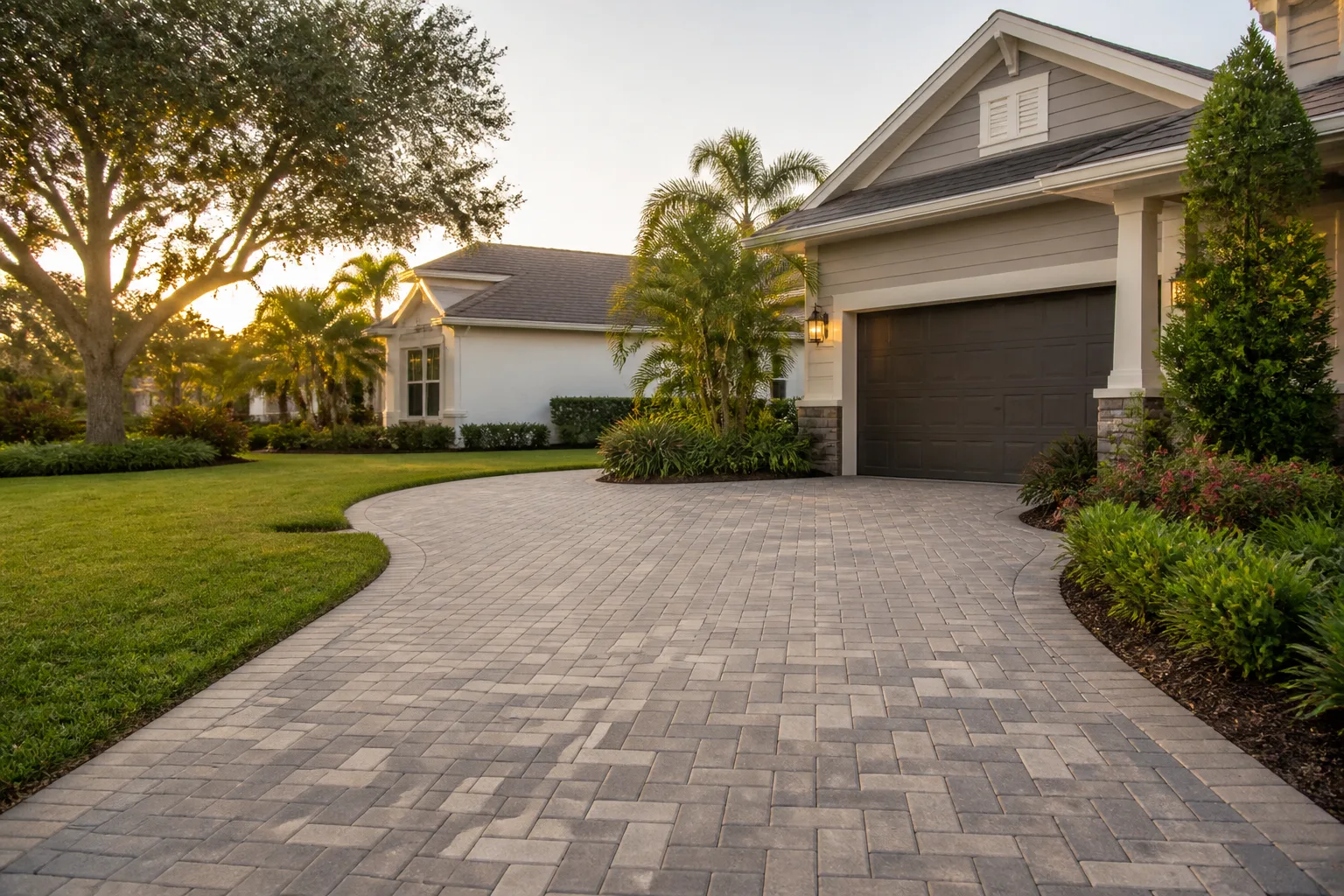
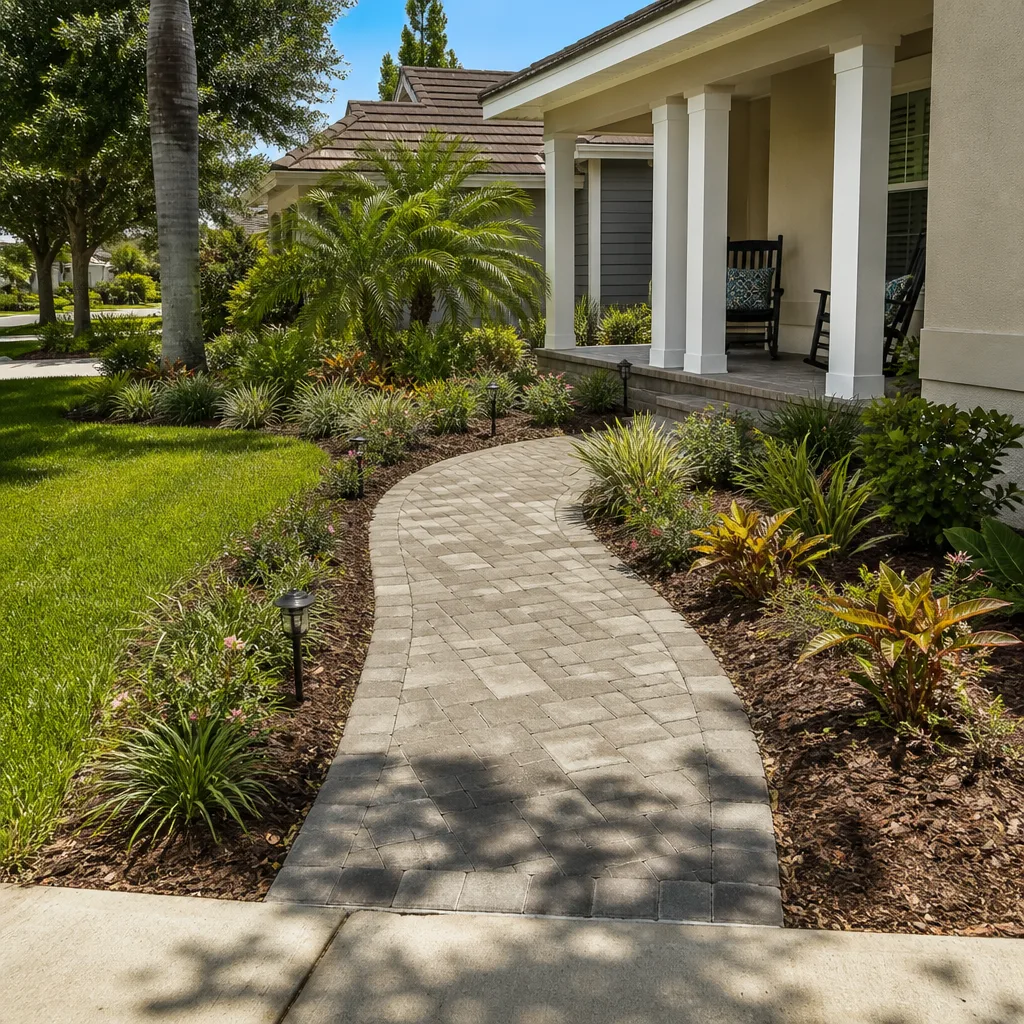
- Driveway & pavers
- Fence
See the difference
 Before
 After
 Before
 After
 Before
 After
Asphalt Driveway Cost in Fort Worth, TX: What You’ll Pay and Why the Binder Grade Decides the Deal
Asphalt driveway paving in Fort Worth typically runs $3,500 to $9,000 for a standard residential driveway, and the number is driven less by square footage than by the asphalt binder grade and base prep behind it. An entry-level mix quoted at $4 per square foot can rut and hold tire impressions after two Fort Worth summers. Call (855) 912-5373 for a free estimate with line-item pricing: base prep, binder grade, tack coat, compaction passes, and lift thickness, spelled out before we start. Phones are answered by a live person, 24/7.
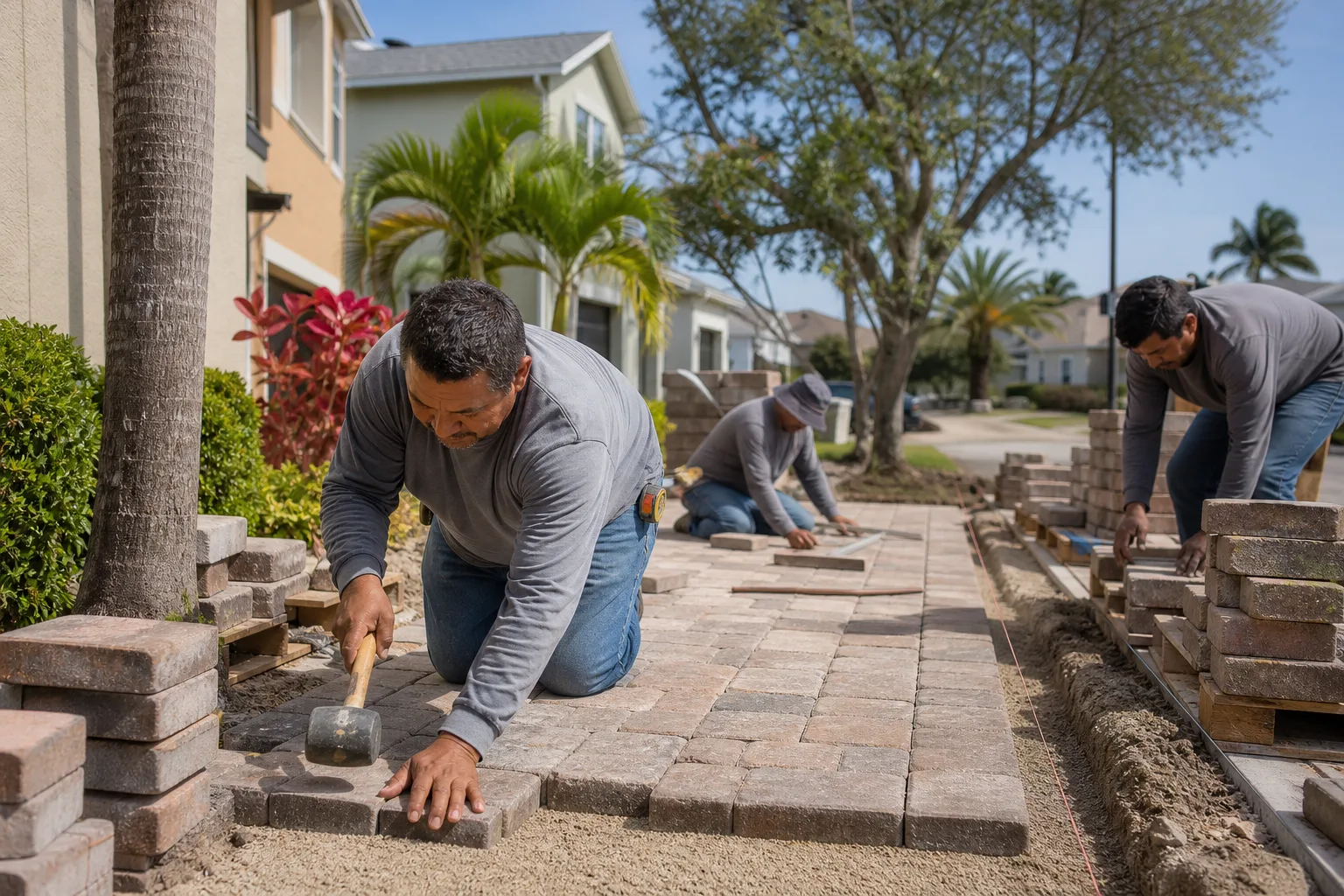
Why the Cheap Asphalt Quote in Fort Worth Usually Costs More Later
North Texas summer surface temperatures on a sun-exposed driveway regularly exceed 150°F. At that heat, asphalt stops behaving like a rigid surface and starts acting like a slow-moving liquid under load. A soft binder lets the aggregate rearrange itself under a parked truck, and by August the driveway has tire ruts that never come out. The fix isn’t a thicker pour on the same soft mix. It’s a stiffer binder, and that binder costs more per ton.
Most cost guides skip this entirely. They quote a square-foot number and let the mix spec stay invisible. We don’t, because in Fort Worth a driveway that fails in year two costs more than one that was specified correctly in year zero.
PG 70-22 vs. PG 64-22: The Binder Conversation Nobody Volunteers
Asphalt binder is graded by performance grade, written as two numbers: the high-temperature number and the low-temperature number. A PG 64-22 binder is rated to stay stiff up to about 64°C (roughly 147°F). A PG 70-22 binder holds its shape up to about 70°C (roughly 158°F). That six-degree difference is the whole ballgame in a Fort Worth July.
PG 70-22 costs more per ton. It’s also the grade that keeps a driveway from rutting under a parked F-250 after a 105°F afternoon. On a 600-square-foot driveway the upgrade typically adds a few hundred dollars to the material line, which is a fraction of what it costs to mill out and replace a failed mat in year three.
Ask every asphalt contractor you talk to what binder grade they’re specifying. If the answer is “standard” or “whatever the plant sends,” that’s not a specification. That’s a guess written on your invoice.
What a Groundwork asphalt quote actually includes
Upfront pricing means every line is named. A square-foot number that balloons with add-ons is the oldest trick in this trade, and it usually surfaces after the crew has already mobilized. Our quotes carry the full scope from the start:
- Excavation and subgrade prep – removing the existing surface and correcting the subgrade, not paving over whatever is there
- Base course – a compacted aggregate base sized to the soil conditions under your specific driveway
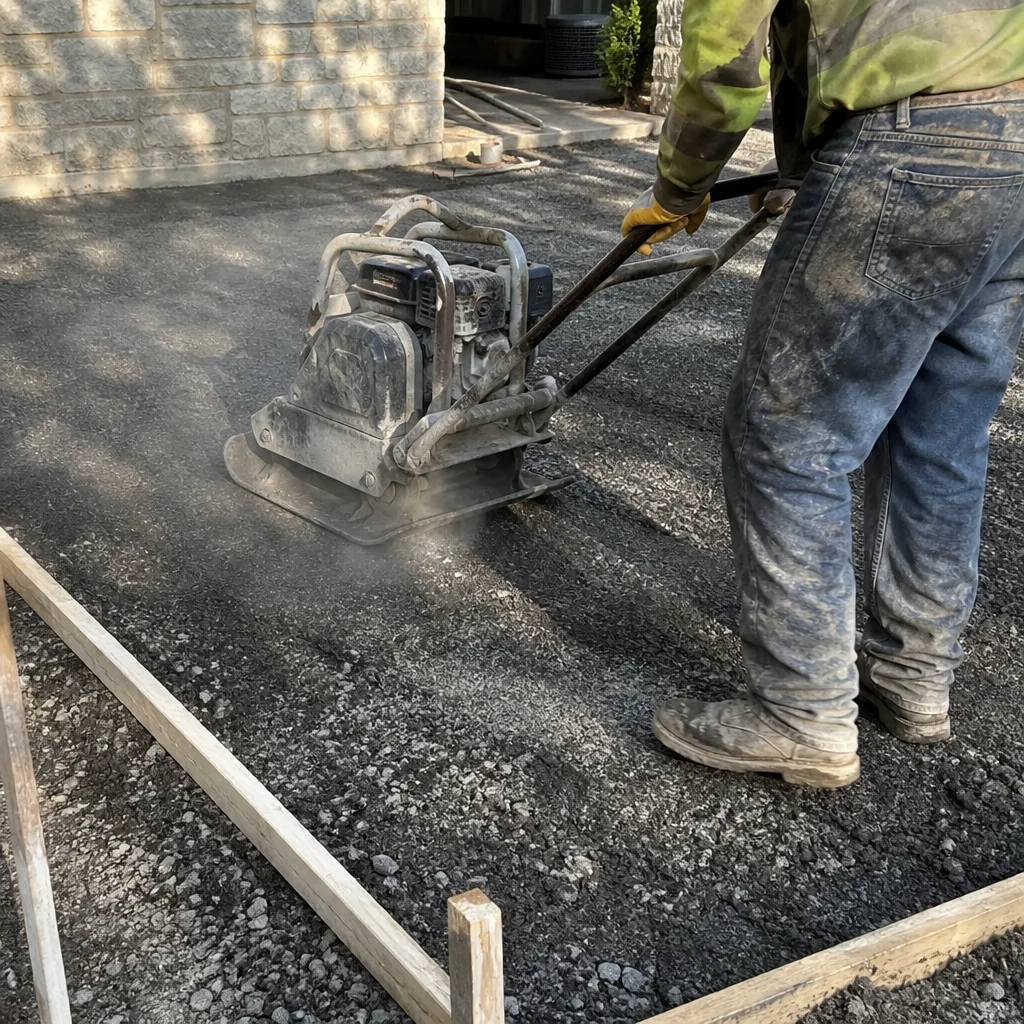
- Compaction passes – in lifts, with equipment, not a plate compactor run over the top once
- Binder grade – the actual PG grade, in writing, on the quote
- Tack coat – the bonding layer between base and asphalt that cheap crews skip
- Lift thickness – how thick the compacted asphalt will be, not how thick it was before rolling
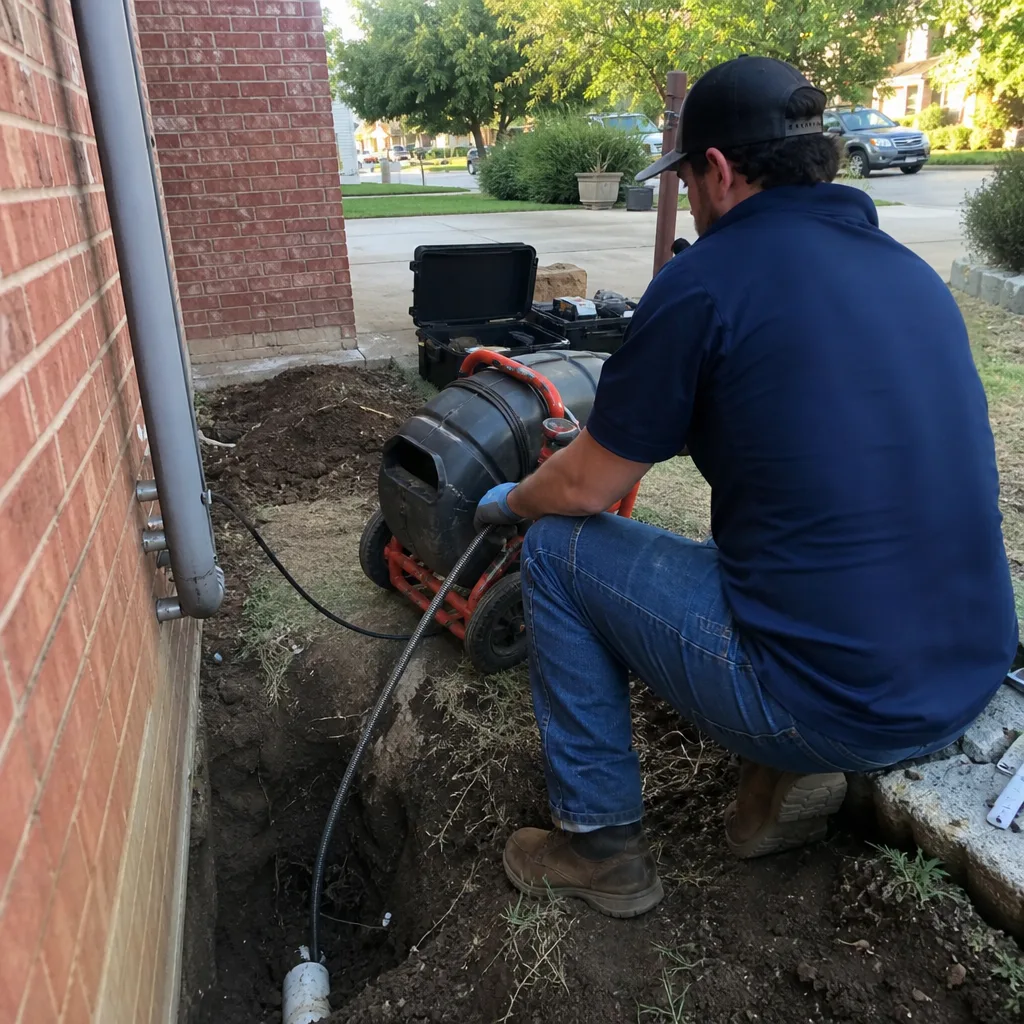
The Black Clay Problem: Why Base Prep Decides Your Cost, Not the Asphalt
Fort Worth sits on expansive black clay. That soil swells when it’s wet and shrinks when it’s dry, and it moves a driveway from below, not from the surface. A quick-lay crew that skips proper base compaction gets edge cracking by the first dry spell and center heave by the second wet season. The asphalt itself was fine. The ground under it wasn’t.
So the real cost question isn’t “how much per square foot” – it’s “how much base work is behind that square foot.” Our technicians have up to 12 years of experience and know what Fort Worth clay does to a driveway that skipped the prep. The neighborhoods pushing past Loop 820 toward Alliance and Walsh Ranch sit on some of the most active clay in the metro, and a driveway built on a thin, under-compacted base there is on borrowed time.
Fort Worth also builds at two speeds at once. Century-old stockyards blocks and Near Southside brick warehouses sit a few miles from greenfield sprawl in the northwest, and the same drive that needs a lead-paint-era approach on one street needs full slab-on-grade new construction on the next. A black-clay base on the east side behaves differently from a freshly graded lot in the far west, and quoting the same spec to both is how driveways fail.
Asphalt vs. Concrete in Fort Worth: The 15-Year Total-Cost Comparison
Asphalt wins on day-one price. Concrete wins on maintenance. Here’s a 15-year total-cost picture for a standard 600-square-foot Fort Worth driveway, using current market ranges:
| Line item | Asphalt | Concrete |
|---|---|---|
| Initial installation | $3,500-$9,000 | $4,500-$12,000 |
| Resealing (every 3-5 years) | $250-$700 per cycle | $0 |
| Resealing across 15 years | 3-4 cycles = $750-$2,800 | $0 |
| Typical 15-year total | $4,250-$11,800 | $4,500-$12,000 |
Run the numbers and asphalt’s initial savings usually persist after resealing, provided the binder and base are right. Where asphalt loses the cost race is a failed mat. A driveway that ruts in year two and has to be milled and replaced lands well above concrete on total cost, and that’s the scenario the binder grade exists to prevent.
Sealing is the other half of the maintenance math. A fresh asphalt driveway needs its first seal around year one, then every 3-5 years after that depending on sun exposure and traffic. Fort Worth’s UV load is hard on a driveway, and skipping a reseal cycle is how hairline cracks become alligator cracking. For pavers or a different surface altogether, Driveway & Pavers in Fort Worth walks through those options in detail.
Fort Worth asphalt driveway price ranges
| Service | Price range (Fort Worth) |
|---|---|
| Asphalt driveway paving | $3,500-$9,000 |
| Driveway replacement (full tear-out and rebuild) | $5,000-$14,000 |
| Driveway sealing | $250-$700 |
| Concrete driveway installation (comparison) | $4,500-$12,000 |
| Paver driveway installation (comparison) | $7,000-$18,000 |
Our technicians pull from trusted material partners like Oldcastle and Quikrete on the base and concrete side, and specify the asphalt mix plant-by-plant based on the grade that actually holds up to Fort Worth heat. Materials are chosen for performance, not just what’s sitting at the yard.
The 730-Day Done Right Promise on Asphalt Work
Most asphalt contractors walk once the job is done. The driveway is paved, the invoice is settled, and if it ruts next summer, that call goes to voicemail. That’s the industry norm in this trade, and it’s why the workmanship question is worth asking before you sign anything.
Groundwork Construction Co. of Fort Worth backs asphalt work with the 730-Day Done Right Promise. If the driveway isn’t done right, we make it right. That’s two full summers of coverage on a surface that lives and dies by summer performance, and it’s the same written guarantee behind every Driveway & Pavers project we do. If you’re comparing asphalt against concrete or pavers, our Driveway & Pavers service page lays out how each surface is specified and installed. For a broader look at the homes we work on, the home page covers the full scope from foundation to finish line.
Financing takes the sting out of a larger project: 0% financing for 18 months, plus $1,000 off projects over $10,000. On a driveway replacement or a full rebuild with new base work, that $1,000 comes off the top, and the 0% window spreads the timing without burying you in interest.
FAQs
Asphalt driveway paving in Fort Worth typically costs $3,500 to $9,000, with full driveway replacement running $5,000 to $14,000 once tear-out and base rebuild are included. The spread comes down to driveway size, base depth, and the binder grade specified. Call (855) 912-5373 for an exact quote – estimates are free and priced upfront.
Asphalt ruts because the binder softens when surface temperatures climb past 150°F, and Fort Worth hits that regularly on a sun-exposed driveway in July and August. A PG 70-22 binder stays stiff at those temperatures; a cheaper PG 64-22 mix doesn’t. Specify the grade, and the rutting stops being a summer problem. Call (855) 912-5373 to talk through the spec on your driveway.
Repair is cheaper when the damage is surface-level – cracks, sealed edges, small potholes – and replacement is cheaper when the base has failed and the driveway is heaving or alligator-cracked. Patching a failed base just buys you one more season before the next failure. A free estimate tells you which side of that line you’re on. Call (855) 912-5373 and we’ll walk the driveway with you.
A Fort Worth asphalt driveway needs resealing every 3 to 5 years, with the first seal about a year after installation. Sealing runs $250 to $700 per cycle and is what keeps UV and water from turning hairline cracks into structural ones. Skipping a cycle on black clay is how a driveway goes from a seal job to a replacement job. Call (855) 912-5373 to schedule a seal or get a free estimate.
Get Your Asphalt Driveway Priced Right the First Time
The difference between a driveway that holds up through a decade of Fort Worth summers and one that ruts by year two is in the binder grade and the base work behind it. We put both on the quote, along with the 730-Day Done Right Promise and 0% financing for 18 months. Call (855) 912-5373 for a free estimate and a live person on the line, any hour.
Written by the team at Groundwork Construction Co. of Fort Worth, serving Fort Worth, TX.
What Our Customers Say
"Found unpermitted work by the previous owner once he opened the wall. He stopped, explained the options and what each would cost, and let me decide rather than making it my emergency."
- Marco Castillo"The finished work is exactly what we wanted. It did run about three weeks over, mostly waiting on a cabinet delivery that was out of his hands, though I would have liked more updates during that stretch."
- Dev Sharma"The schedule he gave me at the start was accurate to within four days on a three month job. Anyone who has done a renovation knows how unusual that is."
- Laura Bennett