








Free written scope consultation - allowances, timeline, and change-order rules on paper before a single trade is scheduled
Styles & brands we work with
- Kitchen remodeling
- Bathroom remodeling
- Home additions & ADU
- Roofing
- Windows & doors
- Driveway & pavers
- Fence
See the difference
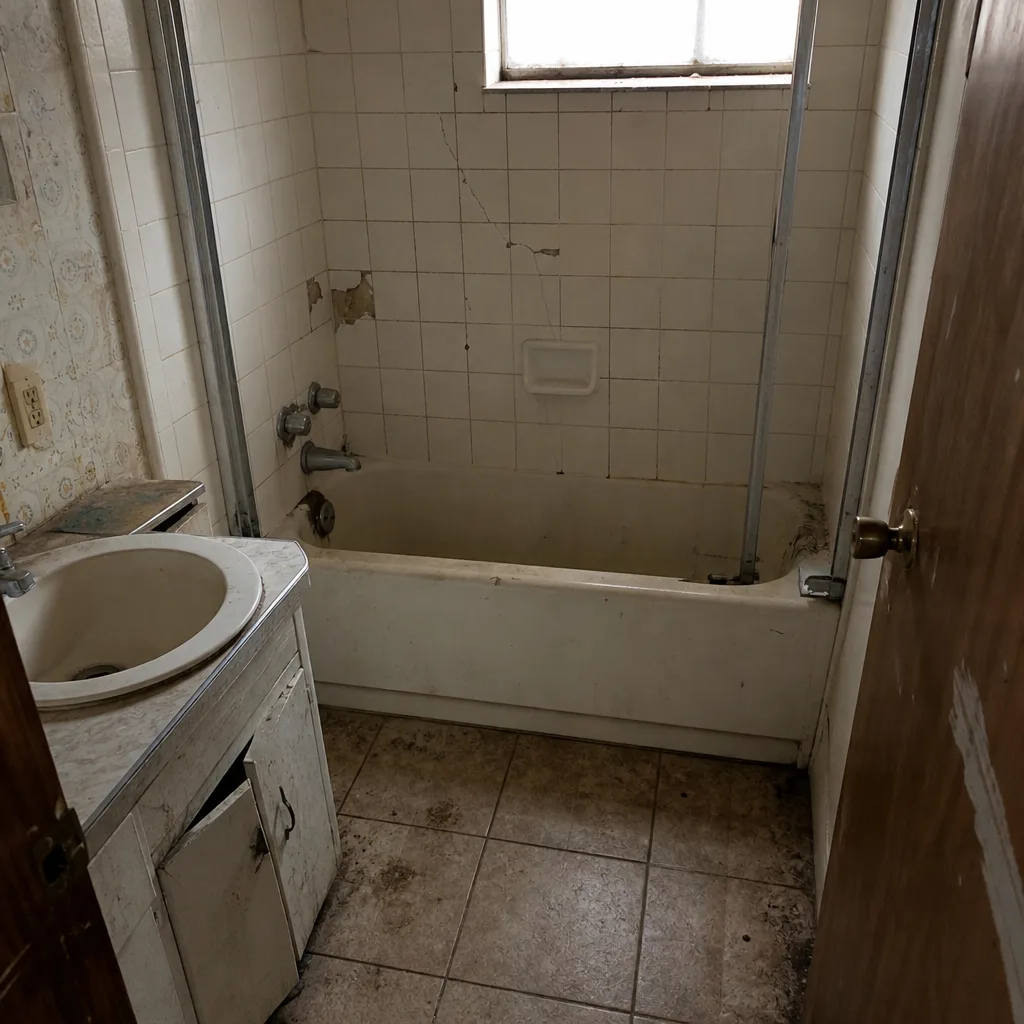 Before
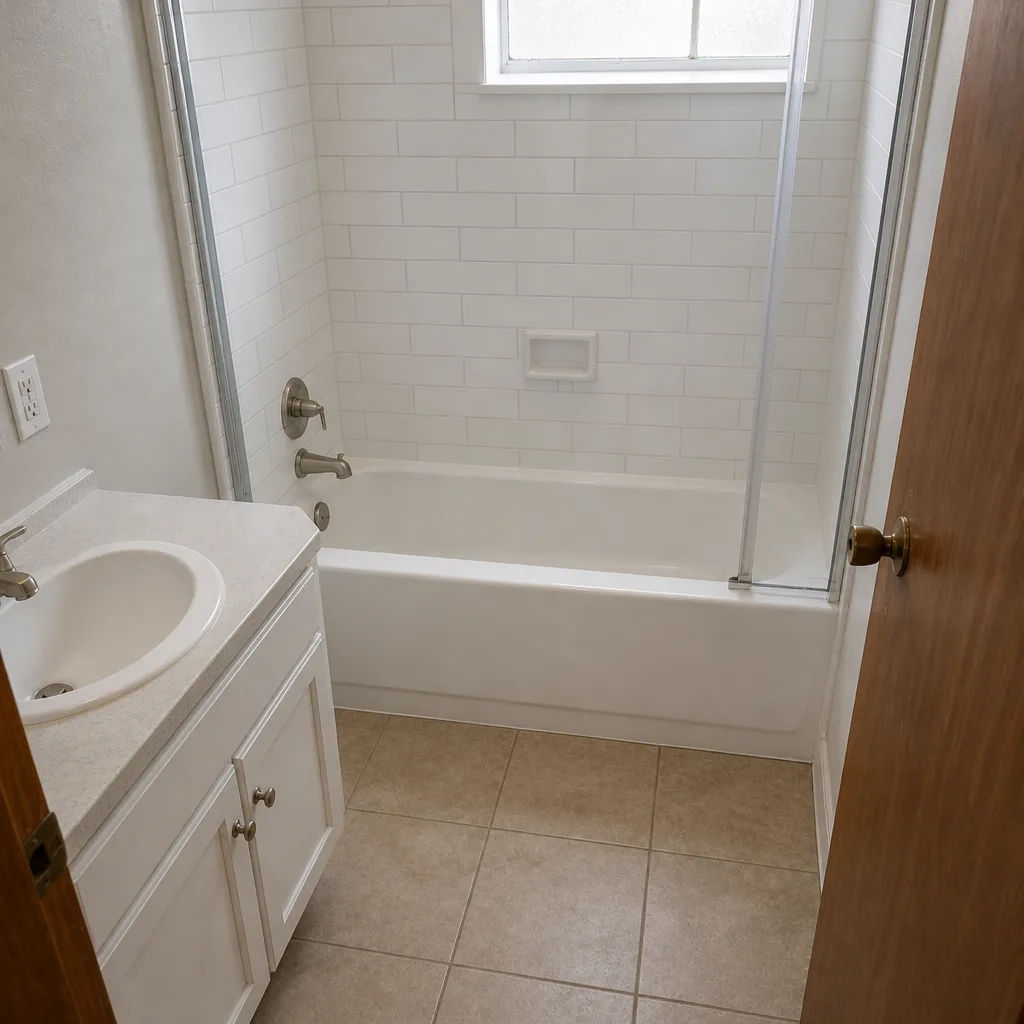 After
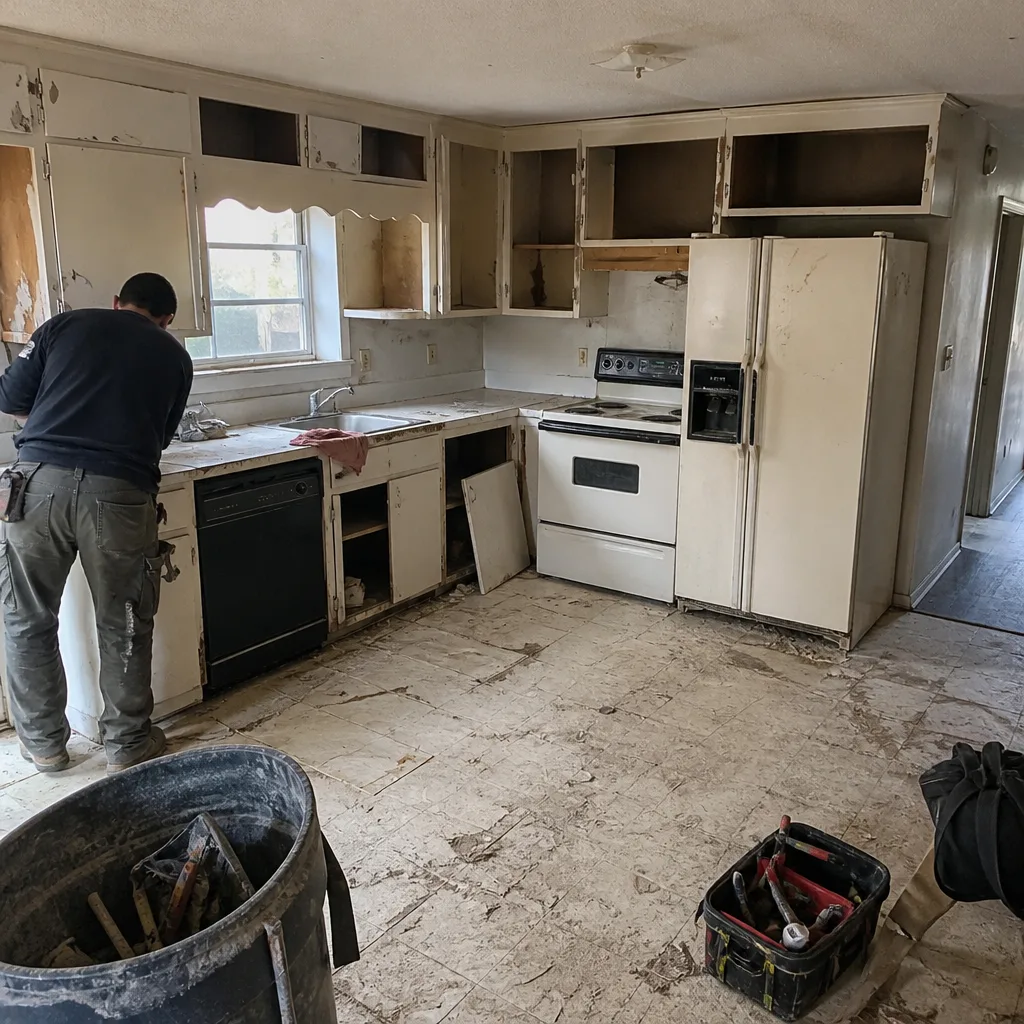 Before
 After
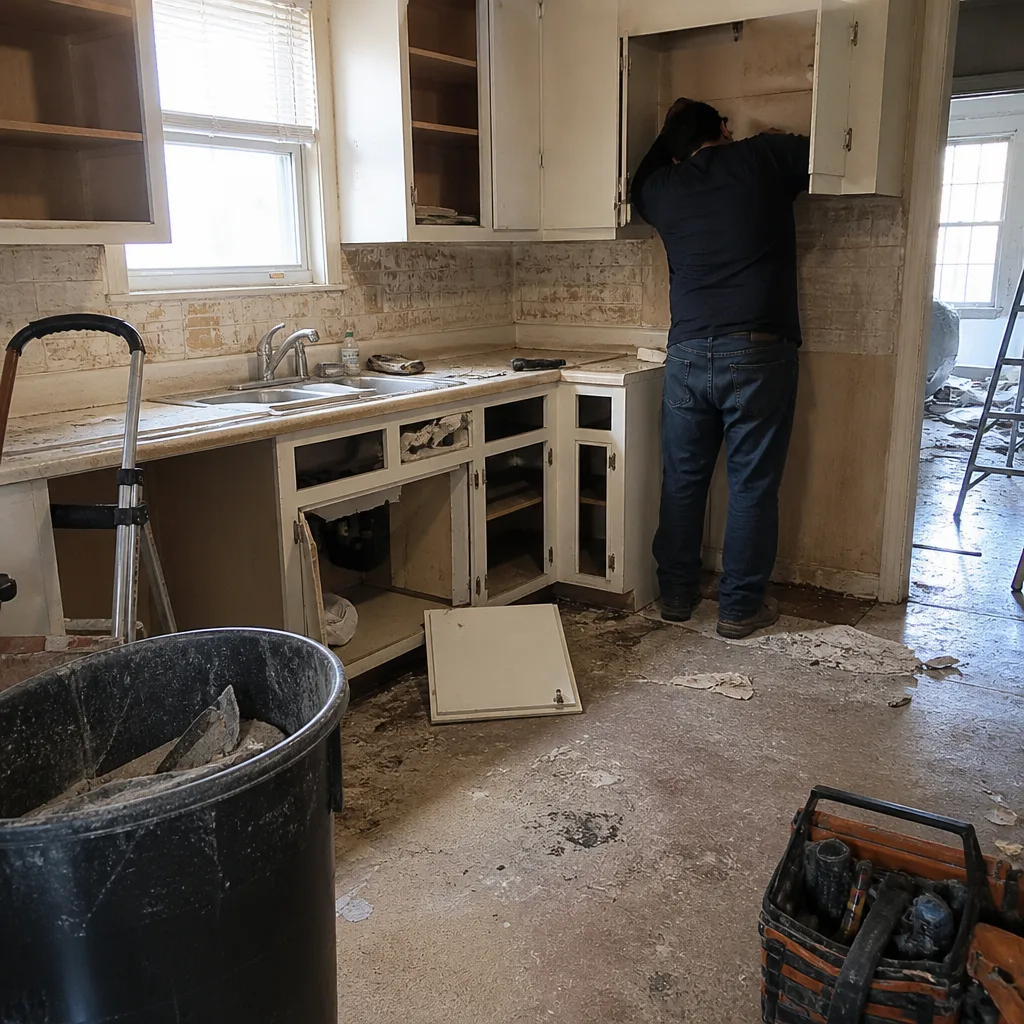 Before
 After
How to Clean Gutters in Fort Worth, TX: Scoop, Flush, and Watch the Downspouts
Cleaning gutters means three things done in order: scoop the debris out by hand, flush the troughs with a hose so water actually moves, and run a full-flow test through every downspout to confirm water leaves the roof instead of pooling at the foundation. Twice a year is the national advice, but in Fort Worth three times a year is the honest number. If a downspout is already blocked or you’re seeing staining under the gutter line, call us at (855) 912-5373 and we’ll send someone out to look at it.
Here’s why the stakes run higher here than in most metros. Fort Worth houses sit on expansive black clay. That soil swells when it’s wet and shrinks when it dries, and when a clogged downspout sends water over the gutter edge at one corner, that corner’s soil stays saturated while the rest of the perimeter dries out. Uneven soil moisture is what drives differential foundation movement, and that movement is what shows up later as cracked brick, sticking doors, and four-figure foundation bills. Cleaning your gutters in Fort Worth isn’t housekeeping. It’s foundation protection.

Why a Clogged Downspout Costs More Here Than Anywhere Else
Picture a blocked downspout on the northwest corner of your house during a May storm. Water backs up the downspout, fills the gutter, and pours over the edge in one concentrated sheet about six inches from the slab. That corner’s clay takes on water like a sponge while the south side stays dry. The two sides of your foundation are now sitting on soil in two different states, and the slab or pier-and-beam frame starts to move differentially across that moisture gap.
In Fairmount and Ryan Place, where a lot of the housing stock is early-1900s Craftsman and bungalow on pier-and-beam, that movement telegraphs fast: floors go out of level, doors rack in their frames, original wood sills soften. On the east side and out toward Alliance and Walsh Ranch, where you’re mostly on slab-on-grade, the same wet-dry cycle shows up as hairline cracks in brick veneer or a gap at the garage apron. Same mechanism, different symptom.
The soil-moisture problem is hard to see until it’s structural. What we look for on an inspection:
- Water tracking over the gutter face at a corner instead of falling from the downspout outlet
- Soil pulled away from the slab or a visible erosion channel at one specific point
- Soffit or fascia staining under the gutter run, which hints at long-term overflow
- An underground downspout extension that’s silted shut (common on newer ranch homes)
- Rust trails down the gutter face, which usually means the seam is failing too
How Often Should You Clean Gutters in Fort Worth?
Three times a year. The national “twice a year” advice is built for climates with one predictable leaf drop, and Fort Worth doesn’t have one. Spring brings cedar pollen and oak catkins. Fall drops leaves. And the pecan and cottonwood trees that crowd the creek corridors near Ryan Place and Fairmount add a second load of hulls and twigs that most schedules miss entirely.
A defensible Fort Worth schedule looks like this:
- Late February to early March: clear before the spring storm and hail season starts
- November: clear after the fall leaf drop, before winter rain
- January: a lighter mid-winter pass to catch what blew in with the north-Texas wind events
Homes under heavy pecan or cottonwood canopy may need a fourth pass. Homes with no mature trees nearby can often get by on two. If you’re not sure which camp you’re in, a quick look up and down the gutter line after the first hard rain tells you everything.
The Downspout Flush Test Most Guides Skip
After you scoop the troughs, run a hose at the high end of each gutter and watch the downspout outlet. If the water moves freely and clears within a few seconds of reaching the outlet, you’re done. If it backs up, the clog is in the downspout or the underground extension below it.
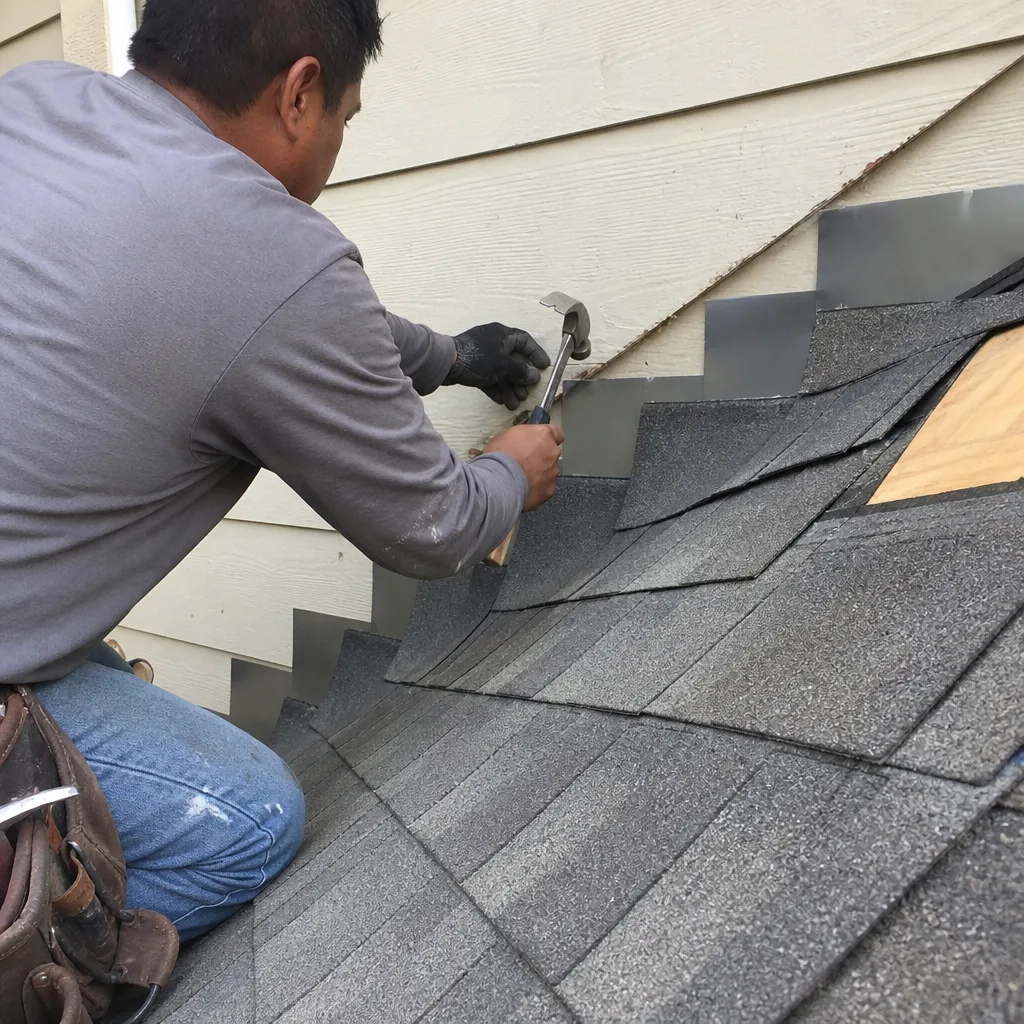
This step matters more in Fort Worth than in most places because underground downspout extensions are standard on a lot of newer ranch construction here. Over a few seasons, that buried pipe siphons silt and shingle granules into the elbow and clogs solid. When it does, it doesn’t just stop draining. It can redirect water back along the foundation line, which is the exact opposite of what it was installed to do. The flush test is the only thing that catches it. If you’re already on the roof checking downspouts, that’s also the right time to look over your shingles and flashing before storm season – if anything looks worn, our Roofing team can assess it.

Do Gutter Guards Work in Fort Worth?
They work, but the guard style matters here in a way it doesn’t in milder climates. Micro-mesh guards are the gold standard in most markets because they shed leaves cleanly and are low-maintenance. In Fort Worth, the debris load is mixed: pine needles that wedge into fine mesh, shingle granule runoff that packs into the low spots, pecan hulls that break down into a sludge layer, and cottonwood fluff that mats in the spring.
That combination is why a guard that performs for years in another state can clog within two seasons in Fort Worth. The guard itself isn’t failing. It’s the debris profile. When we spec guards, we’re matching them to what’s actually overhead on your street, not to a national template. Quality guard systems paired with a solid roof and roof-adjacent flashing fall under the same long-horizon thinking we bring to Fort Worth service area work generally: built to last, backed in writing.
When Should a Fort Worth Homeowner Call a Pro Instead of DIY?
Call when the downspout won’t clear, when you see gutter separation from the fascia, or when water damage is already showing under the soffit. Those are inspections, not cleanings. Wet fascia and rotted soffit are structural, and diagnosing the extent of the damage needs eyes on the framing, not on a ladder with a hose in your hand.
There’s also a practical reason to call during a storm event. Groundwork Construction Co. of Fort Worth answers the phone live, 24/7. That matters here because a homeowner who finds a downspout dumping water at the foundation during a May hailstorm can get a real person on the line who can triage over the phone: is this a cleaning issue, or does it look like soffit damage already? We’re not going to tell you gutter cleaning is an emergency service. It isn’t. But identifying whether a clog has already caused structural damage is a call worth making at 9 p.m. rather than at 9 a.m. Monday.
What Does a Gutter-Related Roof Repair Usually Cost?
Simple gutter-adjacent roof repairs in Fort Worth generally run $400 to $1,800, and full roof replacement sits in the $8,000 to $20,000 range. On the historic districts, a porch or gutter line repair that triggers design-review overlays in Fairmount, Ryan Place, or the Stockyards area can add review time to the schedule before anyone touches a ladder. The honest answer is that nobody can quote a repair until someone’s looked at the fascia. Our estimates are free and we’ll tell you straight if it’s something smaller. Call (855) 912-5373 to get on the schedule.
FAQs
Professional gutter cleaning in Fort Worth typically runs $150 to $400 depending on the home’s height, gutter length, and how badly packed the debris is. Homes under heavy pecan or cottonwood canopy often land at the higher end because they need hand scraping before the flush. Call (855) 912-5373 for an exact quote – estimates are free.
Yes. Fort Worth’s expansive black clay swells when wet and shrinks when dry, and a blocked downspout concentrates water at one spot on the foundation perimeter, keeping that corner’s soil wet while the rest dries. That uneven moisture is a primary driver of differential foundation movement. It’s the leading reason we treat gutter maintenance here as foundation protection rather than a cosmetic chore.
Only with the right guard spec, and yes, pecan hulls are the reason. Pecan hulls break down into a dense sludge that packs into any guard’s fine mesh, and a standard micro-mesh guard that works well in other regions will clog within two seasons under pecan coverage. We size the guard to the actual tree mix on your lot. Call (855) 912-5373 and we’ll look at the street with you.
Usually, yes. Our technicians have up to 12 years of experience, all are background-checked, and they arrive in uniform with a clear estimate before any work starts. Same-day assessment is common during storm season. Call (855) 912-5373 – a live person answers 24/7.
Get a Straight Answer on Your Gutters
If you’d rather have it looked at, Groundwork Construction Co. of Fort Worth offers a no-pressure assessment in Fort Worth – call (855) 912-5373. We’ll flush the downspouts, check the fascia and soffit, and tell you plainly whether it’s a cleaning or a repair. Upfront pricing, no surprises.
Written by the team at Groundwork Construction Co. of Fort Worth, serving Fort Worth, TX.