Last updated November 18, 2026


Free written scope consultation - allowances, timeline, and change-order rules on paper before a single trade is scheduled
Windows & Doors Warning Signs Every Homeowner Should Know
If your energy bills have crept up 15 – 20% over three years and nothing about your daily routine changed, your windows are probably the reason. They’ve been telling you for a while. The draft you blamed on the thermostat, the door that sticks every July, the fog between the panes on the north side of the house: those are symptoms, and each one has a specific cause. Most Fort Worth homeowners only call after a failure gets loud, which is exactly when repairs cost the most. This guide covers the five ways windows and doors fail, how to tell a $50 fix from a $500 replacement, the security signs people miss, and what happens to your wallet at the 6-month, 1-year, and 2-year mark if you wait.
Quick Answer
The warning signs of failing windows and doors are foggy or condensation-filled glass, drafts and rising energy bills, frames that stick, rot, or peel, hardware that won’t latch or lock smoothly, and water stains or soft wood around openings. In Fort Worth, the biggest added clue is clay soil movement showing up as doors and windows that suddenly bind or gaps that open seasonally. Catching these early separates a cheap repair from a full replacement.
Styles & brands we work with
- Kitchen remodeling
- Bathroom remodeling
- Home additions & ADU
- Roofing
- Windows & doors
- Driveway & pavers
- Fence
Table of Contents
- The Five Failure Modes (and Their Early Warning Signs)
- Repair or Replace? The Diagnostic Questions That Decide
- Security Warning Signs Most Homeowners Miss
- Fort Worth Soil Movement: When It’s a Window Problem and When It’s a Foundation Problem
- The Compounding Cost Timeline: What Waiting Actually Costs
- A 20-Minute Walkthrough You Can Do This Weekend
- Common Mistakes to Avoid
- When to Call a Professional
The Five Failure Modes (and Their Early Warning Signs)
Windows and doors don’t fail randomly. They fail in one of five recognizable ways, and each one leaves a breadcrumb trail months before it becomes expensive. Once you know the trail, you can walk your own home and roughly classify every opening in about 20 minutes.
1. Seal Failure
The seal is the airtight, watertight bond between the glass unit, the frame, and the weatherstripping. When it breaks, you get fogging between the panes of a double- or triple-glazed window, or condensation that beads on the inside glass while the rest of the room feels dry. Seal failure is common on south- and west-facing windows in Fort Worth because they take the hardest afternoon sun load from May through September. Fog between panes means the insulated glass unit (IGU) has lost its gas fill, and no amount of wiping will fix it.
2. Frame Deterioration
Wood frames check, peel, and soften. Vinyl frames can warp or crack at the miter joints. Aluminum frames pit. Look for peeling paint around the sill, a frame that flexes when you press it, or a chalky residue that keeps coming back after you wash it. In Fort Worth homes built before 1990, wood and early vinyl frames are the usual suspects.
3. Hardware Failure
Cranks that slip, hinges that sag, locks that need two hands, and a deadbolt that drags instead of snapping. Hardware is the cheapest of the five to fix and the most ignored. A sagging hinge on a door is a two-minute adjustment; ignored for a year, it warps the frame.
4. Air Infiltration
You’ll notice this with the back of your hand before you notice it on a bill. Run your hand along the frame on a windy day. If you feel a steady breeze at the latch or the sill, the weatherstripping, the threshold, or the frame itself has given up. Rising heating and cooling costs are the slow symptom; the hand test is the fast one.
5. Water Intrusion
Water intrusion is the one that introduces rot, mold, and structural damage. Signs include a dark stain on the interior drywall next to a window, soft wood at the sill, bubbling paint, or a musty smell when it rains. Fort Worth’s spring storms push water sideways with enough force to find any gap, so a frame that leaked once in April will leak again in May.
Repair or Replace? The Diagnostic Questions That Decide
This is where most homeowners guess. The good news is that four questions separate a $50 fix from a $500 (or larger) replacement decision with surprising reliability. Answer all four for any window or door in question.
- Where is the failure? If the problem is hardware, weatherstripping, or a hinge, you’re in a repair. If the glass unit itself has fogged between the panes, the IGU needs replacing or the whole window does. If the frame is soft, warped, or cracked at a joint, you’re looking at replacement.
- Is the frame solid when you press it? Press hard on the frame and sill with your thumb. Any give, any softness, any flaking that shows raw wood underneath: that’s structural. Hardware won’t fix it. Not for long.
- Is it one opening or a pattern? One drafty window is a repair. Six windows on one wall that all leak or all fogged within a year of each other is a systemic problem, usually the window brand or install method that was used when the house was built.
- How old is the unit? Modern double-pane windows typically last 20 – 25 years before the seal goes. Wood windows need maintenance every 3 – 5 years to reach that. If you’re past 20 and the frame shows wear, replacement pencils out faster than repeated repairs.
Anything under $500 is almost always worth repairing first. Over that, get a written quote for both options before deciding. That’s the standard we hold ourselves to on every job: two numbers, line-item, in writing. As a full-scope partner across Groundwork Construction Co. of Fort Worth home, we can quote windows and doors alongside any related work so the decision isn’t made in a vacuum.
Security Warning Signs Most Homeowners Miss
A door can look perfectly secure and function as the easiest way into a house. Security failures hide in the details. Here’s what to check on every exterior door, ideally once a year:
Frame Rot
Walk around the door frame with a knife or screwdriver handle and tap every 6 inches. A solid frame sounds crisp. A rotted frame sounds dull, and a rot pocket will often crumble if you press the tool into it. The strike plate screws are the most common failure point: if the wood around them is soft, the deadbolt can be defeated by a single solid kick. That’s a $40-$120 repair for a frame repair kit, or a replacement if the rot is deep.
Failing Locks
A deadbolt that requires a jiggle to seat, or a lock where you can see the bolt not fully extending into the strike, is a lock failing to lock. Test it from both sides. On older Fort Worth homes, deadbolts installed into hollow or thin frames will look fine and function poorly under force.
Misaligned Strikes
Look at the gap between the door and the frame when the door is closed. If the gap widens toward the top or bottom, the strike plate is misaligned. That misalignment means the deadbolt is only catching the outer edge of the plate. A strike plate that’s catching half its depth is worth half its security. This shows up often in Fort Worth homes that were built on clay soil, which we’ll cover next.
Missing or Worn Screws
Strike plates are commonly installed with half-inch screws that only reach the door trim. A deadbolt properly installed should have 3-inch screws that reach the stud behind the frame. If you remove a strike plate and the screws come out in less than an inch, the door looks secure and isn’t.
Fort Worth Soil Movement: When It’s a Window Problem and When It’s a Foundation Problem
This is the section that separates a Fort Worth-specific guide from a generic one. Fort Worth sits on expansive clay soils that swell when wet and shrink when dry. When the soil moves, the house moves with it, and windows and doors are usually where you see it first.
What clay soil does to doors and windows
As the soil under one corner of the house dries out (which in Fort Worth happens fast in a normal July), that corner settles a fraction of an inch. Multiply that across the width of a wall and you get binding doors, windows that suddenly won’t close, and gaps that open at the corners. Then the fall rains come, the soil swells, and the symptom reverses. Two seasons of that pattern, and the frame itself is permanently out of square.
The diagnostic question
Ask yourself: does the same window or door bind consistently, or does it come and go with the season? A seasonal symptom that reverses is a soil-movement sign. A persistent, one-directional symptom (this window has gotten worse every month for a year) is more likely to be frame failure and needs a window replacement quote.
When to call a foundation company first
If you see three or more of the following, get a foundation evaluation before spending a dollar on windows or doors:
- Doors and windows bind on more than one side of the house
- Diagonal cracks in the drywall above windows or doors that widen with the seasons
- Visible gaps between the exterior brick and window frames
- Doors that sway or rack when opened (the top corner moves)
- Sloping floors or doors that swing open on their own
Foundation work comes first because any window or door we install will simply go out of square again if the house is still moving. The reverse is also true: Fort Worth homeowners sometimes spend thousands on foundation work when a misaligned strike plate or a sagging hinge was the answer. A written, line-item assessment from a company that does both disciplines (windows and structural work) usually settles it in a single visit. Our Home Additions & ADU in Fort Worth team runs into this constantly when adding onto homes in the older neighborhoods around TCU and Ryan Place.
The Compounding Cost Timeline: What Waiting Actually Costs
The single biggest reason window and door problems get expensive is timing. A crack in a frame catches early is a caulk-and-seal job. Left alone, it’s a frame replacement. Here’s what waiting typically costs, from what we see across Fort Worth homes:
6 months of waiting
- A minor air leak becomes a measurable energy penalty, often $15 – $30 a month on cooling and heating during peak months.
- A small rot pocket becomes a larger one and starts to compromise the sill.
- A sticking door gets worse and begins warping the interior trim.
1 year of waiting
- The $15-$30 a month becomes the baseline. Your energy bill has adapted to the leak.
- Water intrusion from the previous storm season starts to show as paint bubbling or interior drywall staining.
- Hardware appears to be “worn” when really the frame has moved around it. You replace the hardware and it still works poorly.
2 years of waiting
- A full frame-and-glass replacement is needed where a repair would have held.
- Water intrusion may have created mold or rot in the wall cavity, which is a construction job, not a window job.
- A door that functioned as a security barrier becomes a genuine security liability.
- You’ve paid for the replacement in energy bills and repair visits without getting any of the benefit.
We quote these jobs with upfront pricing, written line-item, so you’re not comparing a repair to a replacement blind. The number on the quote is the number you pay. If work starts, it doesn’t move.
A 20-Minute Walkthrough You Can Do This Weekend
You don’t need a moisture meter or a contractor on your property to do a first-pass diagnostic. Walk through these eight steps on a dry day, ideally a windy one:
- Do the hand test. Run the back of your hand along the perimeter of every window and door on a windy day. Note every spot where you feel air moving.
- Look at the glass. From the inside, hold up a flashlight at an angle. Fog, streaks, or condensation between panes is a seal failure. Note which windows have it.
- Check the frames. Press hard on every sill and frame corner. Note any give, any softness, any flaking paint showing raw wood.
- Operate every window once. Open and close each window fully. A crank that slips, a sash that sticks mid-travel, or a lock that needs two hands is a hardware failure.
- Test every door lock from both sides. Deadbolt should snap cleanly into the strike. If you have to jiggle it, note it.
- Look at the door-to-frame gap around the whole door. A gap that widens toward a corner is a misaligned strike or a frame that’s out of square.
- Inspect the interior trim under each window. Look for staining, bubbling paint, or soft spots at the bottom corners. That’s the water-intrusion signature.
- Write down what season it is. A symptom that appeared in July is not the same as a symptom that showed up in February. Seasonal = soil movement. Persistent = frame failure.
Total time: about 20 minutes for a typical Fort Worth single-family home. The list you come out with is your repair-or-replace decision list.
Common Mistakes to Avoid
- Caulking over rot. Caulk seals air and water but does nothing for wood that’s already soft. In Fort Worth’s humidity, caulk over rot traps the moisture and accelerates the decay. Fix the rot first, then caulk.
- Replacing glass units on frames that are already failing. A new IGU installed in a warped frame will fog again within a few years. Check the frame before you spend on glass.
- Assuming every sticking door is a foundation problem. In Fort Worth, we see homeowners call a foundation company for what was a misaligned strike plate, a sagging hinge, or humidity-swollen wood. Diagnose cheap causes first.
- Ignoring one window because the others look fine. Windows on the south and west sides of a Fort Worth house age 3-5 years faster than the north side. A single failing south window usually means the rest of that wall is 1-2 years behind it.
- Buying replacement windows without specifying the glass rating. Fort Worth’s summer UV load and storm exposure call for a low-E rating and impact considerations that a base window won’t provide. This is where we bring in partners like Andersen and Marvin, because the glass spec matters more than the trim color.
- Hiring a one-trade company for a house that needs multiple fixes. A window specialist isn’t going to notice a driveway drainage problem that’s channeling water toward your foundation, which is a common source of window rot in Fort Worth. Full-scope inspection catches the interaction. If you’re also considering exterior work, our Driveway & Pavers in Fort Worth and Fence Installation in Fort Worth teams work alongside our window crews regularly to check for exactly that.
- Waiting for “obvious” failure before calling. By the time failure is obvious, you’re paying for the repair plus the damage it caused. The signs in this guide are designed to be caught earlier than that.
When to Call a Professional
Some checks belong in a homeowner’s hands, and some need a trained eye. Call a professional if you see fog between panes on more than two windows, any soft or crumbling wood at a frame or sill, water stains or mold on interior drywall near an opening, three or more doors or windows binding at the same time, a deadbolt that won’t fully extend, or visible gaps between exterior brick and window frames. If any of those appear, doing your own repair is the more expensive path. Windows and doors are also a safety issue: a frame in tension can fail suddenly, and high or steep openings are genuinely dangerous to work on. Groundwork Construction Co. of Fort Worth offers free estimates in Fort Worth. Call (855) 912-5373.
See the difference
 Before
 After
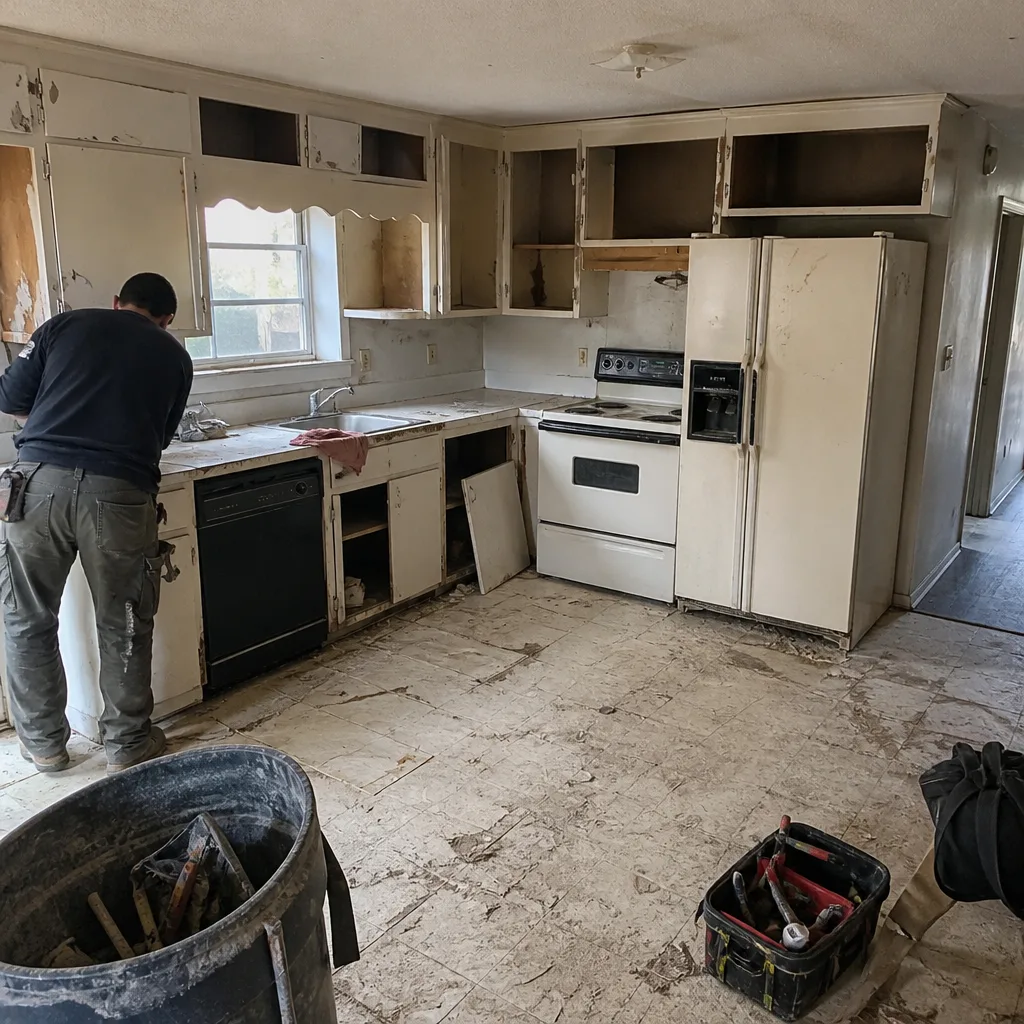 Before
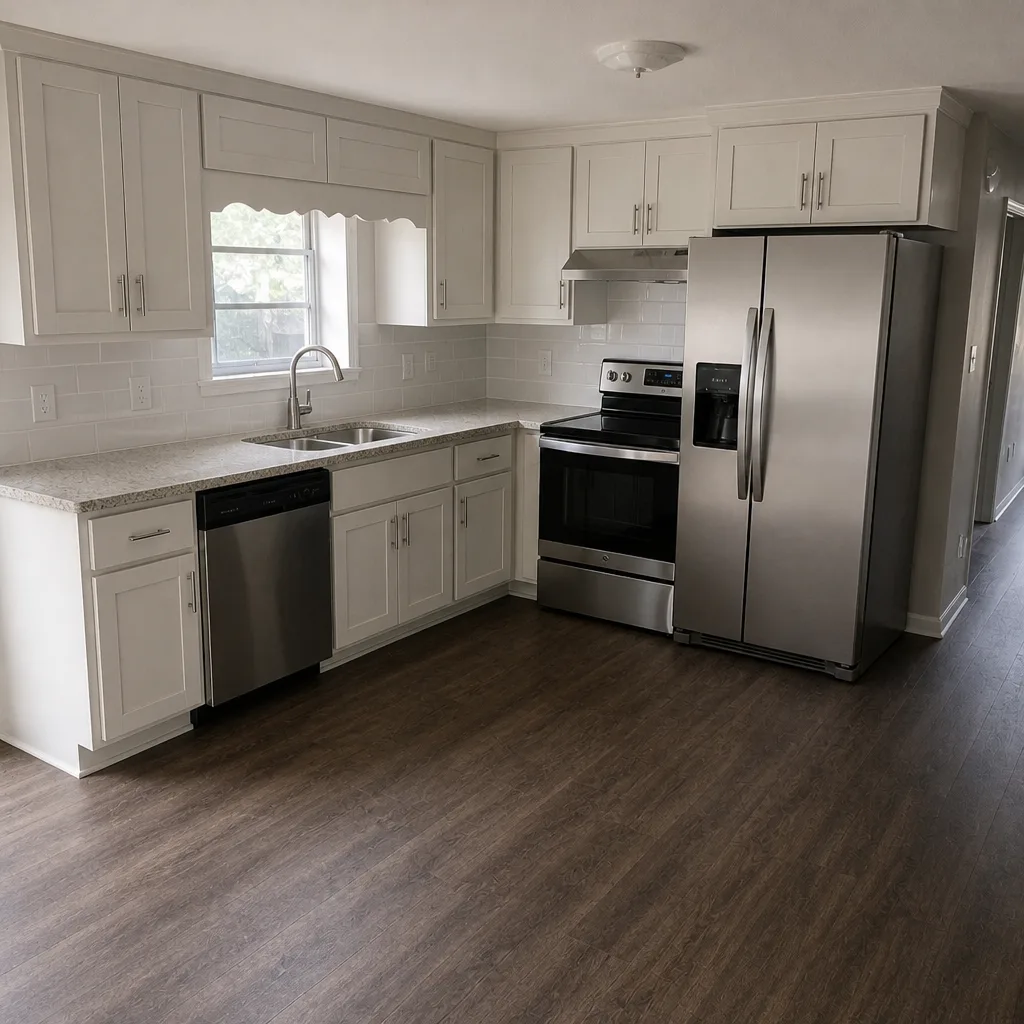 After
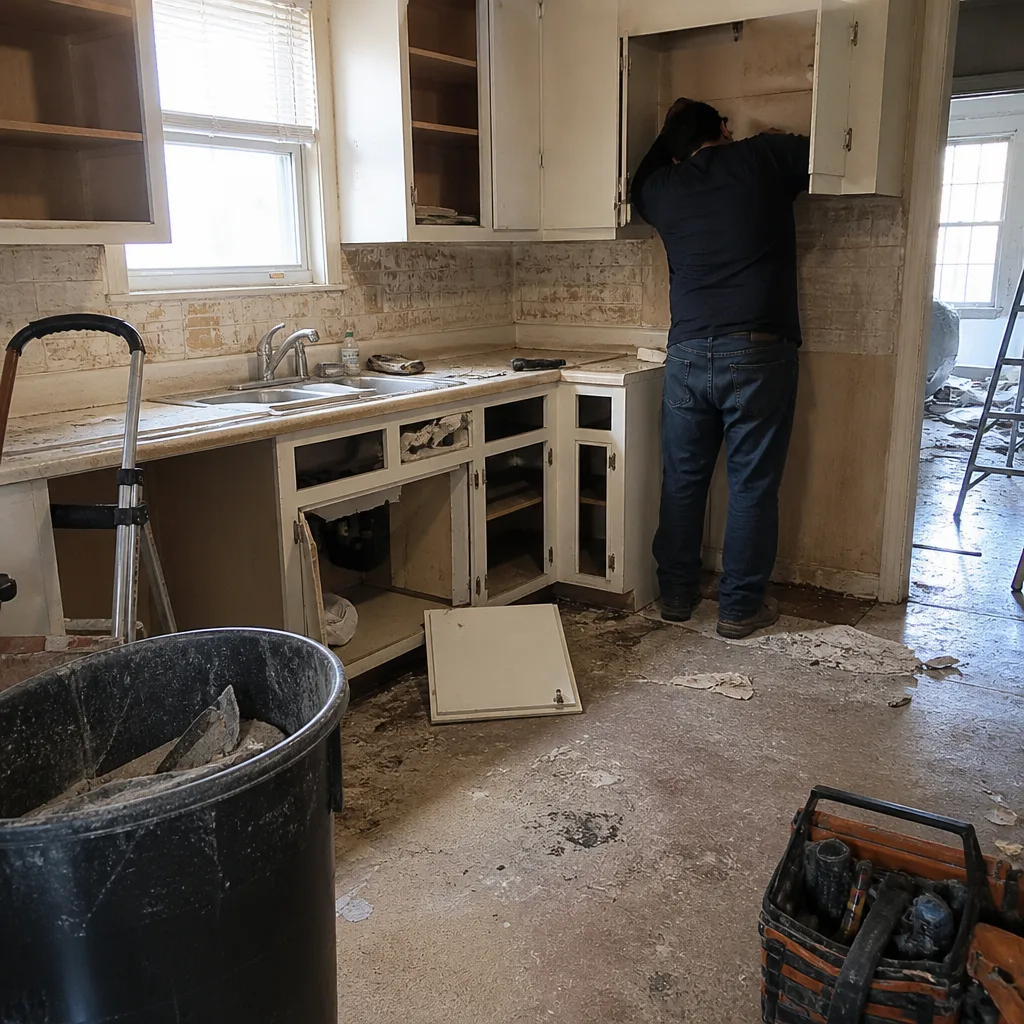 Before
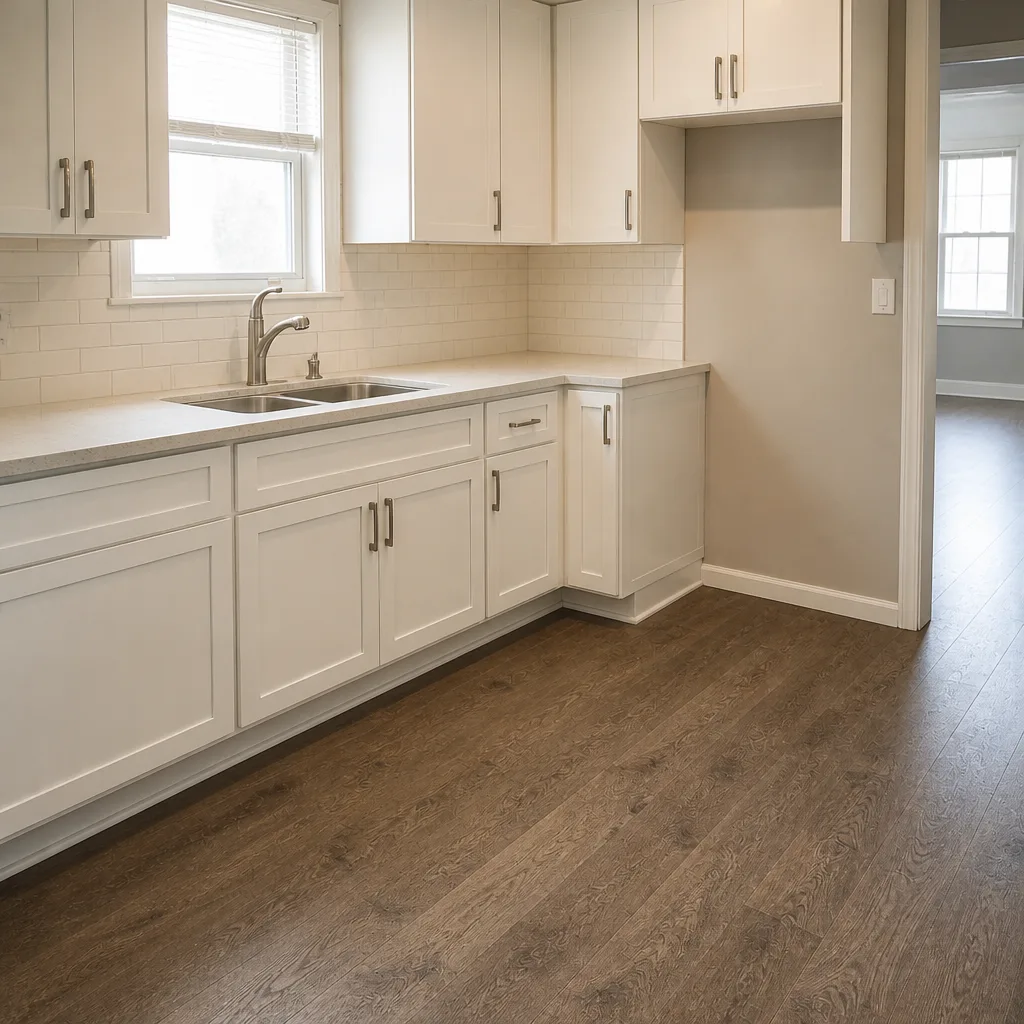 After
Frequently Asked Questions

Most window and door repairs in Fort Worth run $150 – $500 per opening for hardware, weatherstripping, glass unit replacement, or strike adjustment. Full window replacement typically runs $600 – $1,500 per window installed depending on size, glass spec, and material. Door replacement runs higher because frame work is usually included. We quote every job in writing, line-item, with upfront pricing. Call (855) 912-5373 for an exact quote – estimates are free.
Fog or condensation between the panes is the most reliable early sign of a failing window. It means the sealed insulated glass unit has lost its gas fill, and the failure will not reverse on its own. In Fort Worth, you’ll see it first on south- and west-facing windows because of the hard afternoon sun load. Drafts and rising energy bills are usually a year or two behind the fog.
Fort Worth’s expansive clay soil shrinks in dry summer conditions and pulls the foundation under one part of the house down slightly. That movement turns the frame of the house a fraction out of square and doors and windows bind. If the symptom reverses in the fall, it’s a seasonal soil movement pattern. If it doesn’t reverse, the frame has likely failed and needs replacement. Call (855) 912-5373 if the stickiness is persistent – we’ll tell you which it is.
You can replace the insulated glass unit (IGU) without replacing the whole window, provided the frame is still solid. If the frame is soft, warped, or shows rot at the sill, an IGU replacement alone won’t hold and you’ll be back in the same spot within a few years. We do both and quote them separately so you can compare. Estimates are free.
Get a foundation evaluation first if three or more openings on different sides of the house are binding at the same time, or if you see diagonal drywall cracks above windows or gaps between exterior brick and frames. Otherwise, a window company can usually proceed. Our team inspects for foundation signs on every window estimate in Fort Worth, and we’ll tell you honestly if a foundation company should be your first call.
Yes. Every window and door installation we perform is covered by the 730-Day Done Right Promise for two full years. If it isn’t done right, we make it right. That’s one of the longest workmanship guarantees in the residential construction space, and it’s in writing on every job.
The Bottom Line
Windows and doors fail in predictable ways, and they announce it months before the failure is expensive. Fog between panes, drafts on the back of your hand, soft frames, sticking hardware, and a deadbolt that doesn’t snap are all early-stage signals. In Fort Worth, add the seasonal bind-and-release pattern that clay soil produces. The common thread is that the cheap repair window closes as the symptom ages. Answer the four diagnostic questions, do the 20-minute walkthrough, and call before the symptom gets loud. That’s how you keep a $50 fix from becoming a $5,000 job.
Get a Free Estimate on Windows & Doors in Fort Worth
Groundwork Construction Co. of Fort Worth offers free project estimates and design consults, and every job comes with upfront pricing, a written line-item quote, 0% financing for 18 months, and $1,000 off projects over $10,000. Every window and door is covered by the 730-Day Done Right Promise, and our technicians are background-checked and arrive in uniform. When you call (855) 912-5373, a live person answers – 24/7, not a voicemail. We use trusted brand partners across every service line, from Andersen and Marvin on windows to Belgard and Unilock on hardscape, so the material choice is yours, not just what’s on the shelf.
Written by the team at Groundwork Construction Co. of Fort Worth.