Last updated November 18, 2026






Free written scope consultation - allowances, timeline, and change-order rules on paper before a single trade is scheduled
Windows & Doors Troubleshooting: Common Problems and How to Fix Them
Here’s a number that surprises most homeowners: a door that stops latching is rarely a hardware failure. In our experience across Fort Worth, the lockset is fine more often than not – the frame around it has moved, and the door simply can’t line up with the strike plate anymore. That gap between what you see and what’s actually happening is the whole story with windows and doors. Fix the symptom and you’ll usually pay twice. Fix the cause and the problem stays gone. This guide walks through the most common complaints – drafts, condensation, sticking, rattling, water intrusion – and traces each one back to where it really starts. You’ll get the tests to run yourself, the fixes you can honestly handle, and the moments where calling a pro saves you money.
Quick Answer
Most window and door problems trace back to four root causes: air sealing failure, a broken glass seal, moisture intrusion, or structural movement of the opening itself. The visible symptom – a draft, foggy glass, a sticky door – tells you which of those four is likely at work. Drafts point to weatherstripping, caulk, or frame gaps. Fog between the panes means the insulated glass unit’s seal is dead and the whole unit needs replacing. Sticking doors and windows in Fort Worth often mean foundation movement has racked the frame. Water coming inside is never a DIY fix – it’s an active leak that gets worse with every rain.
Styles & brands we work with
- Kitchen remodeling
- Bathroom remodeling
- Home additions & ADU
- Roofing
- Windows & doors
- Driveway & pavers
- Fence
Table of Contents
- Why Your Windows and Doors Feel Drafty (And Where the Air Actually Comes From)
- Condensation on Glass vs. Between the Panes: One Is Normal, One Is Failure
- Sticking Doors and Windows: When It’s the Frame, Not the Hardware
- Rattling Windows and Doors: The Causes You Can Hear
- Water Infiltration: The One Problem You Should Never Ignore
- Three Tests You Can Run Yourself to Diagnose Air Sealing
- Foundation Movement and Your Windows: When to Call a Foundation Contractor First
- DIY vs. Professional: Which Fixes Are Safe to Handle Yourself
Why Your Windows and Doors Feel Drafty (And Where the Air Actually Comes From)
The draft you feel near a window is usually not coming through the glass. Glass itself is a poor conductor and a fine seal. The air is getting in around the frame – through worn weatherstripping, cracked caulk at the exterior, gaps where the window meets the rough opening, or a sash that no longer closes tight against its stops. That matters because the fix is completely different depending on where the leak lives. New weatherstripping costs a few dollars. A gap at the rough opening means removing trim and re-insulating, which is a bigger job.
Fort Worth homes deal with a specific version of this. Our summers push past 100°F and our winters drop below freezing a few times a year, sometimes in the same week. That constant thermal cycling works weatherstripping and caulk loose faster than a mild climate would. We see it most in older neighborhoods like Ryan Place and Mistletoe Heights, where original wood windows have been through decades of it. Homes built in the 1990s and 2000s out toward Alliance and Saginaw tend to show the same wear by now – weatherstripping doesn’t last forever, and most of it was never designed to.
Common leak points, in order of how often we find them:
- Weatherstripping along the door jamb – compressed flat after years of the door slamming against it
- Door sweeps and thresholds – the gap under an exterior door is frequently wider than the sweep can cover
- Caulk lines at the exterior frame – hairline cracks that open up with sun exposure
- Window sash locks and latches – a loose lock lets the sash pull away from the weather seal
- Gaps around the rough opening – usually a sign of settling or a poor original install
If you can see daylight through a closed door or window, that’s a leak you can fix with new weatherstripping or a new sweep in most cases. If you can’t see it but you feel the cold, run the tests in the section below before you buy anything.
Condensation on Glass vs. Between the Panes: One Is Normal, One Is Failure
Condensation on the inside surface of your glass is normal. It means humid indoor air is meeting a cold surface, and it happens in every Fort Worth home on a chilly morning after a hot shower or a night of cooking. Wipe it off, run the exhaust fan, and it goes away. Condensation between the two panes of an insulated glass unit is a failure. That fog, haze, or foggy streak is trapped moisture inside a sealed unit whose seal has failed. No amount of cleaning touches it because the moisture is in a chamber you can’t reach. The glass is dead, and the only real fix is replacing the insulated glass unit or the whole window sash.
The distinction matters for money. A failed seal doesn’t just look bad – it kills the insulating gas fill that made the window energy-efficient in the first place. A double-pane window with a dead seal performs closer to a single-pane window until it’s replaced. In a Fort Worth summer, that’s an air conditioning bill that climbs every month until you fix it. We see this most in homes from the 1990s and 2000s where the original builder-grade windows are now 20-plus years old and the seals have cycled through thousands of hot-to-cold cycles.
Here’s how to tell them apart at a glance:
- Surface condensation – beads or film on the glass you can wipe off with your finger. Normal.
- Between-pane condensation – a foggy or milky haze inside the glass, or visible water droplets behind the pane. Seal failure.
- A clouded but not wet pane – often a sign the desiccant inside the spacer is exhausted. Also a dead seal.
- A whitish or silvery stain inside the glass – mineral deposits from moisture that’s been trapped a while. Replace the unit.
If you’re seeing between-pane fog in Alta Mere, Wedgwood, or anywhere else across Fort Worth, the honest answer is that the window is done. Cleaning it won’t help, and coating it won’t help. Replacement is the fix, and if the window is original builder-grade, this is often the moment to consider replacing it with a quality unit like Andersen or Pella so the seal lasts as long as the frame does.
Sticking Doors and Windows: When It’s the Frame, Not the Hardware
A door that’s getting harder to close is telling you the opening has moved. The hardware didn’t get bigger and the door didn’t grow – the frame shifted, and now the door is racked against the jamb. In Fort Worth, the most common cause is our clay soil. The blackland and expansive clay soils under much of the city swell when wet and shrink when dry. That cycle moves foundations. When a foundation moves, the walls above it move, and the openings in those walls – doors and windows – lose square. A lockset that lined up perfectly last summer won’t line up after a dry spell and a foundation shift.
It’s tempting to replace the lockset or plane the door’s edge. Both can buy you a few weeks, but neither changes the frame. If the door is binding at the top corner and dragging at the bottom opposite corner, that’s a classic racked-frame pattern – the opening is out of square, and you’re seeing it at the door. A door that’s tight along the top and loose at the latch side is telling you the same thing.
How to tell if it’s the frame:
- Check the reveal – the uniform gap between the door and the jamb. If it’s wide at one corner and tight at the opposite, the opening is out of square.
- Look at the strike plate – if the latch sits higher or lower than the plate opening, the frame has moved relative to the door.
- Check the gap at the bottom – a door that was once a clean 1/4-inch gap now dragging on the threshold without any change in the sweep is a frame issue.
- Look for cracks – vertical drywall cracks at the corners of door or window openings, especially diagonal ones radiating out from the corner, are a strong signal of foundation movement.
- Test nearby openings – if three doors in the same part of the house are sticking at once, it’s not the doors.
Windows bind the same way. A double-hung sash that used to slide smoothly but now hangs up halfway is often a racked frame. If the frame hasn’t moved, the sash balance system could be the culprit – we cover rattling and balance issues in the next section. Start with the frame test at the top corner of the opening. If the reveal and drywall cracks point to movement, the fix has to happen at the foundation before anything else.
Rattling Windows and Doors: The Causes You Can Hear
Rattling is the easiest problem to diagnose because the noise points straight at the source. A window sash that rattles when the wind blows is almost always a bad sash balance – the spring or spiral mechanism that holds the sash against the jamb has lost tension. A door that rattles when someone walks past is usually a strike plate that isn’t holding the latch snugly, or weatherstripping that’s lost its spring. A door with glass panels that rattles can have a loose glazing bead. Each of these is a real fix, and none requires replacing the whole window or door.
We hear rattling more often in Fort Worth homes along the busier corridors – think anywhere near I-30, I-35W, or a major arterial. Road vibration, combined with our clay soil movement, loosens hardware faster than it loosens on quieter streets. Homes out toward the Alliance corridor see it with the new construction framing and the high winds that come off the open country. In either case, the noise is a symptom of loosened hardware, not necessarily a failing window.
The most common rattle sources:
- Failed sash balance – the sash sits loose in the jamb and vibrates. The fix is a balance replacement, not a full window.
- Loose strike plate – the door moves inside a strike opening that’s bigger than it should be. Tighten the strike screws or move it slightly.
- Worn weatherstripping – the seal that used to hold the door or sash tension is flat. New weatherstripping quiets it and seals it.
- Loose glazing bead – the trim holding the glass in the door or window is loose. It’s a small fix, but don’t ignore it – a loose bead can let water in.
- Insulated glass unit movement – if the sealed glass is shifting inside its frame, the bottom seal has failed. That’s a unit replacement.
Rattling is worth fixing fast because every one of these causes invites water or air in eventually. A sash balance isn’t just noise – it lets air past the frame. A loose strike plate will eventually crack the door edge from repeated impact. Fix it now, and it’s a small repair. Leave it through a Fort Worth storm season, and it gets to be a bigger one.
Water Infiltration: The One Problem You Should Never Ignore
Water coming inside a window or door is the one problem on this list that always needs a professional. Not because the fix is always big, but because the cause is invisible until it isn’t. Water at a window or door is usually getting in through a seal or flashing failure you can’t see from the inside – the exterior flashing behind the siding, the sill pan under the door, the intersection of window trim and brick. Every one of those is a spot that requires removing trim or siding to diagnose correctly, and every one of them gets worse with each rain until it’s fixed.
What makes this urgent in Fort Worth is the storm pattern. We get heavy downpours that dump an inch of rain in an hour, and water intrusion that’s a slow drip in a light rain becomes a soak in a storm. We’ve seen water show up inside around window trim, along door thresholds, and at the base of sliding doors after a summer storm – and behind the drywall the damage has usually been happening for months. Rot, mold, and failed framing are all downstream of a leak that ran quietly.
Where to look, from inside and outside:
- Staining on interior drywall or trim around the window or door – usually a slow leak at the exterior
- Peeling paint or bubbling on interior walls – a sign of moisture behind the drywall
- A visible gap at the exterior caulk line – a straight shot for water in a driving rain
- Water staining on the sill or the floor under the door – usually a threshold or sill pan failure
- Water pooling on the interior side of a sliding door track – a failing track or door seal
Fix small leaks fast. Caulk and flashing repair at a small issue is inexpensive. Failing framing, mold remediation, and replacing rotted sheathing is not. And if you’re watching water come in during a storm, don’t wait for a break in the weather to call – the leak will get worse with the next one. In our experience, most water intrusion we see in Fort Worth starts at a failed seal at the exterior, and the repair only requires the right access and sealant.
Three Tests You Can Run Yourself to Diagnose Air Sealing
You don’t need to call anyone to find out whether your windows and doors are leaking air. Three simple tests, done on a windy day or with a fan running, will tell you most of what you need to know. They take about an hour for a typical house, and they’ll save you money whether you hire someone or fix it yourself.
The Dollar Bill Test
Close a dollar bill – or any piece of paper – in a closed door or window so half hangs inside and half outside. Try to pull it out. If it slides out easily, the seal isn’t holding and air is getting through the same gap. Test at the top corner, the middle, and the bottom of each door and window. A bill that’s held tightly at the bottom and slides out at the top is telling you something specific: the top of the opening has enough gap to leak, and the frame might be out of square. Test every exterior door and a sample of windows on each side of the house.
The Candle or Incense Draft Test
On a windy day, hold a lit candle or a smoking stick of incense near the seams of a closed window or door – the perimeter, the jamb, the sill, the meeting rail on a sliding window. A flicker that isn’t from room air movement, or smoke that gets pulled toward a seam, is showing you exactly where the air is coming in. Test with the bathroom vent or kitchen hood on – it lowers the pressure in the house and can pull air through gaps you wouldn’t otherwise feel. This is the single best test for finding exactly which seam is the problem.
The Visual Inspection Checklist
Walk every exterior door and window with a flashlight and check for the following:
- Weatherstripping – is it intact, or is it compressed flat, torn, or missing?
- Door sweeps – does the sweep touch the threshold fully, or is there a visible gap?
- Caulk lines – any cracks, gaps, or missing caulk at the exterior frame?
- Sash locks and latches – do they pull the sash snug, or is there slop?
- Reveal gaps – at every door and window, is the gap even at the top, sides, and bottom?
- Daylight – any light visible around a closed door or window?
- Drywall – any cracks, stains, or bubbling near the opening?
- Fog between panes – any haziness or actual moisture inside the sealed glass?
Take notes and photos. What you’re building is a map of what needs fixing, and the notes will make a service call more efficient if you decide to hand it off. It’s also the right starting point before considering a wider upgrade – the same checklist we walk before quoting new windows or doors is the one we’d suggest for your own walkthrough, which is why some Fort Worth homeowners use our Groundwork Construction Co. of Fort Worth home service overview to see how windows and doors fit into the bigger picture.
Foundation Movement and Your Windows: When to Call a Foundation Contractor First
Fort Worth is built on some of the more active soil in the country. Our clay expands when it’s wet and shrinks when it’s dry, and it moves foundations with it. When a foundation shifts, every wall above it moves, and the doors and windows in those walls lose square. That’s why a Fort Worth door that was fine in April can be sticking in August – the soil dried out under one side of the house, the foundation moved a fraction of an inch, and the opening moved with it. A window that’s hard to open for the same reason is not a window problem.
This is the most expensive mistake we see homeowners make: replacing the window or the door to fix a symptom that’s actually a foundation problem, then having the new one stick within a year. If the frame is racked, a new window will be racked too. The fix has to happen at the foundation before the opening can be squared up. And if you’re seeing multiple sticking openings, diagonal drywall cracks, or doors that swing open or closed on their own, call a foundation contractor before a window contractor. A structural engineer is the right first conversation for anything serious, and any window or door work should wait for it.
The signals to call a foundation contractor first:
- Two or more doors in the same area that started sticking at the same time
- Diagonal drywall cracks radiating from the corners of door or window openings
- Doors that won’t stay open, or swing shut on their own
- Cracks in brick or stone veneer on the exterior
- A noticeable slope in the floor near a sticking opening
- Windows that are hard to open in the same area as sticking doors
If none of those are present and it’s just one sticking door, it’s more likely a smaller frame issue or worn hardware – the frame test above will tell you. When the frame does need work, that’s the moment to bring in a professional who handles the opening as a whole, and we’re happy to walk through it. Our Home Additions & ADU in Fort Worth service covers the same structural thinking for bigger scope work.
DIY vs. Professional: Which Fixes Are Safe to Handle Yourself
Some window and door troubleshooting is a homeowner job, and some really isn’t. The test is simple: if the fix is at the surface – a seal, a sweep, a piece of hardware – you can do it yourself with basic tools. If the fix requires opening up the wall, replacing insulated glass, addressing a leak you can’t see, or squaring up a frame, it’s a professional job. The cost difference isn’t the point. The point is that the wrong DIY fix at a moisture problem makes the moisture damage worse, and a DIY fix at a structural movement problem doesn’t fix the real cause.
Safe DIY fixes:
- Replacing weatherstripping – a few dollars of material, a screwdriver, and 20 minutes per door
- Replacing a door sweep or threshold seal – the same, and one of the fastest fixes for a draft
- Re-caulking the exterior frame – clean the joint, apply new exterior-grade caulk, and check it again each season
- Tightening hardware – handle screws, strike plates, and sash locks are all fair game for a homeowner
- Adding a door draft stopper – a temporary fix at the bottom gap, useful if you’re waiting for a bigger repair
- Adjusting a sliding door track or cleaning out debris – often all that a sticking sliding door needs
Jobs that need a professional:
- Any water intrusion – you can’t fix the real cause without opening up the exterior, and the interior damage gets worse every day you wait
- Insulated glass unit replacement – resealing is a factory process, not something done in the field
- Sash balance replacement – a spring under tension is a real injury risk, and doing it wrong breaks the window
- Frame squaring or shimming – this is structural work, and a mistake here makes the problem worse
- Anything that follows foundation movement – get the foundation addressed by a foundation contractor, then the opening addressed by a window and door pro, in that order
There’s also a safety angle worth stating plainly: replacement window glass and any work involving a sash balance or a sprung component can injure you seriously if the part releases under tension. If you’re not sure what’s holding the window together, don’t take it apart to find out. In our experience, the fixes that go bad are the ones where a homeowner starts one job and discovers a second one halfway through. When you’re not sure, call. New windows and doors from brands like Andersen, Pella, and Marvin are built for a long service life, and part of getting that life is having the install and repair done right on the first visit.
If you’re considering full replacement rather than repair, the same logic applies to what goes on the exterior. Water intrusion around a new window or door is the number one reason a replacement fails early, and we handle the exterior envelope alongside the install. See how that works on our Fence Installation in Fort Worth service line for the same detail-oriented approach to exterior work around the home.
Common Mistakes to Avoid
- Replacing the lockset when the frame has moved. A new lockset in a racked frame will still bind, and you’ll have spent the money for nothing. Run the frame test first.
- Cleaning the inside of the glass to fix between-pane fog. The moisture is behind the sealed glass. Cleaning won’t touch it, and the window is still failing the energy test.
- Caulking over the top of a water leak without finding the source. You’ll trap moisture inside the wall – which is worse than a slow drip. Find the leak, then fix it.
- Assuming a draft means the window needs replacing. Most drafts are weatherstripping, sweeps, or caulk. A $20 weatherstripping job fixes many of the drafts we get called about.
- Buying new windows to fix a foundation problem. If the opening is out of square, the new window will be racked too. Get the foundation addressed first.
- Ignoring the same door sticking through a whole Fort Worth summer. It’s often the frame and the drywall crack behind the paint is already there. Address it before the opening gets harder to square.
- Doing the sash balance job yourself. That’s a spring under real tension. It’s a professional job and it’s not a close call.
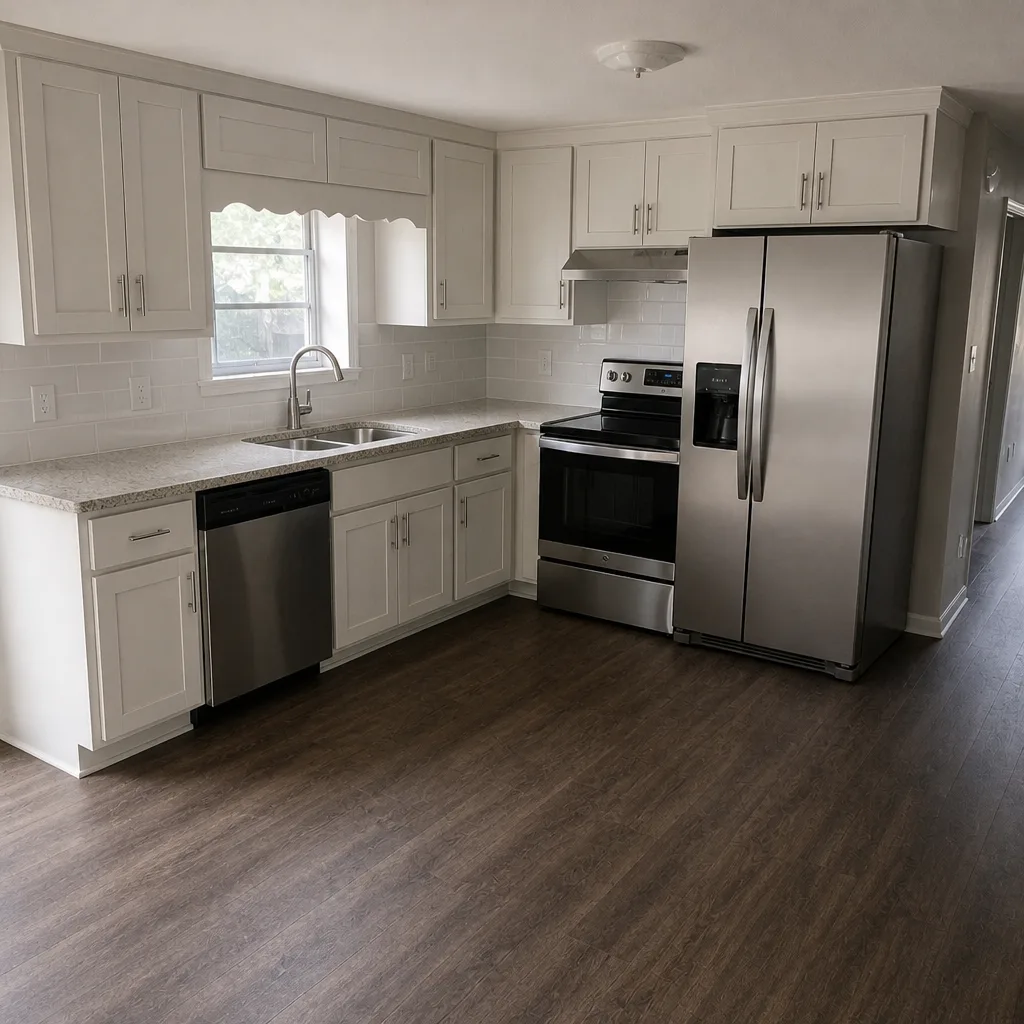
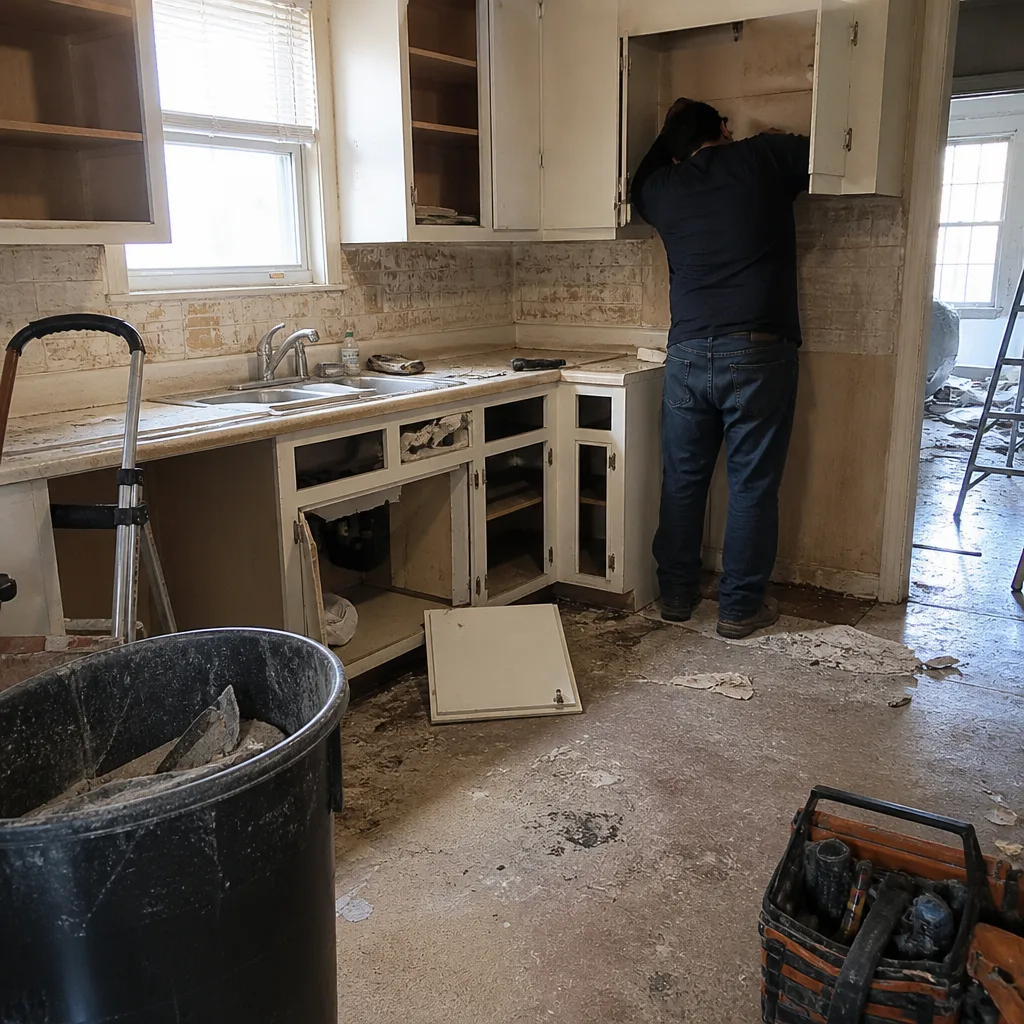
See the difference
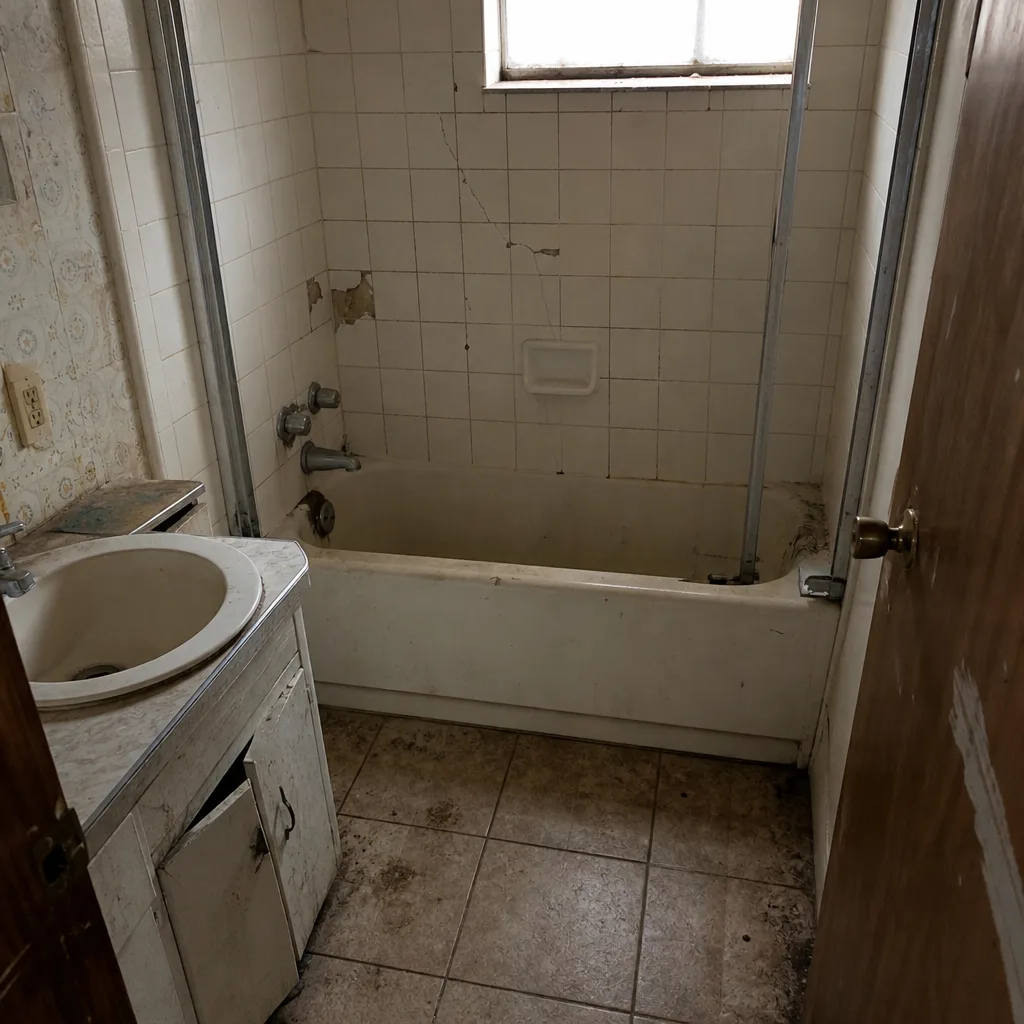 Before
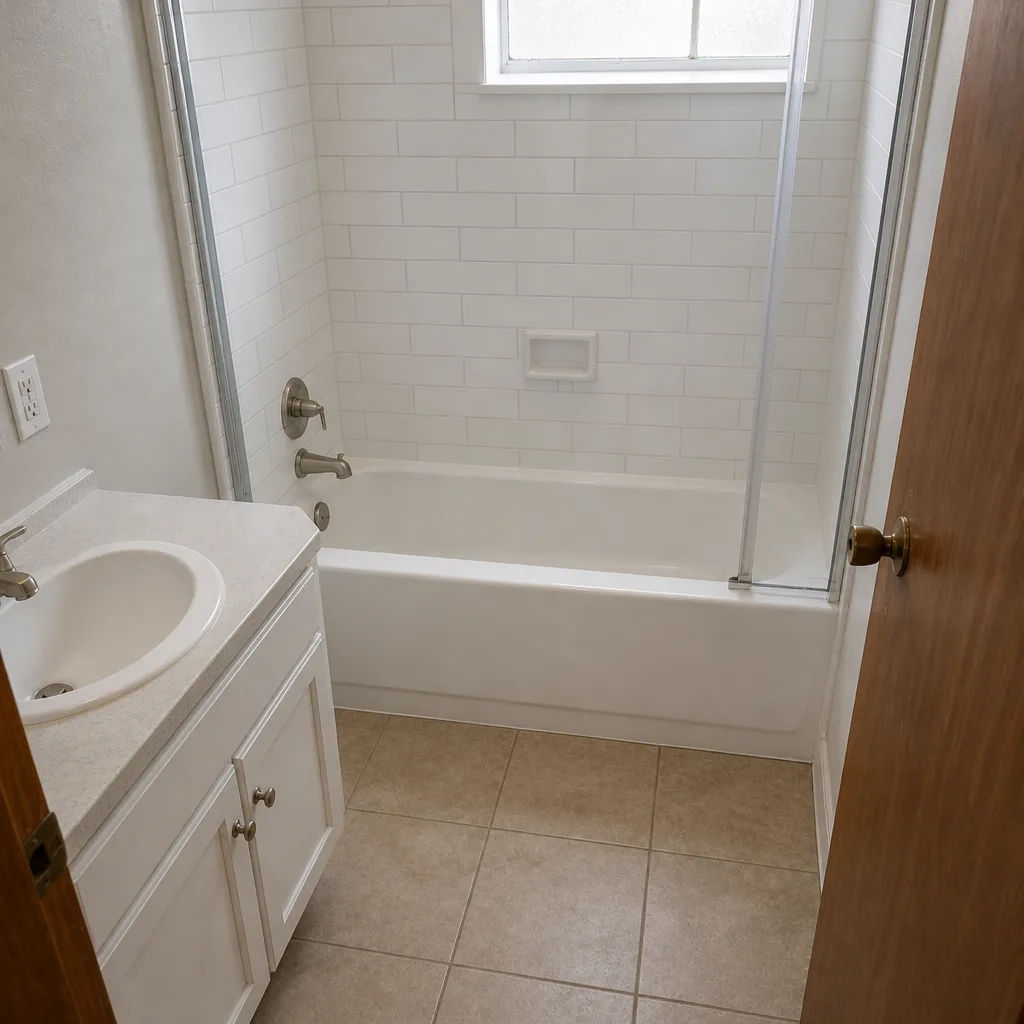 After
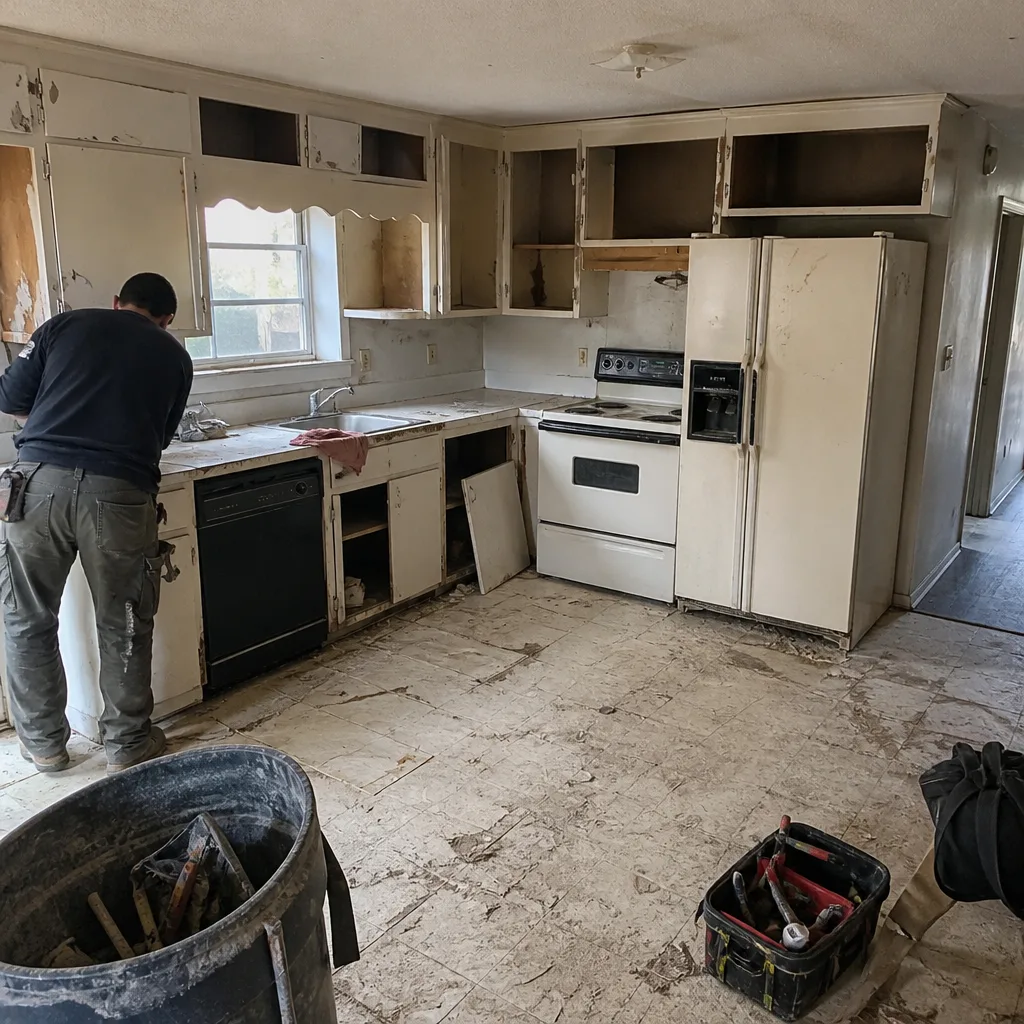 Before
 After
 Before
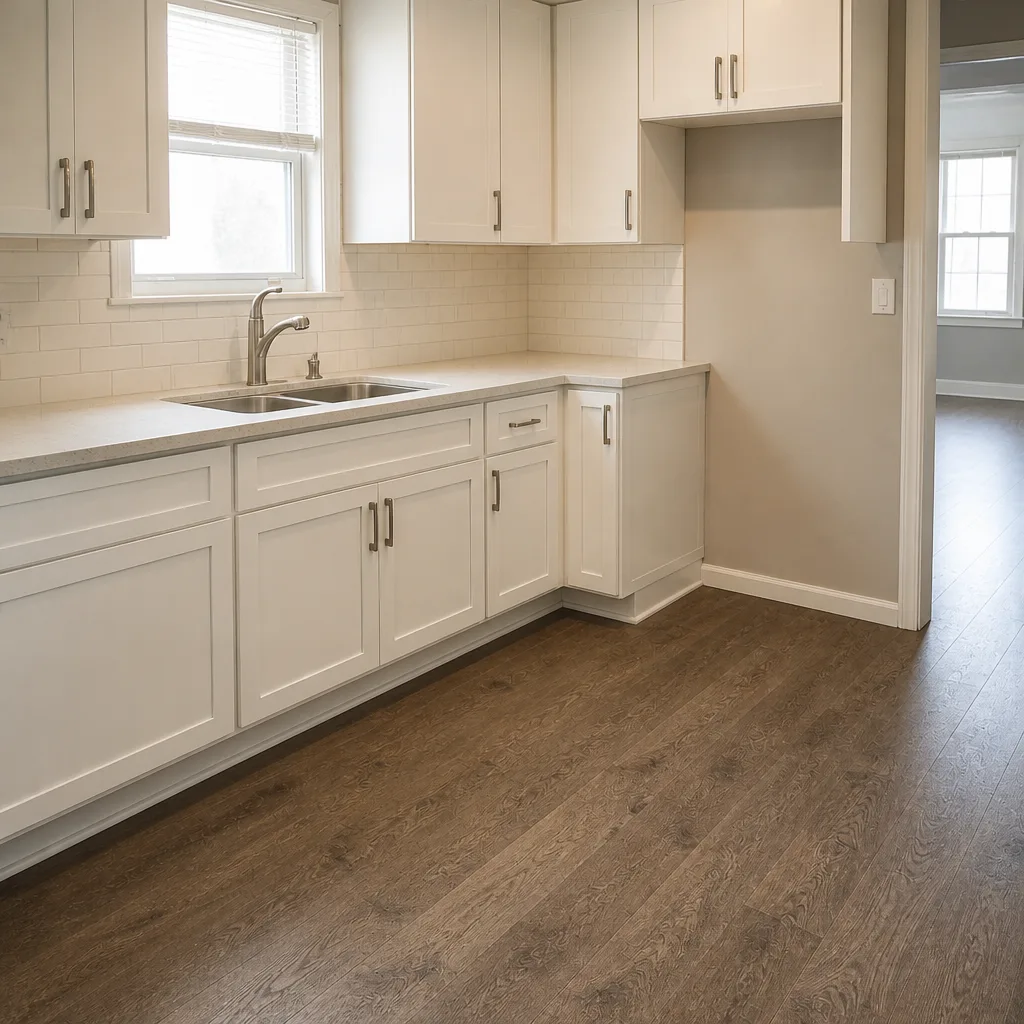 After
When to Call a Professional
Call a professional when the problem is water intrusion, when two or more doors or windows in the same area are affected, when the frame test shows an out-of-square opening, when between-pane fog is present, or when a sash balance or insulated glass unit needs replacement. Those jobs either require the exterior envelope to be opened up or involve a component under real tension. Most other window and door issues in Fort Worth are within reach of a homeowner with basic tools. For anything on the professional side, Groundwork Construction Co. of Fort Worth offers free estimates in Fort Worth – call (855) 912-5373. We’ll do the diagnostic walk, tell you straight whether you need a repair or a replacement, and give you an upfront number with no surprises. If the foundation is involved, we’ll tell you to get a foundation contractor first. That’s the honest answer, and it’s what we’re here for.
Frequently Asked Questions
It’s most often the frame, not the door. Fort Worth’s expansive clay soil swells and shrinks with our wet and dry cycles, and that moves the foundation slightly. When the foundation moves, the opening above it goes out of square, and the door binds against the jamb. Run the reveal test at the top corners, and check for diagonal drywall cracks nearby. If those are present, call a foundation contractor before a door professional. For an estimate on the opening itself, call (855) 912-5373.
Condensation on the surface of the glass is normal – it means humid indoor air is meeting a cool glass surface, and wiping it off with a towel and running a bathroom exhaust fan handles it. Fog or moisture between the panes is a dead seal. The sealed unit’s insulating gas has escaped, and the window is no longer performing like a double-pane. No cleaning will fix it; only replacement of the insulated glass unit or the whole window will. Call (855) 912-5373 for an exact quote on window replacement.
Window replacement in Fort Worth typically runs $450 to $1,200 per window for standard sizes and hardware, higher for large picture windows, specialty shapes, or premium brands like Andersen, Pella, and Marvin. Installation, exterior trim, and disposal are included in a good quote. Get a written line-item quote so you can see what’s included. Call (855) 912-5373 for a free estimate, and we’ll give you an upfront price with no surprises.
Yes, in most cases. Dollar bill test the window first. If the bill slides out easily, new weatherstripping will fix it – it’s about $20 in materials and an hour of your time. If the bill is tight but you still feel a draft, check the exterior caulk line for cracks and re-caulk. The fix is only in the sealed unit or the frame when the bill passes the test at some spots but not others, and that’s worth a professional look. Call (855) 912-5373 if you want a free diagnostic.
Repair is the right answer when the glass and frame are sound and the problem is weatherstripping, hardware, or caulk. Replace when the glass seal is dead, when the window is original builder-grade and 20-plus years old, or when multiple windows in the same room are failing at once. Replacement pays back in energy savings, though it’s a longer-term calculation. Call (855) 912-5373 for a free estimate – we’ll walk both options and give you the honest recommendation.
It means the insulated glass unit’s seal has failed. That’s not something specific to Fort Worth – it happens everywhere – but our wide temperature swings cycle windows through more expansions and contractions than a mild climate does, which tends to shorten the life of a seal. Builder-grade windows from the 1990s and 2000s are the most common casualties we see. The fix is a replacement unit, and if the window frame is sound, we can often replace just the glass. Call (855) 912-5373 to find out what’s possible on your windows.
The Bottom Line
The single biggest mistake in windows and doors troubleshooting is treating the symptom instead of the cause. A sticking door that gets a new lockset will still stick. A foggy window that gets cleaned will still be foggy. A draft that gets a draft stopper will still draft. The tests in this guide – the dollar bill test, the candle test, and the frame reveal check – will tell you which of the four root causes you’re dealing with in about an hour. From there, the DIY fixes are cheap and quick, and the professional fixes are worth doing right the first time. If you’re in Fort Worth and you’d rather have the walkthrough done by someone with the diagnostic experience, that’s a free call away. From foundation to finish line, we’re here to make sure the fix you pay for is the one that lasts.
Groundwork Construction Co. of Fort Worth brings the 730-Day Done Right Promise, free project estimate and design consult, and 0% financing for 18 months to every window and door project. The number you see is the number you pay – no surprises. To schedule a free estimate in Fort Worth, call (855) 912-5373.
Written by the team at Groundwork Construction Co. of Fort Worth.